


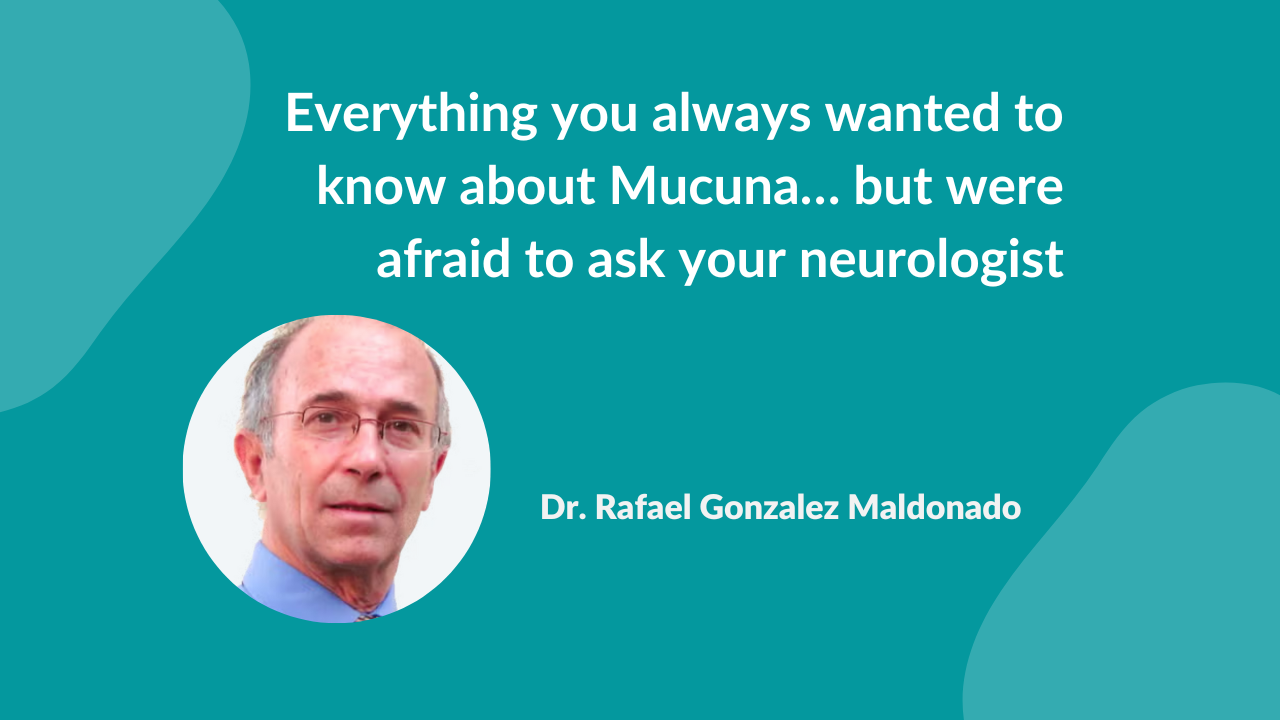
Everything you always wanted to know about Mucuna by Dr Rafael Maldonado
February 13, 2025
In a recent webinar by No Silver Bullet 4 PD, on natural treatments for Parkinson’s disease, Dr. Rafael Gonzalez Maldonado, an expert in holistic and alternative medicine, shared insights into the remarkable potential of Mucuna pruriens. This tropical legume, often called the “velvet bean,” has been gaining attention for its natural L-Dopa content and possible benefits in managing Parkinson’s symptoms.
What Is Mucuna Pruriens?
Mucuna pruriens is a plant traditionally used in Ayurvedic medicine for various neurological conditions. What makes it particularly interesting for people with Parkinson’s is its high concentration of L-Dopa, the precursor to dopamine. As Dr. Rafael Gonzalez Maldonado explained, “Mucuna is unique because it provides a natural source of L-Dopa, which the body can convert into dopamine, the very neurotransmitter that Parkinson’s patients struggle to produce.”
How Mucuna Compares to Traditional Medications
Standard Parkinson’s treatment often involves synthetic levodopa combined with carbidopa to enhance absorption and reduce side effects. However, some patients experience fluctuations in effectiveness, known as “off” periods, as well as long-term complications like dyskinesia.
According to Dr. Rafael Gonzalez Maldonado, “One of the biggest advantages of Mucuna is that it naturally contains co-factors that help with dopamine metabolism, potentially leading to a smoother response compared to synthetic levodopa.” Some studies suggest that the natural form of L-Dopa in Mucuna may have a longer-lasting effect, though more research is needed to confirm this.
Potential Benefits of Mucuna for Parkinson’s
Many people with Parkinson’s have turned to Mucuna as a complementary or alternative therapy. Dr. Rafael Gonzalez Maldonado highlighted several possible benefits:
Smoother symptom control: Some patients report fewer motor fluctuations.
Fewer side effects: Since Mucuna is a natural compound, it may be better tolerated by some individuals.
Additional neuroprotective properties: Mucuna contains antioxidants, which could help protect neurons from oxidative stress, a key factor in Parkinson’s progression.
However, he also cautioned, “It’s essential to work with a healthcare provider when considering Mucuna, especially if you’re already taking Parkinson’s medications. The interaction between synthetic and natural L-Dopa can be complex.”
How to Use Mucuna Safely
When it comes to using Mucuna, there are several factors to consider:
Dosage: The amount of L-Dopa in Mucuna supplements can vary widely, so it’s crucial to find a reliable source and start with a low dose.
Timing: Mucuna may work best when taken on an empty stomach, as protein can interfere with L-Dopa absorption.
Consistency: Some users find that Mucuna requires fine-tuning to maintain stable symptom relief.
Dr. Rafael Gonzalez Maldonado emphasized, “The key is personalization—what works for one person may not work for another. Always introduce it gradually and monitor its effects carefully.”
The Future of Mucuna in Parkinson’s Treatment
While Mucuna pruriens holds great promise, more research is needed to fully understand its role in Parkinson’s management. Clinical trials comparing it directly with standard medications are still limited, but anecdotal reports from patients continue to fuel interest.
As Dr. Rafael Gonzalez Maldonado concluded, “Mucuna isn’t a miracle cure, but it’s an exciting option for those looking for a more natural approach to Parkinson’s treatment. With the right guidance, it can be a valuable part of a holistic care plan.”
For those interested in exploring Mucuna, consulting with a neurologist or movement disorder specialist is highly recommended to ensure safe and effective use. Watch the full interview by clicking on the link below.
Comments (0)
Loading comments...