


Gut Molecules Can "Switch Off" Brain Inflammation
February 4, 2026
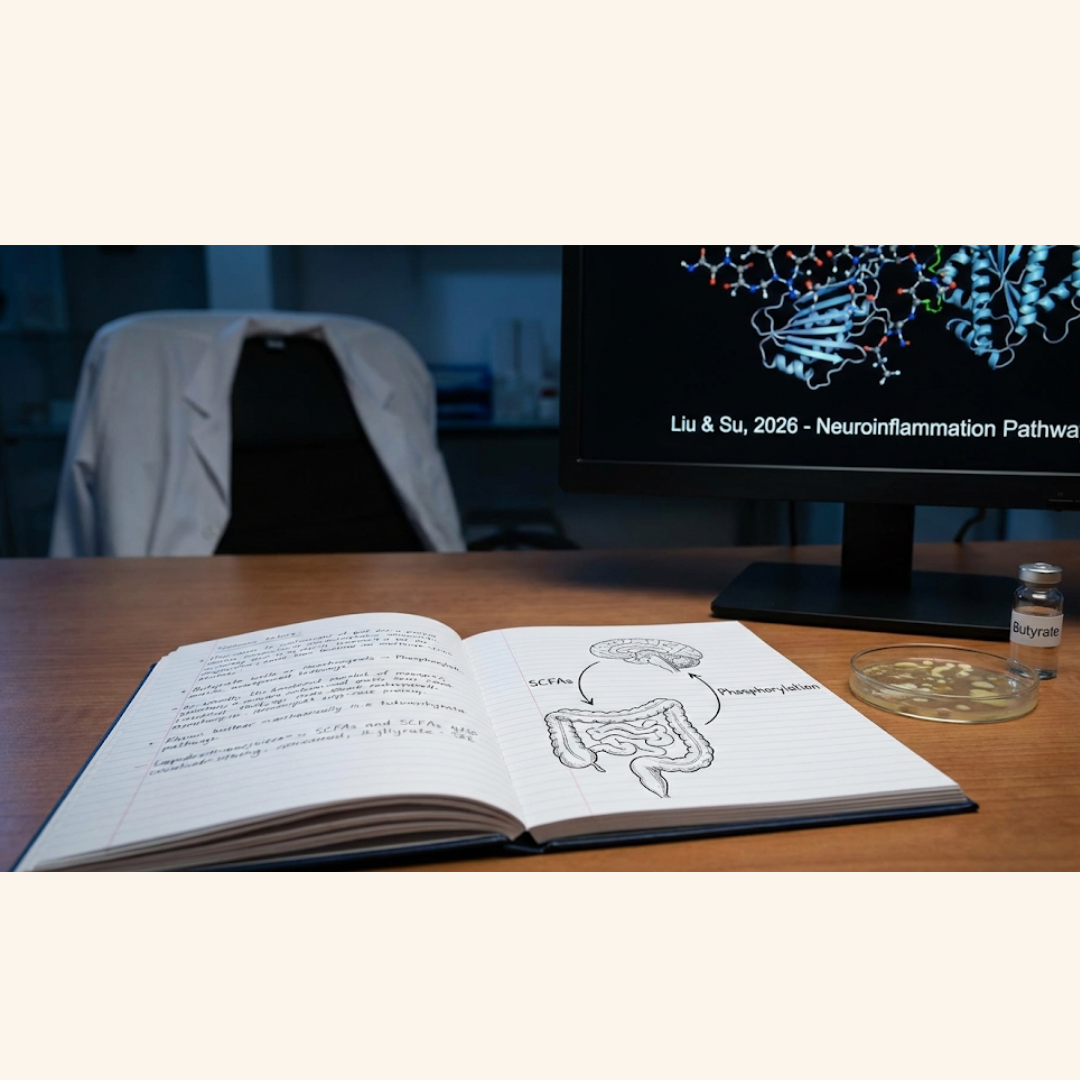
We have known for some time that fibre is essential for digestion, but a new scientific review has just revealed that its role goes far beyond simply helping you stay regular. Published this week, the study by researchers Liu and Su explains the precise mechanical link between what you eat and how your brain protects itself. The heroes of this story are Short-Chain Fatty Acids (SCFAs), and it turns out they are capable of flipping the chemical switches that control inflammation in the brain.
The review, titled Deciphering the modulatory role of short-chain fatty acids in Parkinson's disease, dives deep into a process called phosphorylation. While that sounds complex, you can think of it as a series of light switches inside your cells. In people with Parkinson's, the switches that trigger inflammation and cell stress are often stuck in the "on" position. This constant alarm state contributes to the build-up of alpha-synuclein clumps and the exhaustion of energy-producing mitochondria.
What this new paper highlights is that SCFAs—which are produced when your gut bacteria ferment the fibre you eat—travel from the colon to the brain and effectively turn these switches off. By calming these signalling pathways, SCFAs help your brain cells return to their primary job: clearing out toxic proteins (a process called autophagy) and maintaining stable energy levels.
This is a vital piece of the puzzle because it moves the advice to "eat more plants" from a vague wellness tip to a specific neuroprotective strategy. When you eat a bowl of lentils or oats, you are not just feeding yourself; you are providing the raw materials for your gut bacteria to manufacture medicine that calms inflammation in your brain. The study confirms that by keeping your SCFA levels high through diet, you are directly helping your neurology regulate its own safety systems.
Comments (0)
Loading comments...