


The Promise of Lithium: A New Frontier in Neuroprotection
March 25, 2026
Thank you, Mr Green, for sharing this interesting webinar.
For decades, the search for a "disease-modifying" therapy for Parkinson’s and Alzheimer’s—one that actually slows the progression rather than just masking symptoms—has been the "holy grail" of neurology. While many high-profile pharmaceutical trials have faced setbacks, a growing body of research suggests that a common, over-the-counter element might hold the key: Lithium.
In a recent presentation for the PMD Alliance, Dr. Tom Guttuso, Jr., a Professor of Neurology at the University at Buffalo, detailed how low-dose lithium therapy is emerging as a primary candidate for preserving brain health as we age.
The "Brain’s Bermuda Triangle"
To understand how lithium works, Dr. Guttuso describes three destructive processes that conspire to kill neurons:
Sticky Proteins: Specifically alpha-synuclein (linked to Parkinson’s) and tau (linked to Alzheimer’s).
Chronic Inflammation: Overactive immune cells in the brain.
Oxidative Stress: Damage to cells from unstable molecules.
Lithium is unique because it targets all three sides of this "triangle." It suppresses the brain's inflammatory cells (microglia and astrocytes), enhances "autophagy" (the cell's internal garbage-disposal system that clears out sticky proteins), and improves the function of mitochondria, the energy-producing powerhouses of our cells.
The "NFL" of Brain Health: Neurofilament Light
The most exciting part of Dr. Guttuso’s research involves a biomarker called Neurofilament Light (NfL). Often abbreviated as "NFL" to make it easier for patients to remember, this protein is a structural component of the "axon"—the long projection of a nerve cell.
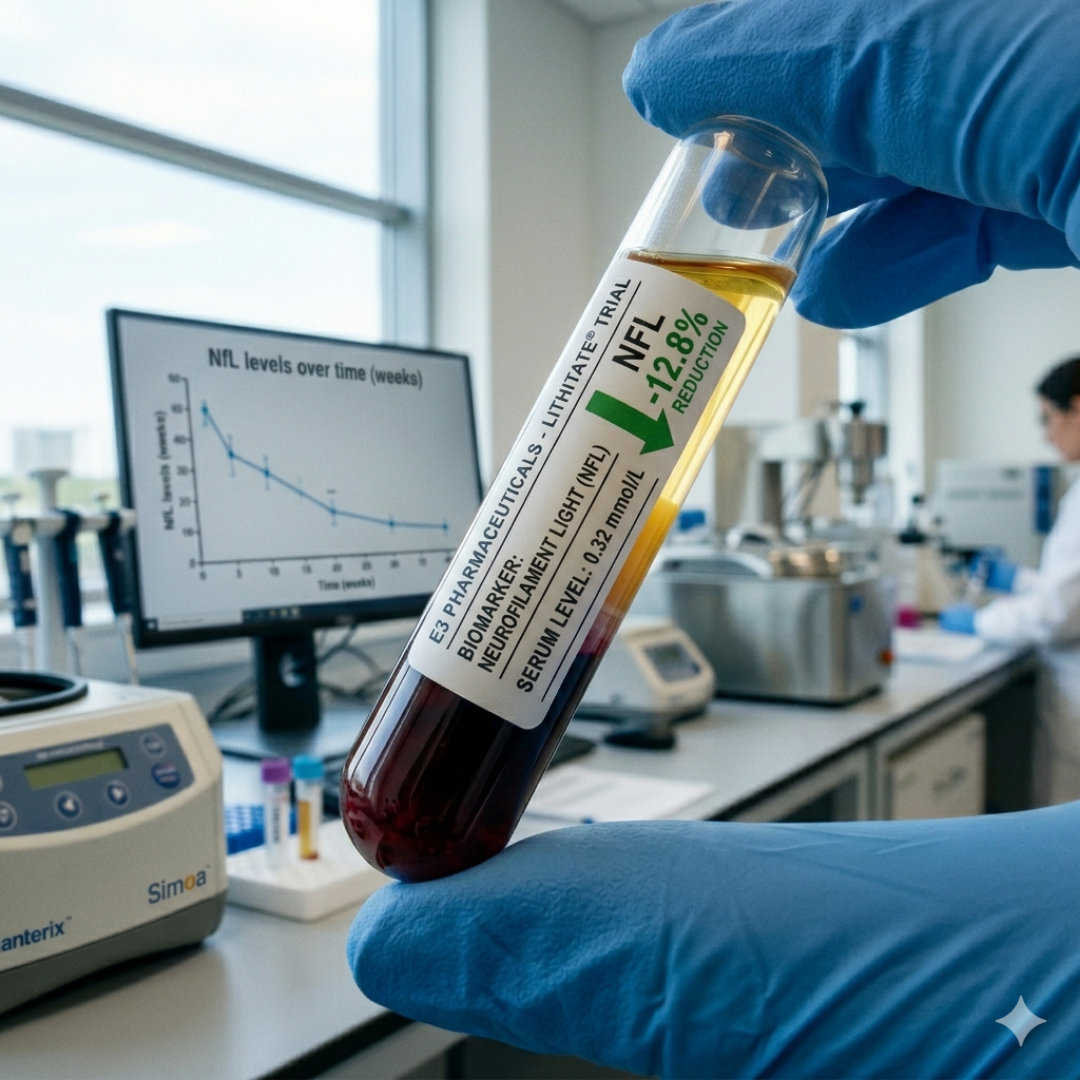
When a brain cell is damaged or dies, NfL leaks out into the bloodstream. By measuring NfL through a simple blood draw, doctors can objectively track the rate of neurodegeneration. Dr. Guttuso’s Phase II clinical trials found that:
Patients with low lithium levels saw an 11% increase in NfL over 24 weeks.
Patients with higher serum lithium levels (around 0.32 mmol/L) saw a 12.8% reduction in NfL.
This is a landmark finding. No other therapy to date has been associated with a significant decrease in NfL in Parkinson's patients. A reduction of this magnitude suggests that the therapy is actively protecting brain cells from damage.
Lessons from History: Smoking and Drinking Water
The theory that lithium protects against Parkinson's actually began with a strange observation: smokers have a 50–70% lower risk of developing Parkinson’s. While nicotine trials failed to show benefit, Dr. Guttuso discovered that tobacco contains extremely high levels of lithium.
Similarly, large-scale "observational" studies in Denmark and Japan found that municipalities with higher lithium levels naturally occurring in the drinking water had significantly lower rates of Alzheimer’s and dementia.
Guidance on Supplementation
While lithium is available as an over-the-counter supplement (often as lithium aspartate), Dr. Guttuso urges extreme caution. Even in "low doses," lithium must be handled carefully:
Medical Monitoring: You should never attempt to dose lithium yourself. It can affect kidney and thyroid function if levels are not monitored by a doctor.
The Right Range: The goal for neuroprotection is a "low dose" (aiming for a serum level of roughly 0.25 to 0.5 mmol/L), which is significantly lower than the doses used for psychiatric conditions like bipolar disorder.
Drug Interactions: Lithium can interact with other medications, such as Lexapro or blood pressure meds.
Looking to the Future
As we age, our NfL levels naturally begin to climb, especially after age 65, reflecting the "normal" loss of brain cells. Dr. Guttuso’s vision is a future where low-dose lithium might be used as a preventative measure to "flatten the curve" of brain aging, potentially delaying the need for mobility devices and preserving cognitive function for years longer than currently possible.
Full results from the ongoing extension study are expected this summer, with the hope of moving toward a large-scale, multi-center clinical trial.
Comments (0)
Loading comments...