


The Rust Inside: Why Iron Might Be the Villain (and How to Tame It)
December 30, 2025
We have always been told that iron is good for us. It is the fuel for our blood, the stuff of Popeye’s strength, and essential for energy. But a comprehensive new study published in Nature suggests that when it comes to the brain, there can definitely be too much of a good thing. The research dives deep into a process called Ferroptosis, and it provides a compelling roadmap for how we might stop brain cells from essentially rusting to death.
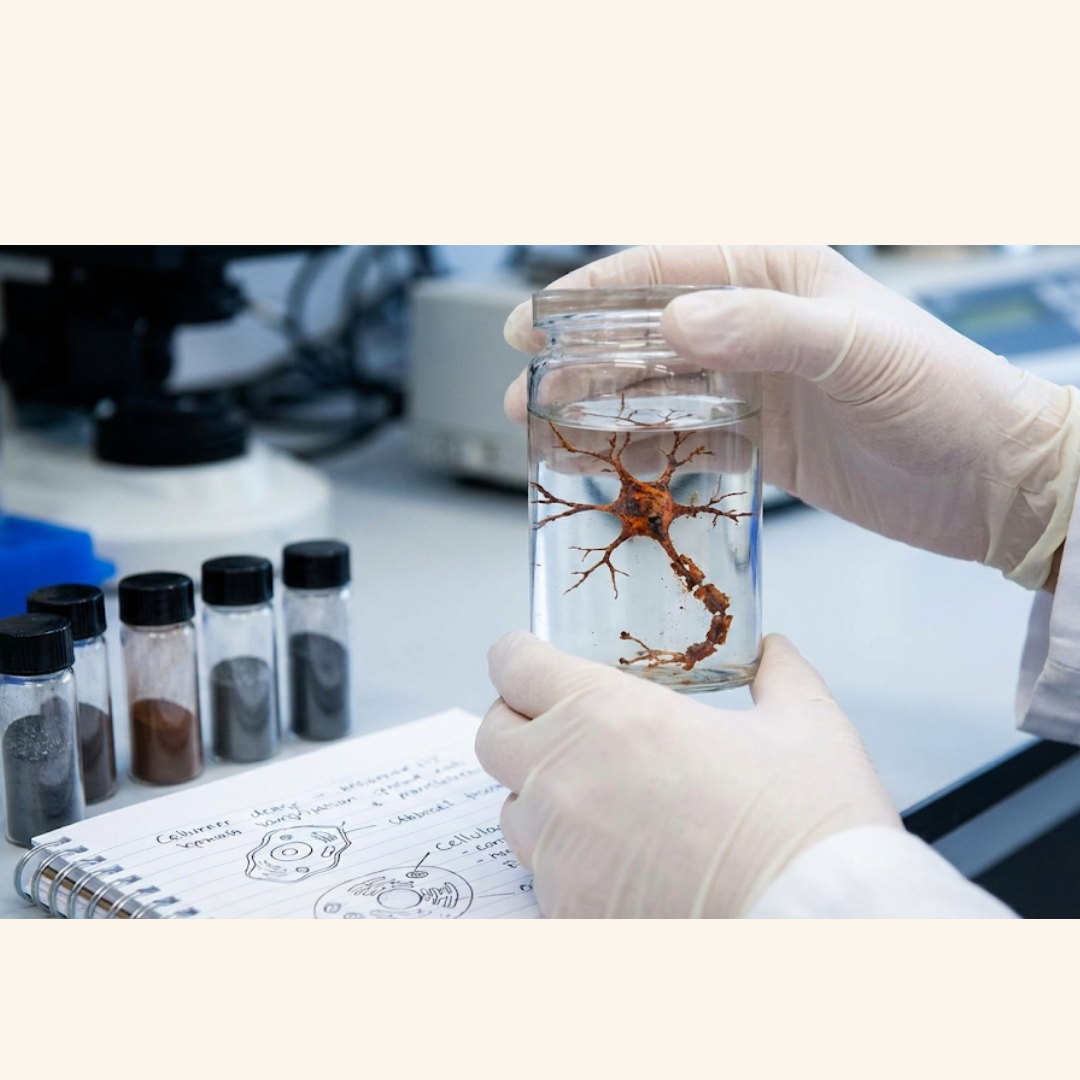
Ferroptosis is a relatively new concept in science, discovered only about a decade ago. Unlike other forms of cell death where the cell quietly shuts down, ferroptosis is chaotic and violent. It happens when iron levels inside a cell get too high, causing the fats in the cell membrane to oxidise.
In plain English? The cell rusts. The protective outer shell degrades, the machinery inside fails, and the neuron dies. We have known for a long time that the substantia nigra—the dopamine HQ in the brain—is often overloaded with iron in people with Parkinson’s. This study connects the dots, suggesting that this iron overload isn't just a side effect; it might be the executioner.
What makes this new paper so important is that it doesn't just admire the problem; it looks for the off-switch. The researchers focused on Transcriptional Factors. Think of these as the foremen on a construction site. They are the proteins that read our DNA and tell the cell which tools to build and which safety protocols to activate.
The study reveals that specific transcriptional factors act as the "thermostat" for iron. If they are working correctly, they sense rising iron levels and order the cell to build safe storage containers (like a biological safe). If they malfunction, the iron runs wild, triggers the rusting process, and the cell is lost.
For years, trials trying to simply strip iron out of the brain (chelation) have had mixed results because the brain actually needs some iron to function. This research suggests a smarter approach. Instead of trying to remove the iron, we should focus on fixing the thermostat.
By targeting these specific transcriptional factors, scientists believe we could boost the brain's natural ability to handle iron safely. It is the difference between trying to put out a fire with a bucket of water and simply installing a better sprinkler system.
The Future Outlook: This shifts the battlefield. We are moving away from simply replacing lost dopamine and towards protecting the neurons that are still there. If we can develop drugs that flip these genetic switches, we could theoretically stiffen the cell’s defences against this biological rust. It turns a chaotic, destructive process into a manageable maintenance issue, keeping the machinery running smoother for longer.
Comments (0)
Loading comments...