


Clinical trial shows no difference in blood dopamine levels between two common Parkinson’s drug combinations
June 4, 2026
A clinical trial comparing two common drug combinations used to manage early-stage Parkinson’s shows no significant difference in how they affect circulating dopamine levels in the blood.
Managing the movement symptoms of Parkinson’s involves addressing the loss of dopamine producing cells in a key brain region known as the striatum. The primary strategy to overcome this shortfall is the use of levodopa, a compound that the body converts directly into dopamine. Because levodopa is rapidly broken down by enzymes in the body before it can reach the brain, it is administered alongside other medications that block this breakdown process, ensuring more of the active compound crosses the blood brain barrier safely and effectively.
Two of the most frequent therapeutic formulations are levodopa combined with carbidopa and entacapone, known as LCE, and levodopa paired with benserazide, referred to as LB. Whilst both combinations are highly effective at boosting dopamine availability to improve motor function, their short term impact on circulating dopamine levels in peripheral blood has remained a point of scientific inquiry.
To explore this, a collaborative research team from Atatürk Sanatoryum Training and Research Hospital and Ankara University Faculty of Medicine in Turkey conducted a randomised study focusing on ninety individuals with early stage Parkinson’s that primarily affected one side of the body. The participants, who had a median age of 69.5 years and predominantly presented with tremor-dominant symptoms, were divided to receive either the LCE or the LB treatment protocol.
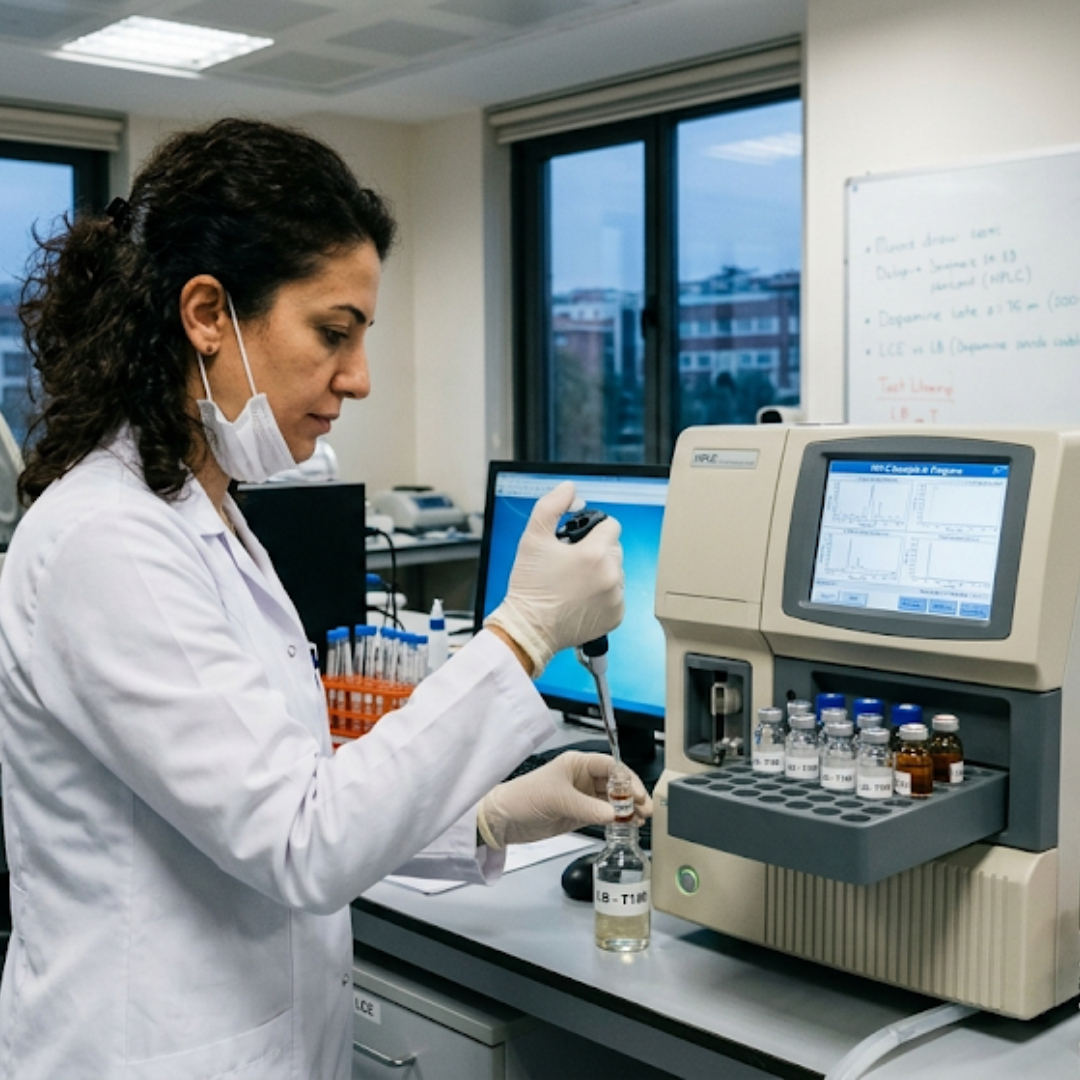
The researchers utilized high performance liquid chromatography, or HPLC, to measure the exact concentrations of dopamine in blood samples collected at baseline, ninety minutes, and one hundred and eighty minutes following medication delivery. HPLC is a highly sensitive analytical chemistry technique that separates, identifies, and quantifies specific biochemical components within a complex mixture, making it ideal for tracking precise hormonal and neurotransmitter changes in blood plasma.
The results revealed that both the LCE and LB groups experienced a measurable short term increase in blood dopamine levels within the three hour window after dosing. However, a detailed statistical comparison between the two treatment arms showed no meaningful difference in how much the circulating dopamine increased. The temporal fluctuations within each individual group over the three hours were also deemed non-significant when compared side by side.
The study authors suggested that several clinical factors might explain why a sharper biochemical divergence between the two therapies was not observed in the blood. In the early stages of Parkinson's, the body often maintains a degree of natural dopaminergic buffering. This preserved buffering capacity, combined with the fact that participants had unilateral involvement and were prescribed relatively low levodopa doses, likely minimized the visible differences in peripheral blood chemistry. The researchers concluded that whilst both formulations succeed in delivering the necessary therapeutic boost, larger and longer follow up clinical trials will be essential to track deeper long term biochemical variations.
Comments (0)
Loading comments...