


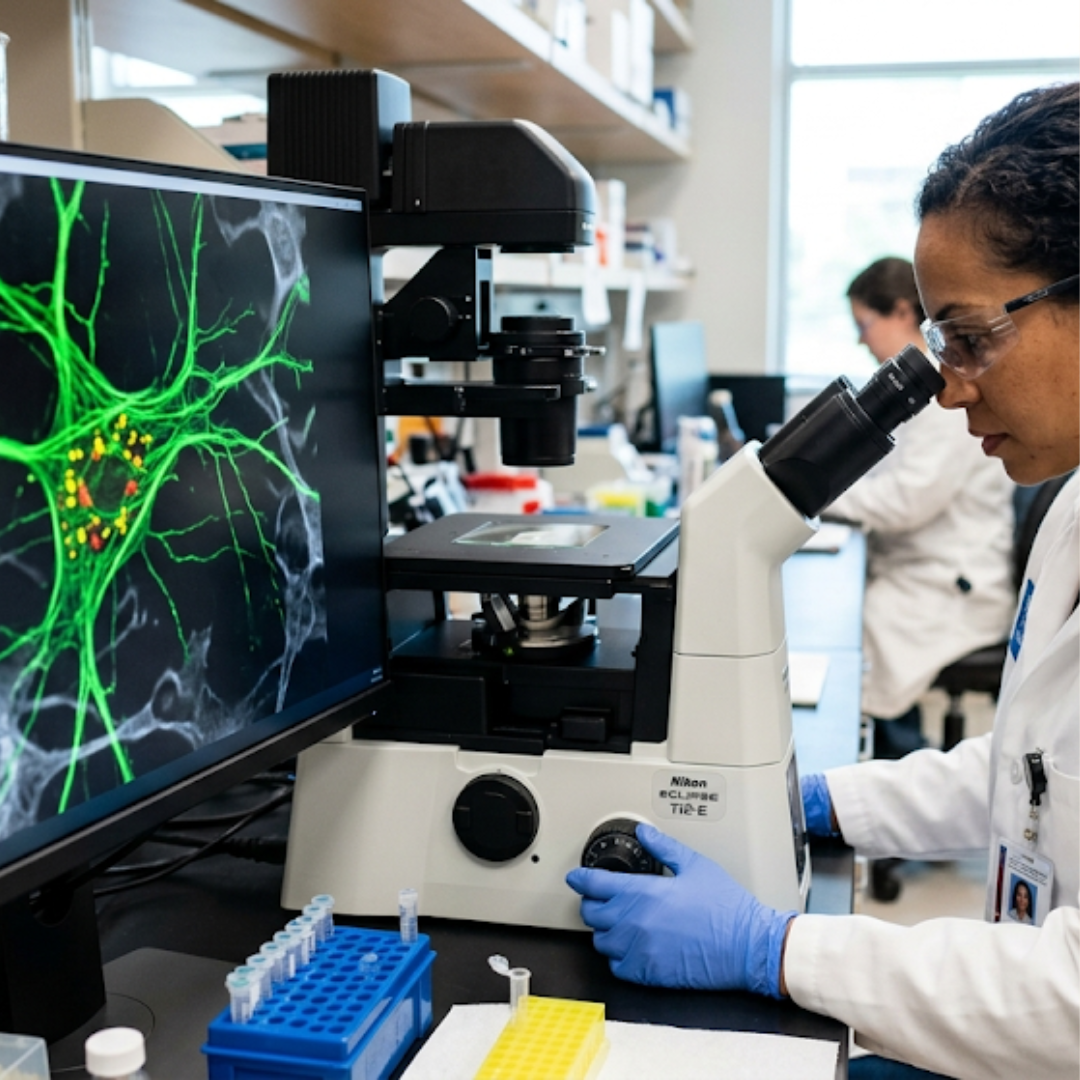
Scientists discover that tubulin acts as a defender against harmful brain protein clumping
June 22, 2026
Scientists at the Baylor College of Medicine have discovered that a common cell protein called tubulin can actively stop two problematic proteins from forming the toxic brain clumps associated with Alzheimer's and Parkinson's.
In healthy brain cells, the proteins Tau and alpha synuclein play crucial roles by interacting with tubulin to build microtubules. These microtubules act like internal railway tracks for the cells, providing structural support and allowing materials to be transported smoothly where they are needed. However, in neurodegenerative conditions, these proteins can misfold, becoming idle troublemakers that stick together to form harmful aggregates. These clumps eventually damage the brain cells, leading to common symptoms like memory loss and movement difficulties.
Previously, researchers focused heavily on trying to block the tiny, fluid droplets within cells, known as condensates, where these proteins gather. It was thought that preventing these droplets from forming would stop the harmful clumping. The new study takes a completely different approach by looking at how to safely manage the proteins inside the droplets. Instead of destroying the droplets, researchers found that introducing more tubulin could safely redirect the proteins.
When tubulin levels are low, the internal railway tracks break down, leaving Tau and alpha synuclein with nothing productive to do, which causes them to form toxic clumps. When tubulin is readily available, it quickly engages these idle proteins and gives them a healthy job to do, which is building and stabilizing the necessary railway tracks.
This discovery fundamentally changes how scientists view tubulin, shifting its status from a helpless bystander destroyed by the condition to an active defender capable of preventing damage. By focusing future treatments on boosting the natural pool of tubulin in the brain, scientists hope to create a selective strategy that stops toxic clumping whilst fully preserving the vital, everyday functions of these proteins.
Comments (0)
Loading comments...