


Additive neuro-restorative effects of exercise and docosahexaenoic acid intake in a mouse model of Parkinson's disease
December 17, 2024
 mistergreen3003
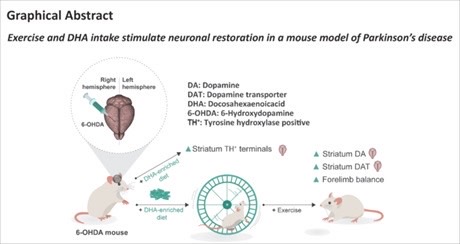
This research investigates whether a combination of exercise and docosahexaenoic acid (DHA), a type of omega-3 fatty acid, can help repair brain pathways affected by Parkinson's disease (PD). In a mouse model of PD, scientists tested the effects of exercise (using a running wheel), a DHA-enriched diet, or both together after inducing dopamine loss in the brain.
Key Findings:
- DHA alone: Improved certain brain markers, such as dopamine levels, and showed some restoration of damaged brain pathways.
- Exercise alone: Provided limited individual benefits.
- Combination of DHA and Exercise:
Enhanced balance and motor coordination in the mice.
Increased dopamine transporter levels (important for brain communication).
Reduced a key marker linked to dopamine breakdown.
The study found that exercise and DHA (found in fish oils) work better together than alone to restore brain health in Parkinson's disease. While neither fully reversed the damage, the combined approach showed improvements in motor function and brain recovery markers. This highlights the potential of using nutrition and physical activity as a combined strategy to help people with Parkinson's.
Why It Matters:
This research provides a foundation for clinical trials exploring how lifestyle changes like diet and exercise might help slow or repair brain degeneration in Parkinson's disease.
Comments (0)
Loading comments...