


Scientists use advanced MRI to map brain changes in people with Parkinson's
April 2, 2026
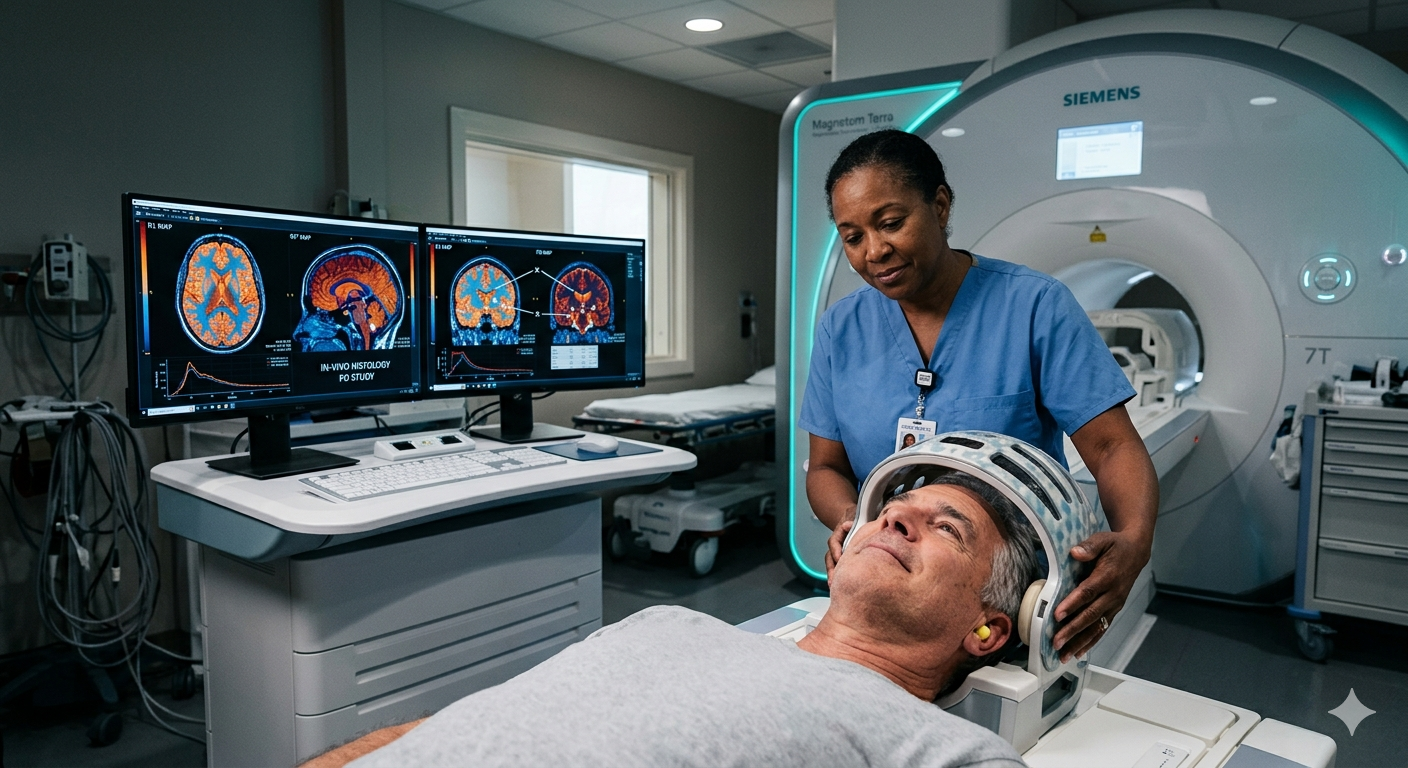
Researchers have found a way to look at the brain with such detail that it is like performing a biopsy without any surgery. A new study published in npj Parkinson's Disease shows how a technique called quantitative multiparametric mapping allows scientists to see the microscopic landscape of the brain while a person is still alive.
Usually, the only way to see the fine details of how the condition affects brain tissue—such as changes in iron levels or the thinning of protective coatings around nerves—is to look at a brain under a microscope after someone has passed away. This new imaging method changes that by measuring several different magnetic properties of the brain at the same time during a standard-looking MRI scan.
By looking at these specific measurements, the researchers could spot distinct patterns in areas like the basal ganglia and the brainstem, which are key parts of the brain involved in movement. They found that the signatures left by the condition in these areas were closely linked to how far the symptoms had progressed.
This is a significant step forward because it helps explain why Parkinson's affects everyone differently. The scans revealed that there are different "subtypes" of the condition, each with its own unique fingerprint in the brain. Some people might have more iron accumulation in certain spots, while others show different types of tissue changes.
Having a clearer window into the living brain means that in the future, doctors might be able to detect these changes much earlier. It also offers a better way to track whether new treatments are actually working to protect brain cells, rather than just masking the symptoms. This move toward "in-vivo histology"—seeing the biology of the condition in real-time—brings us closer to more personalised care for everyone living with Parkinson's.
Comments (0)
Loading comments...