


Baylor researchers identify gene changes that drive Parkinson’s versus those that offer protection
April 24, 2026
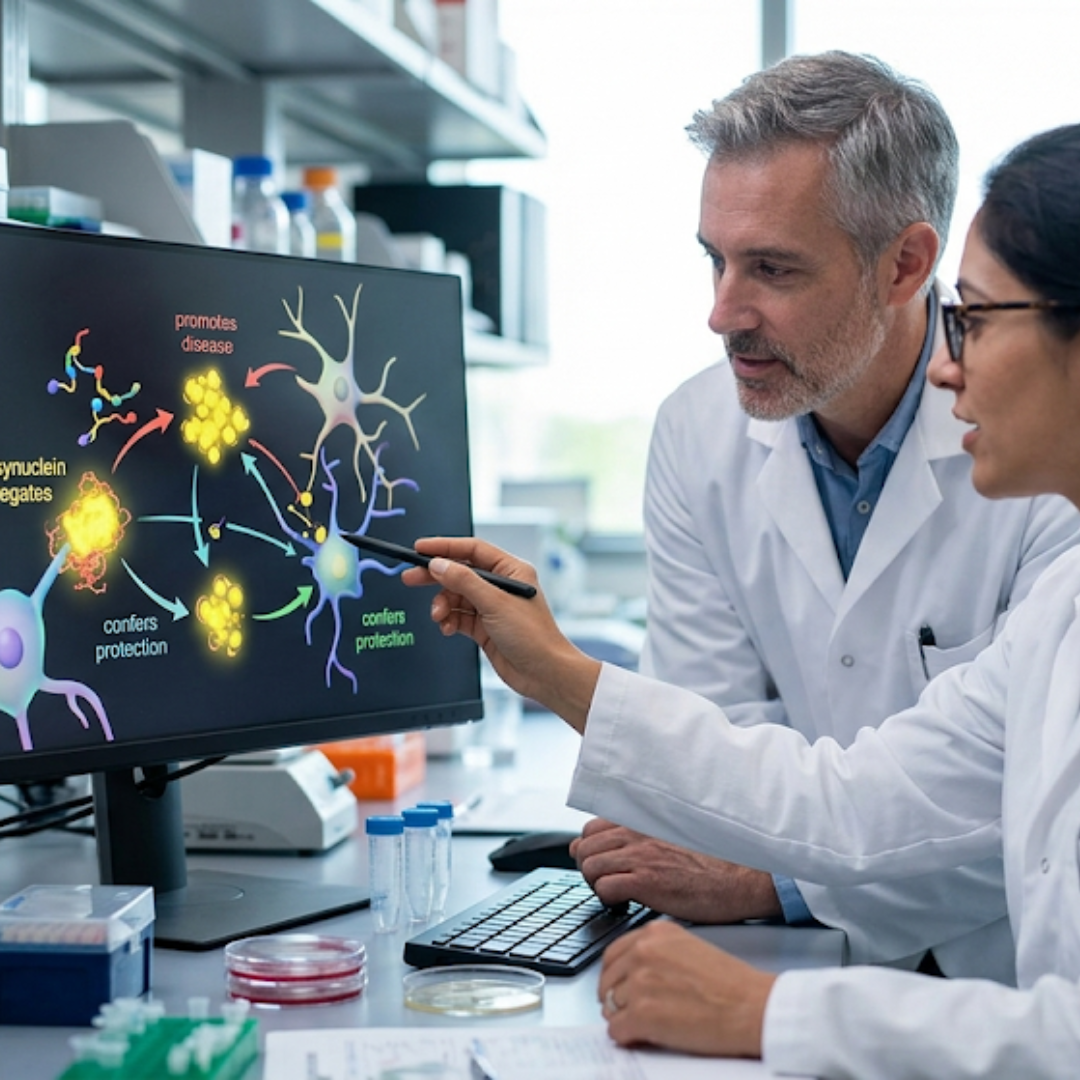
Scientists at Baylor College of Medicine and Texas Children’s Hospital have developed a clever strategy to solve a long-standing mystery: why do some gene changes lead to Parkinson's, while others actually help the body defend itself? By separating the harmful changes from the helpful ones, the team has uncovered new targets for therapies that could one day slow or even stop the loss of brain cells.
A central feature of the condition is the buildup of a protein called alpha-synuclein. In a healthy brain, this protein is continuously recycled and broken down. However, in Parkinson's, this waste-disposal system fails. The protein then clumps together and becomes toxic, specifically attacking the dopamine-producing neurons that are essential for movement. Until now, it has been difficult for scientists to tell if a change in gene activity is a direct cause of this toxic buildup or if the cell is simply changing its behaviour to try and protect itself.
To find the answer, the researchers used a combination of computer modeling and experiments with fruit flies. They mapped out two specific "waste-management" networks in the brain known as the ESCRT and the phosphatidylinositol cycle. By testing these gene groups in flies that show human-like symptoms, they found that certain gene changes made movement problems worse, while others acted like a shield. Specifically, when they manipulated genes like STAM1/2 or INPP4A/B, they were able to improve movement and protect the vital dopamine-producing cells from dying.
The real significance of this discovery is the proof that we can potentially change the course of the condition by "reprogramming" the brain's internal recycling system. Rather than just masking symptoms like tremors or stiffness with medication, future treatments could focus on boosting these protective genes. This research provides a clearer roadmap for drug development, moving us closer to a future where we can proactively stop the condition before it significantly impacts a person's daily life.
Comments (0)
Loading comments...