


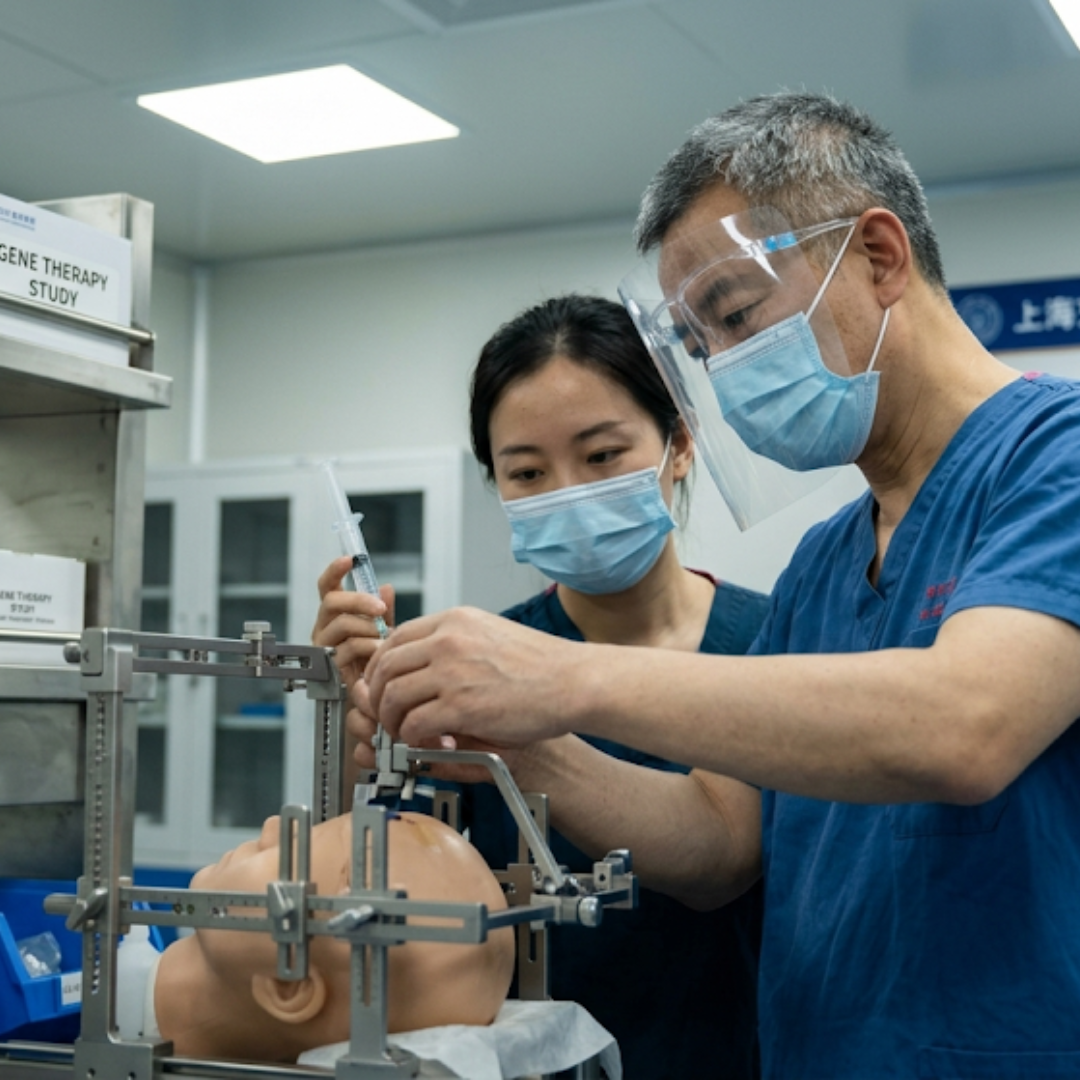
China accelerates clinical trials for Parkinson's with a successful dual target gene therapy study
June 11, 2026
China is rapidly accelerating its clinical trials for novel neurodegenerative treatments, driven by a massive population base that represents a significant percentage of global Parkinson's cases. In a major milestone published in Nature Medicine, researchers in China successfully completed a multicenter phase 1 trial demonstrating that a pioneering dual target gene therapy is safe and well tolerated for managing the condition.
Traditional genetic approaches for Parkinson's typically introduce only a single gene into the brain, focusing either on boosting dopamine production or protecting vulnerable brain cells. However, because Parkinson's is a complex condition with multiple interacting pathways, targeting just one mechanism can limit the therapy's overall effectiveness. To overcome this, a collaborative research team led by scientists from Ruijin Hospital affiliated with Shanghai Jiao Tong University School of Medicine, Xiangya Hospital of Central South University, and Xi'an Jiaotong University evaluated an innovative strategy called BBM-P002. Developed by Belief Biomed Inc, this therapy delivers two distinct therapeutic genes simultaneously, engineered to optimize dopamine synthesis while protecting existing neurons.
The multi-centre, open label trial was conducted between April 2023 and July 2024 to evaluate the safety and early feasibility of this treatment. Ten participants with moderate to advanced stages of Parkinson's were enrolled across the participating clinical sites. The surgical procedure involved a precise, one time delivery of the engineered genetic material directly into the bilateral putamen, a region of the brain heavily impacted by dopamine loss.
Over a twelve month follow up period, the trial met all its primary safety endpoints. The findings confirmed that the treatment was highly stable and well tolerated by all participants. No dose limiting toxicities or drug related serious adverse events were reported, and researchers observed no significant systemic toxicity or immune responses. Having established this crucial safety foundation, the team is now moving forward with larger phase 2 clinical trials to determine how effectively this dual target strategy can improve motor function and everyday life for people with Parkinson's.
Comments (0)
Loading comments...