


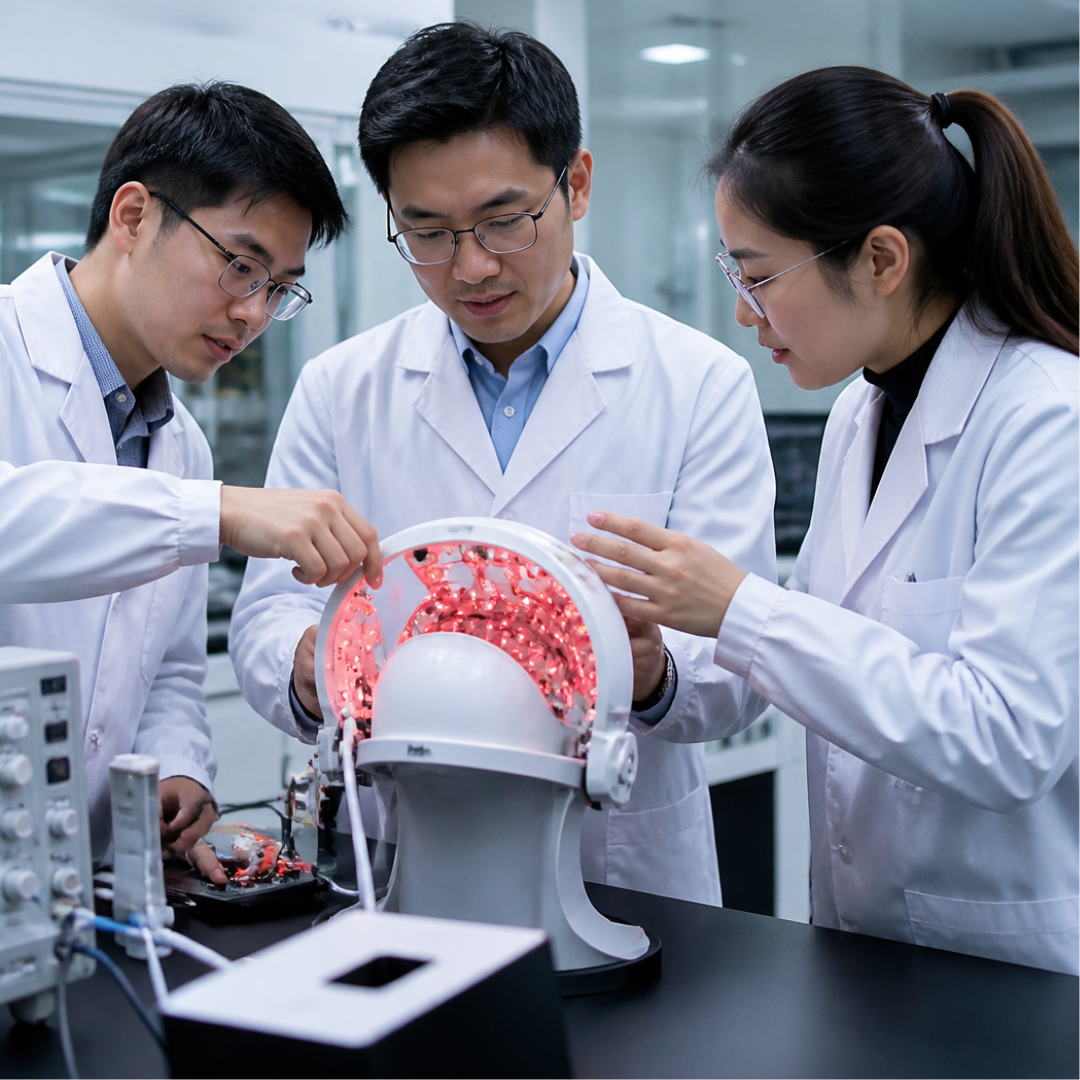
Photobiomodulation keeps gaining traction with scientists while commercial realities prove tough
October 29, 2026
 Beatrice
Shining light onto the head or body to treat a neurological condition might sound like a plot from a science fiction novel, yet it is a rapidly growing area of scientific inquiry. Known formally as photobiomodulation, this non-invasive therapy uses specific wavelengths of visible red and near-infrared light to deliver energy directly to living tissue. Because existing medications focus mainly on managing daily symptoms rather than stopping the underlying progression of the condition, scientists and medical technology companies alike are eager to find new tools that can protect brain cells. To separate hope from hype, a research team recently reviewed the latest evidence to see what light therapy can actually achieve.
The central idea behind photobiomodulation is a bit like photosynthesis in plants, though instead of making sugar, our cells use the light to boost their own energy production and repair mechanisms. In experimental laboratory models, shining red and near-infrared light onto tissues has produced some fascinating biological responses. First, it appears to give a much-needed boost to the mitochondria, which are the tiny power plants inside our cells that often struggle to keep up in Parkinson’s. Second, the light helps calm down neuroinflammation, acting like a cooling blanket on an overactive immune response in the brain.
Furthermore, laboratory tests suggest that this boost in cellular energy and reduction in inflammation helps dopamine-producing neurons survive longer under stress. Perhaps most surprisingly, researchers also noted effects along the pathway connecting the gut and the brain. Shining light on the abdomen in animal models appeared to positively influence gut bacteria, which in turn sent healthier signals up to the brain.
However, even in the laboratory, light therapy does not do everything. One of the hallmarks of Parkinson’s is the buildup of a sticky, misfolded protein called alpha-synuclein, which clumps together inside brain cells. Experts point out that there is still very little direct evidence showing that light therapy can stop these proteins from clumping or spreading. It seems the light is much better at supporting general cellular health and energy than clearing out protein blockages.
While the laboratory results give scientists plenty of reasons to be curious, translating those findings into reliable, everyday medical devices has proven to be a major hurdle. Nothing illustrates the challenges of this field better than the story of Symbyx Biome. For six years, the Australian medical technology company was one of the most visible pioneers in the space, developing the handheld PDCare laser to target the gut and the Symbyx Neuro helmet for the head. Despite gaining a dedicated following and securing regulatory listings in the UK, Europe, and Australia, independent testing panels noted that while some users experienced modest symptom relief, others saw no change at all, and the upfront costs remained high. In July 2026, Symbyx sadly ceased all commercial operations and closed its doors. Their closure serves as a sobering reminder of just how difficult and expensive it is for a company to fund large-scale clinical trials and sustain a hardware business while the science is still maturing.
Despite the loss of Symbyx, several other companies are actively pursuing different angles of light therapy. Following a similar gut-and-brain philosophy is CeraThrive, a company offering the CERA system, which pairs an LED headband with a body panel worn over the stomach to target both areas at once. Meanwhile, other manufacturers focus strictly on delivering light directly to the head. Canadian company Vielight produces headsets that combine skull-mounted LEDs with a small clip that shines near-infrared light up into the nasal cavity, aiming to reach deeper brain structures through the nose. Another notable player is Neuronic, which designs light helmets using specific near-infrared wavelengths aimed at boosting cellular energy and cognitive function. Taking a completely different path is the American clinical-stage company PhotoPharmics. Rather than shining light through the skull or the gut, their experimental Celeste device delivers specialised wavelengths of light into the eyes to help reset the body’s internal body clock and improve both movement and non-movement symptoms.
When you look at this crowded landscape of helmets, gut pads, nasal clips, and eye lamps, the findings of recent scientific reviews make complete sense. When experts evaluated the human clinical trials conducted so far, they found that while the devices are practical to use and generally safe in the short term, the actual clinical proof remains preliminary and inconsistent.
The human studies completed to date suffer from a few major limitations. Most trials have only involved very small groups of volunteers, making it hard to know if positive results are genuine or just down to chance or the placebo effect. Additionally, as the wide variety of commercial devices shows, different teams use completely different wavelengths, power levels, treatment times, and target areas on the body. Because there is no standard recipe for how to apply the light, comparing one study or device to another is like comparing apples to oranges.
Ultimately, researchers conclude that photobiomodulation should be viewed strictly as an experimental add-on strategy rather than an established treatment. The biological theory behind energising our cells with light is sound, and the dedication of the companies trying to bring these tools to the community is clear. Yet as the closure of Symbyx shows, bridging the gap between promising laboratory science and a proven, everyday medical therapy takes time, massive investment, and rigorous testing. Until larger human trials can prove exactly which type of light works best and for whom, a grounded and cautious approach remains the wisest way to view the market.
Comments (0)
Loading comments...