


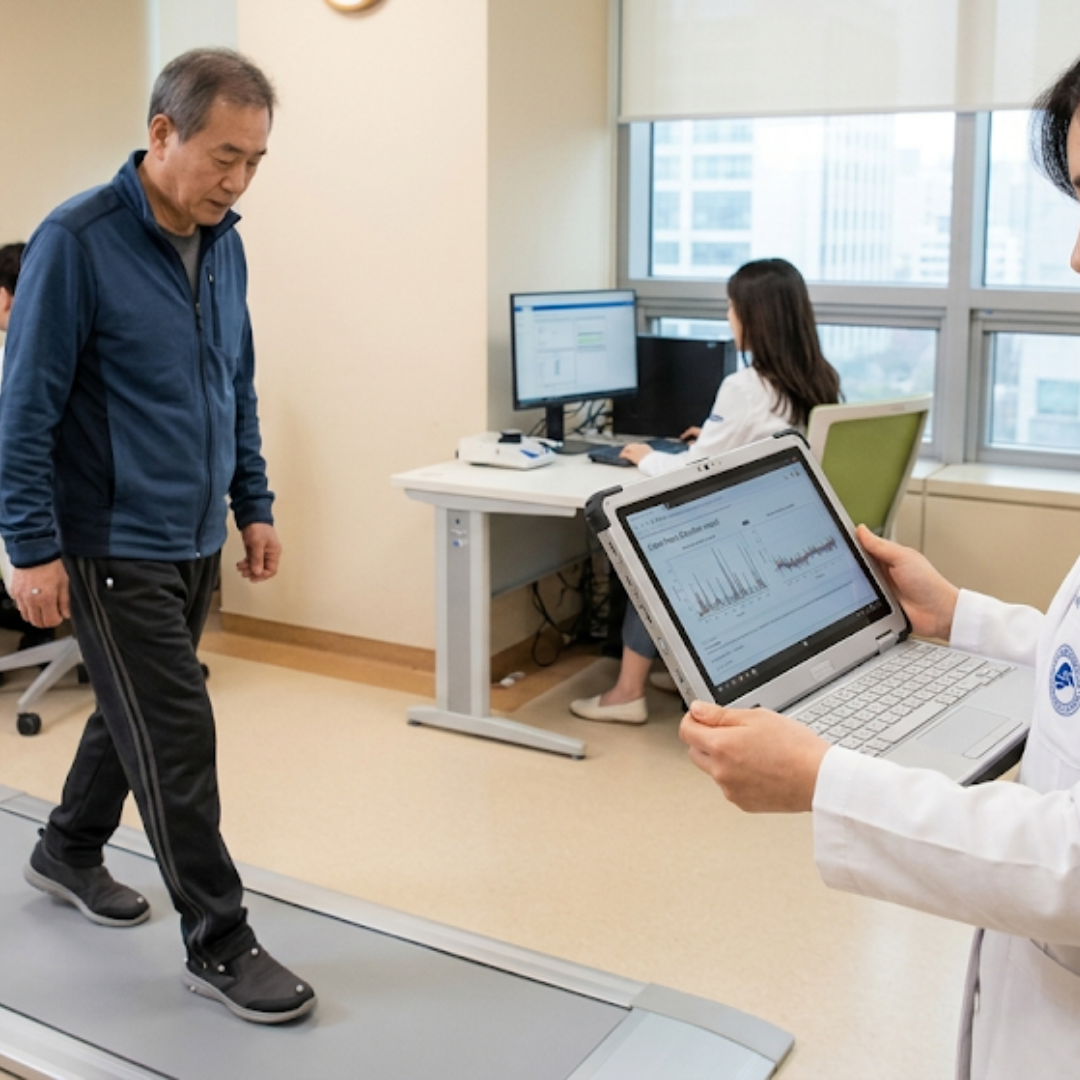
Samsung scientists developed an AI predictive model to identify high-risk fall groups in Parkinson’s
May 10, 2026
For someone living with Parkinson’s disease, a simple walk across the room can feel like navigating a minefield. As brain cells that control movement slowly weaken, symptoms like stiff muscles and shaky limbs become a daily struggle. Perhaps the most frightening statistic is that 60% of people with Parkinson’s will experience a fall, often leading to serious injuries that take away their independence.
Until now, doctors have had to rely on their own observations to guess who might be at high risk of falling. But a team of researchers from Samsung Medical Center has just changed the game. Led by Professor Jinyoung Youn and Dr. Hak-jae Yoo, they have developed a new Artificial Intelligence (AI) that can predict these falls with incredible accuracy.
The "Secret Sauce": The Extra-Trees Model
The team didn't just pick any AI. They tested seven different types of "machine learning" (the kind of tech that helps computers learn from patterns). The clear winner was something called the Extra-Trees Classifier.
Think of this AI as a highly specialized detective. It looks at a mountain of clinical data—things like medical history and symptoms—and pairs it with high-tech measurements of how a person actually walks. By picking out the most important "clues" from all that information, it can tell who is in danger of falling with 89% accuracy.
What is the AI Looking For?
The researchers found that three main things are the biggest "red flags" for a fall:
- Fear of Falling: Surprisingly, just feeling afraid of falling is one of the strongest predictors that a fall will actually happen.
- Gait Patterns: The AI looks at specific details of how a person walks, such as how long their steps are, how fast they move, and how well they can turn around in a full circle.
- Automatic Body Functions: Problems with things we don't think about—like blood pressure or digestion (called "autonomic" symptoms)—also play a big role in balance.
Why This Matters
This isn't just a cool computer program; it's a tool that could save lives. Because the AI is so accurate (with an 88% success rate in internal tests and 89% in external ones), doctors can use it to help almost any patient, anywhere.
By identifying high-risk patients early, doctors can start preventative treatments—like special balance exercises, physical therapy, or adjusting medications—before a fall ever happens. It’s a huge step toward making life with Parkinson’s safer and more predictable.
Comments (0)
Loading comments...