


Japan researchers develop drug to visualize Parkinson’s disease in living patients
June 17, 2024
 Beatrice Zatorska
Researchers in Japan have developed a novel imaging agent that can visualize how an abnormal protein accumulates in the brains of people living with Parkinson’s disease and Lewy body dementia.
The study, led by researchers at the National Institutes for Quantum Science and Technology (QST) and published Thursday in the journal Neuron, could help better our understanding of the diseases, for which there are currently no cures.
It has been known that a protein called alpha-synuclein builds up in the brains of people with Parkinson’s disease and Lewy body dementia, forming clumps called fibrils. But detecting these fibrils in living patients is difficult.
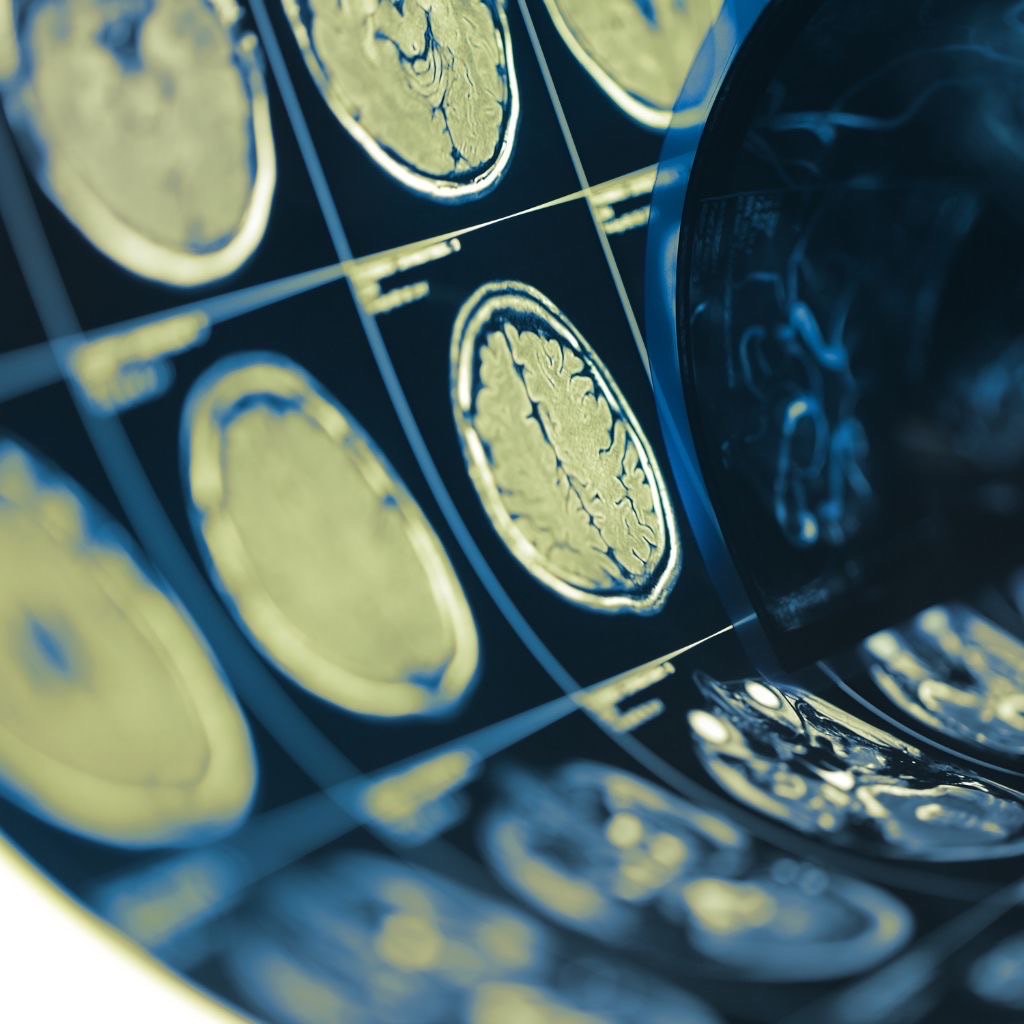
The researchers, including QST’s Hironobu Endo, developed a new drug called C05-05 that binds well to this protein. They injected the drug into eight healthy individuals, eight Parkinson’s disease patients and two patients with Lewy body dementia, and ran PET scans on them. The result showed that the alpha-synuclein protein was highly concentrated in the midbrain in the latter two groups.
In addition, the imaging technology showed that the more alpha-synuclein accumulated in the midbrain, the more severe the patients’ motor symptoms were. This means that the C05-05 could be used not only for diagnosis but also for monitoring the progression of the diseases.
“The PET visualization of abnormal alpha-synuclein concentrations in Parkinson's disease and dementia with Lewy bodies is a long-awaited technology,” commented Ryosuke Takahashi, a researcher who heads the government’s “moonshot” program involved in developing noninvasive biomarkers for dementia. The program has supported the QST team’s work. “Depending on how research develops, this may serve as a biomarker of pre-symptomatic-stage Lewy body dementia.”
Endo said that, for the technology to be used in the real world, the sensitivity of C05-05 needs to be improved further, so the buildup of the alpha-synuclein protein can be detected in earlier stages.
"Based on the insights gained this time, we are already testing an improved drug candidate in animal experiments, and a human clinical trial could possibly start within the next several years," Endo said.
He added that C05-05 can contribute to the development of treatments that target alpha-synuclein by allowing researchers to recruit patients who are confirmed to have the protein in their brain.
About 1 to 1.8 out of 1,000 people in Japan have Parkinson’s disease. But the likelihood of the disease emerging goes up to 1 in 100 among people age 65 or older. It causes unintended or uncontrollable movements, such as shaking, stiffness, and difficulty with balance and coordination, with symptoms normally worsening over time.
Many people with Lewy body dementia experience symptoms similar to Parkinson’s disease. Combined, the two diseases are estimated to affect about 1 million people in Japan, whose ranks are likely to swell with the rapid graying of the country’s population.
Comments (0)
Loading comments...