


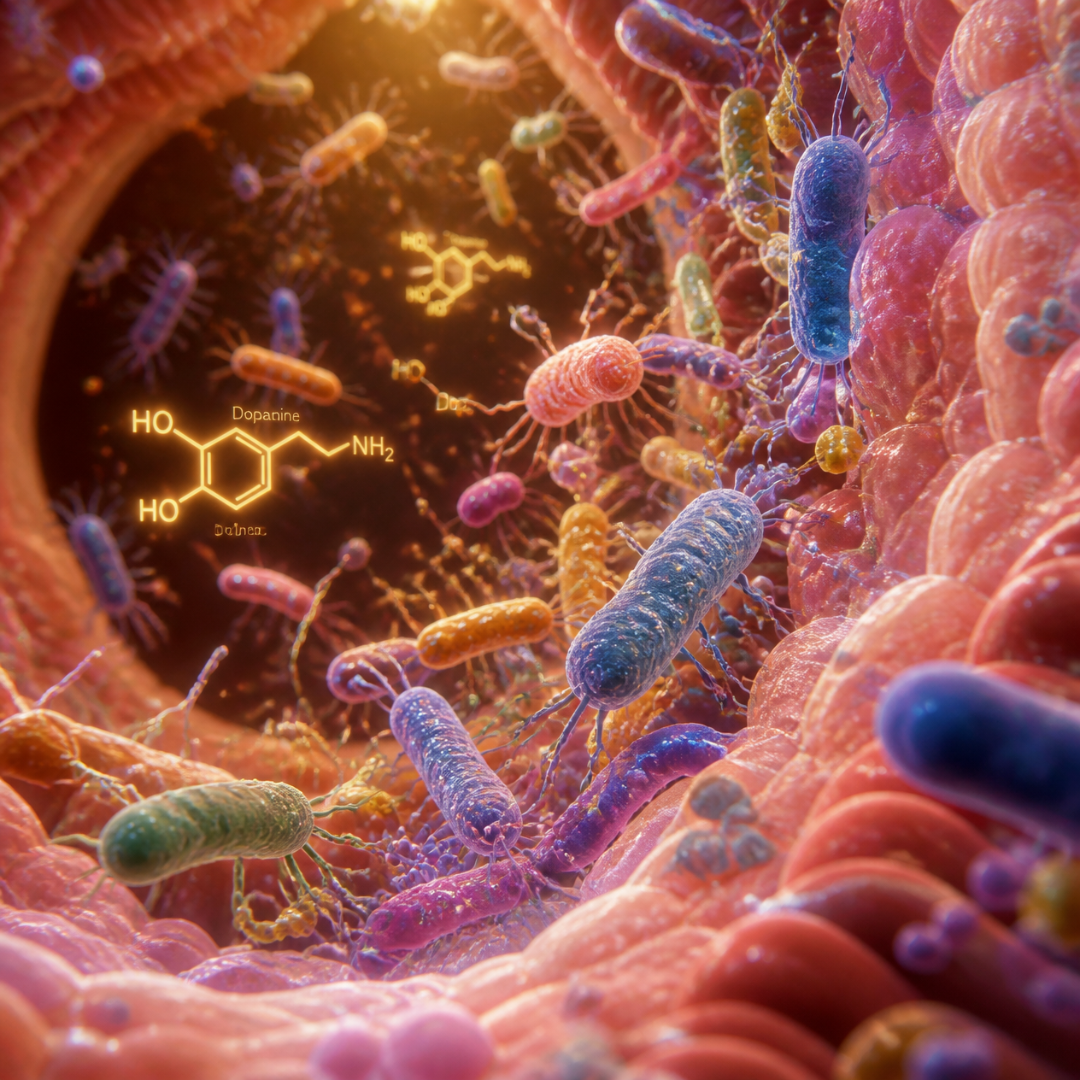
How gut bacteria eat levodopa and slow down digestion in Parkinson's
October 28, 2026
 Beatrice
In the brain, dopamine acts as a chemical spark that coordinates smooth movement. In the gut, it does the exact opposite. When dopamine attaches to specific D2 receptors on intestinal nerves, it acts as a brake, relaxing the gut walls and slowing down the muscle contractions that push food along. A review published in October 2026 by researchers in Italy and Singapore looked at how gut bacteria make their own dopamine inside the intestine, and whether this process links medication absorption issues to chronic constipation.
Two common gut bacteria, Enterococcus faecalis and Enterococcus faecium, carry an enzyme called tyrosine decarboxylase. This enzyme allows the microbes to grab levodopa inside the intestine and convert it into dopamine before the medication can enter the bloodstream. Standard helper drugs like carbidopa or benserazide stop the human body from breaking down levodopa too early, but they do not work on these bacterial enzymes.
When digestion is already slow, or if someone has small intestinal bacterial overgrowth, levodopa tablets sit in the gut for longer. The bacteria hijack a larger share of the dose, leaving less medicine to reach the brain and dumping extra dopamine directly into the intestine. Another microbe, Eggerthella lenta, can then turn that leftover dopamine into a chemical called m-tyramine, further altering the gut environment.
Because constipation often starts years before movement symptoms appear, the researchers proposed a new hypothesis. Even before someone starts taking Parkinson's medication, the gut contains trace amounts of natural levodopa made from dietary protein. If a person already has high numbers of these dopamine-making bacteria early on, the microbes might turn those natural food building blocks into extra gut dopamine. This extra dopamine could press the brakes on intestinal muscles and trigger constipation. Once the bowel slows down, bacteria have even more time to ferment and produce more dopamine, creating a self-feeding loop. Years later, when that person begins taking levodopa pills, the same bacterial colony is already primed to eat the medication and cause unpredictable treatment responses.
The authors stress that this early constipation loop is still an unproven theory with several scientific hurdles. Before medication starts, the natural amount of levodopa in the gut is tiny, and nobody knows if bacteria can produce enough dopamine from food alone to physically slow down a human bowel. It is also unclear if dopamine made inside the hollow tube of the intestine can actually cross the protective mucus lining to reach the nerve receptors buried in the gut wall. Furthermore, nerve damage in Parkinson's might simply slow the gut down first, creating a stagnant environment where these specific bacteria happen to multiply. Finding these bacterial genes in a stool sample does not automatically prove they are causing the blockage.
For daily life, the researchers are clear that people should not restrict protein to try to starve these gut bacteria. The body tightly rations how much dopamine it makes from food, and cutting back on protein will not fix bacterial activity and only risks malnutrition. Instead, a Mediterranean style diet rich in plant fibre, vegetables, legumes, fish, and extra virgin olive oil remains the best way to feed beneficial microbes that protect the gut lining and reduce inflammation.
For those already taking levodopa who experience delayed or inconsistent medication effects, practical steps make the biggest difference. Moving heavy protein meals to the evening stops dietary amino acids from competing with levodopa for absorption in the gut and brain. Testing for and treating stomach infections like Helicobacter pylori or bacterial overgrowth in the small intestine can also stop microbes from hijacking the dose. Finally, keeping up with vitamins B6, B12, and folate helps the body clear away homocysteine, a byproduct that builds up during long-term levodopa treatment.
Comments (0)
Loading comments...