


AI and Physics: The "Digital Wind Tunnel" Speeding Up Drug Discovery
December 15, 2025
For decades, finding a new drug for Parkinson’s has been a bit like trying to find a specific key in a dark room, while the lock itself keeps changing shape. But a new development reported this week suggests that Artificial Intelligence (AI) combined with physics-based computer modelling might finally be turning the lights on.
The excitement centres on a biotech company called Gain Therapeutics and their drug candidate, GT-02287, which is currently being tested in clinical trials. While the drug itself is promising, the story of how they found it is perhaps even more revolutionary for the future of research.
The "Shapeshifter" Problem
To understand why this is a breakthrough, we have to look at the target. The drug is designed to fix an enzyme called GCase (glucocerebrosidase). In many people with Parkinson’s—even those without a specific genetic mutation—this enzyme becomes misfolded and dysfunctional. When it breaks down, it leads to a toxic build-up of waste in the cells, including the notorious alpha-synuclein protein clumps.
Traditionally, finding a drug to fix a wobbly protein is incredibly difficult. You have to find a "pocket" on the protein's surface where a drug molecule can slot in and stabilise it. But proteins are not static statues; they are moving, breathing, shapeshifting structures. A pocket that exists for a millisecond might disappear the next.
The Solution: A Digital Wind Tunnel
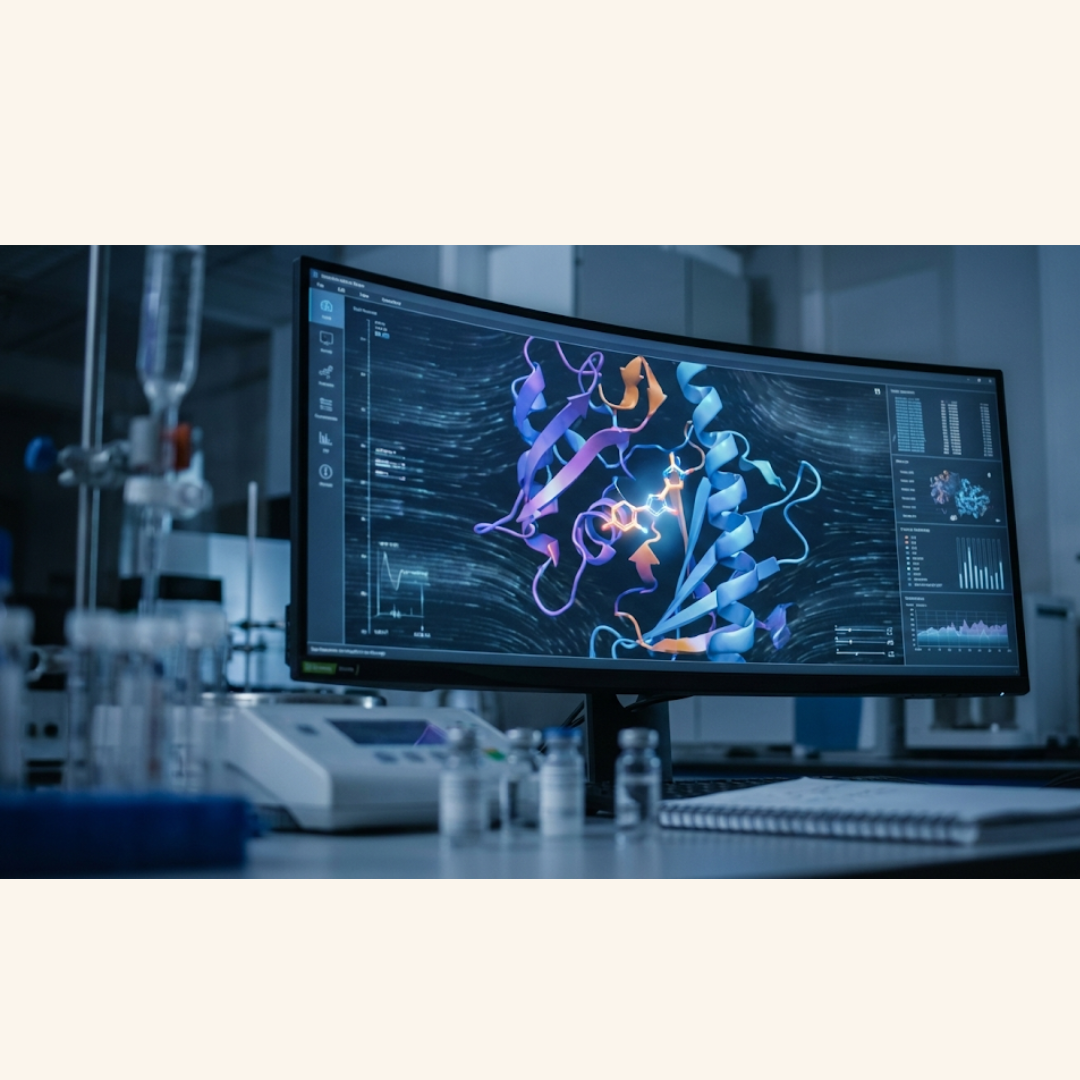
This is where the new technology comes in. Instead of just looking at a static snapshot of the protein, the researchers used a platform called Magellan™. This system combines AI (which can process vast amounts of data) with physics-based modelling (which understands the laws of nature, like how atoms push and pull against each other).
Think of it like designing a Formula 1 car. You don't just draw it on paper; you put it in a digital wind tunnel to see how the air flows over it. Similarly, this AI system simulated the GCase protein in motion, predicting how it moves and vibrates.
By doing this, it spotted a hidden "allosteric" binding site—a secret back door on the protein that only opens briefly. This was a target that traditional methods would have missed entirely because it simply isn't visible in a still image.
The Result: GT-02287
Having found this hidden pocket, the computer then screened millions of compounds to find one that would fit. The winner was GT-02287.
What makes this drug exciting is that it doesn't just jam the machine. By binding to this specific site, it acts like a splint, helping the GCase enzyme fold correctly so it can do its job. In preclinical tests, this restored the cell's waste-disposal system, cleared out the toxic alpha-synuclein clumps, and reduced inflammation. It essentially fixed the plumbing rather than just mopping up the floor.
Why This Matters
We are currently seeing this drug move through Phase 1 trials with encouraging safety results, but the bigger picture is the method itself. This "AI plus Physics" approach allows scientists to explore the "undruggable" universe—the 90% of proteins in our body that we previously couldn't target because we couldn't see how to grab hold of them.
It suggests that the next generation of Parkinson’s treatments might not come from a petri dish, but from a supercomputer simulation that can see what the human eye cannot.
Comments (0)
Loading comments...