


From Freeze to Ease: Review of Parkinson’s Medical Devices
July 23, 2025
Let’s be honest. The world of medical devices designed specifically for people with Parkinson’s is still embarrassingly small. And of the handful that do exist, many are either prohibitively expensive, still in development, or backed by limited evidence. What we do have, though, is a fascinating and fast-growing list of devices that weren’t even imaginable ten years ago. Most of them are one-offs—pioneering tools targeting a specific problem like gait freezing or hand tremor, often born from university labs or personal stories rather than giant tech corporations. There’s little variety, virtually no duplication, and few options that cater to different budgets or needs.
This guide covers what’s available now or coming soon. We’re focusing strictly on medical and assistive devices made for people with Parkinson’s and almost all are available over the counter—so no deep brain stimulation, no pumps, no ultrasound, and no general-purpose tools like Fitbits (those deserve their own article). This is about wearables and gadgets designed to tackle the real-life challenges of living with Parkinson’s. We’ve grouped them by symptom type so you can go straight to the tools that match your daily frustrations.
Gait Freezing and Walking
Gait freezing—those frustrating moments when your feet suddenly feel glued to the floor—is one of the most common and difficult-to-manage symptoms of Parkinson’s. A small number of devices are trying to help you keep moving.
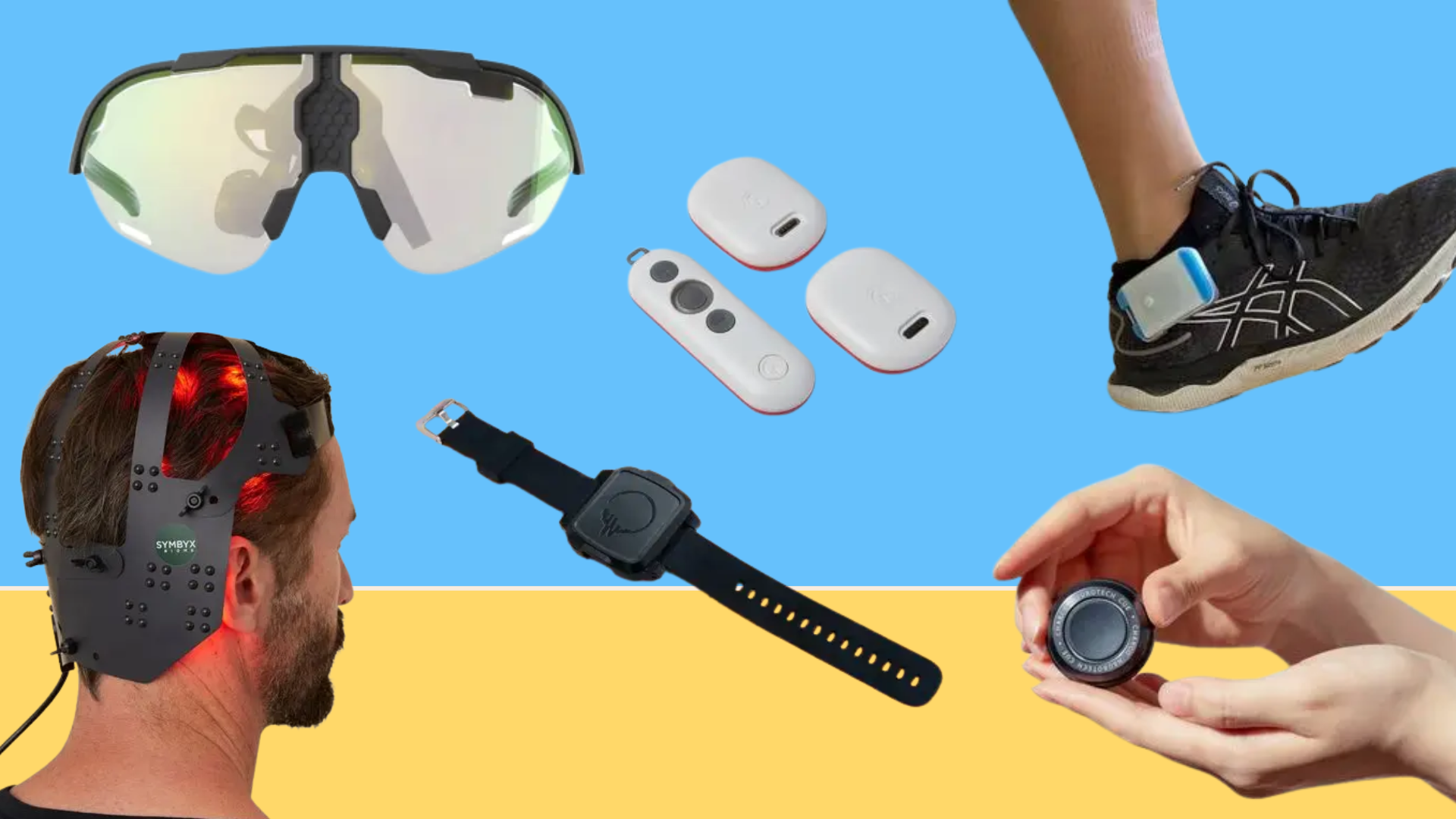
The CUE1+ from Charco Neurotech is a small disc that sticks to your chest using medical adhesive and emits a subtle rhythmic vibration. It’s based on cueing, a well-established method that helps some people with PD overcome slowness or freezing by using external stimuli. It costs around £795 (plus ongoing cost of adhesive to attach to the skin) and is CE-marked in the UK. The CUE1/CUE1+ has also been granted regulatory approval in Europe (CE marked and MHRA registered) and FDA approval for the device is pending.
GaitAid takes a different approach. This smart insole monitors how you walk in real-time and provides haptic feedback (gentle vibrations) or audio cues to keep you moving. The company is still in the development stage, but pilot testers say it’s especially helpful for those with unpredictable gait patterns or anxiety-triggered freezing. You won’t find it in shops yet, but pre-release versions are circulating in clinical trials.
WalkWithPath’s Path Finder is a pair of laser-projecting shoe attachments that create a visual cue line in front of each footstep. The idea is that stepping over a visible line helps trigger movement in the brain. It's simple, but for many people, surprisingly effective. The kit costs around £400–600 and is available online.
For something even simpler, the LaserCane from Attainability is a walking stick that projects a laser line on the floor ahead of you. This basic but brilliant idea helps with freezing by giving your brain a visual target to step toward. At roughly £160, it’s one of the more affordable PD-specific devices, though it looks more medical than sleek.
One of the more unusual devices tackling gait freezing is the Parkinson’s Walking Glasses developed in the Netherlands. These aren’t ordinary specs: instead of improving your vision, they use a built-in light projection system to cast two bright green laser lines onto the ground in front of you. These laser lines act as powerful visual cues that help trigger your brain to initiate or continue walking—especially useful during freezing episodes. The concept is based on well-established research into cueing, which shows that step targets or rhythmic visual prompts can help bypass the faulty motor planning signals in Parkinson’s. Unlike floor-based lasers or walking sticks, these glasses keep the cue constantly visible wherever you look, which means they’re especially useful in unfamiliar environments or while navigating tight spaces. The frame is lightweight, rechargeable, and adjustable, and while the current price is around €399, shipping is available internationally.
Another promising tool fighting freezing of gait comes from Virginia Commonwealth University. Their researchers have created tiny vibrating sensors embedded in a flexible glove and a 3D-printed shoe sole, designed to restore the disrupted brain–body feedback loop of so many people with Parkinson’s experience. These fingernail‑sized buzzers are triggered by pressure sensors: step down, and the sole pulses; grip something, and the glove reacts—all via Bluetooth. Early findings show users naturally adjust their movement, taking bigger steps or releasing their grip to keep things steady. Funded in part by the Michael J. Fox Foundation and backed by $434,000 in NIH grants, this tech is still in prototype stages—but its discreet design, easy wearability, and adaptability (potentially even for prosthetics) give hope for a practical, next-gen mobility aid.
Tremor and Fine Motor Control
Tremor can be a social, emotional, and practical nightmare. While medication often helps, it doesn’t work for everyone or every situation. A few devices are trying to lend a hand—literally.
The Nushu X, developed by Swiss company Magnes and spun out of ETH Zurich, is a smart shoe designed for gait analysis and cueing in Parkinson’s. These sneakers house sensors and AI that monitor over 40 walking parameters—think step length, balance, symmetry—and offer real-time vibrational feedback to help steady each step. Users also benefit from a companion app that tracks daily progress, shares data with their healthcare team, and turns each walk into useful insights. Available in Europe and recently cleared for use in the US, the Nushu X retails between approximately CHF 1,600–2,400 (about £1,300–2,000 / US $1,700–2,600), depending on the package level. Early user reviews highlight improvements in freezing of gait, though success can vary depending on individual gait issues.
For those who just want to eat without spilling soup down their shirt, the Gyenno Spoon is a tried-and-tested gyroscopic eating aid. It keeps the utensil level even if your hand is shaking. It’s FDA-cleared, rechargeable, and available as a set with a fork for around £250–300. This isn’t high-tech wizardry—it’s just smart design doing a very specific job well.
Another standout contender in the tremor-taming arena is the GyroGlove from GyroGear—a sleek, high-tech glove that looks like something out of a sci-fi film but is designed with a deeply practical purpose. It uses a precision-engineered gyroscope on the back of the hand to stabilise tremors in real time. When worn, the glove actively resists unwanted movement, helping to dampen the shaking that can make everyday tasks—like using a spoon, signing your name, or holding a cup—nearly impossible. What makes GyroGlove so compelling is that it offers immediate physical support without drugs, surgery, or complicated training. It's currently available for pre-order, with expected pricing in the ballpark of £4,000–£5,000, reflecting its cutting-edge engineering and custom-fit design. Early demonstrations and trials have shown remarkable improvements in hand control, and while it’s not yet widely accessible, it could be a lifeline for those whose tremor doesn’t respond well to medication.
PhysioBiometrics offers a smart insole that tracks gait and balance data in great detail. It’s more of a monitoring tool than a tremor-reduction device, but it gives therapists critical insights to guide personalised treatment. No confirmed retail price yet, but it’s aimed at clinical settings for now.
Also joining the fight against tremor is the VILIM ball, a clever handheld device developed in Lithuania and now CE‑marked for essential tremor—with expanding trials in Parkinson’s users. It looks like a techy stress-ball but hides smart sensors and AI-driven vibrations that detect your tremor patterns and deliver adaptive, personalised rhythmic pulses. Published studies show around a 60 % reduction in tremor amplitude during use, and patient surveys report relief lasting up to 90 minutes after a 10‑minute session. Priced at approximately €349 (about £300) with a money-back 30‑day guarantee, it’s compact, rechargeable, and portable. While still not prescribed in the UK, it’s already reaching real people with PD, giving them a practical, drug‑free option to steady their hands.
A particularly exciting entry still in development comes from a research team at the University of Wisconsin–Eau Claire, working in collaboration with the Mayo Clinic. They’ve created a soft robotic glove that uses sensors and flexible actuators to assist people with Parkinson’s in regaining fine motor control. Unlike bulky exoskeletons, this glove is lightweight and fabric-based—designed to detect tremors or stiffness and then subtly guide the hand’s movement in real time. Early prototypes have shown potential in improving handwriting and grip strength, two notoriously tricky challenges. With funding now secured from Mayo Clinic’s accelerator programme, the glove is inching closer to reality. Pricing hasn’t been announced yet, and it’s not available commercially, but the research team is actively refining it with Parkinson’s users in mind. If successful, this glove could become one of the most user-friendly solutions for fine motor symptoms yet.
Continuing in the realm of innovative neuromodulation, functional electrical stimulation (FES) is quietly blossoming as a potential therapy for Parkinson’s. Rather than targeting the brain, FES gently stimulates muscles directly—typically via electrodes placed on the skin—to improve control, strength, and coordination. Recent pilots at UCL and other UK centres have shown that FES can reduce hand tremors and stiffness, while also enhancing finger dexterity, grip strength, and even handwriting quality. Patients describe being able to button a shirt or hold a pen more steadily after just a few sessions. Though still in clinical trial stages and not yet standard NHS fare, FES has already begun appearing in neurorehabilitation clinics and pilot programmes—and early evidence suggests it could become a practical alternative (or complement) to drug- and device‑led approaches.
A particularly heartening newcomer is the Kinnections vibrotactile glove, born from Rice University student innovation and Stanford research. This affordable, wireless glove delivers gentle, randomized fingertip vibrations aimed at resynchronising misfiring motor circuits—a technique rooted in published studies. Users have reported improved walking stability, restored muscle tone, better sleep and even speech rhythm. Priced at just US $250, Kinnections offers it as an open-source, DIY-friendly kit or a ready-to-wear version. Though it isn’t FDA-approved or sold through hospitals, pre-orders are underway with shipment expected later this year. Thanks to its low cost and strong user feedback, it may become one of the most accessible tremor-support tools yet.
The SteadyScrib Pen Set is the first writing tool purpose-built for people with Parkinson’s. Developed by Northwestern University graduates, it features a heavy, magnetic pen and a steel-backed clipboard that work together to counter tremor and micrographia. The triangular, wide pen grip is designed for comfort and precision, allowing smoother, more controlled handwriting. Tested with over 110 users and backed by multiple pilot studies, it has earned praise from both users and occupational therapists. It's available directly from the SteadyScrib website and Amazon for US $85, making it an affordable, practical solution for everyday writing challenges.
Voice and Speech
If Parkinson’s has affected your speech volume or clarity, you’ll know how frustrating it is to repeat yourself all the time—or worse, to feel ignored. Only a few devices are tackling this issue directly.
SpeechVive is a behind-the-ear device that detects when you’re speaking and plays a short burst of background noise in your ear. This triggers something called the Lombard effect—a reflex that makes people speak louder in noisy environments. In short, it tricks your brain into boosting your voice. Clinical trials have shown real benefits, especially when paired with speech therapy. The device costs around £1,000–1,500 and must be fitted by a trained clinician.
The EMST150 Expiratory Muscle Strength Trainer is a handheld device designed to improve breathing, coughing, swallowing, and speech by exercising the expiratory muscles. Clinically validated in over 70 studies—and specifically shown to benefit people with Parkinson’s—it can significantly strengthen cough and swallow functions, reducing risks of choking and aspiration. It’s compact, portable, and drug-free, making it easy to use at home. Available directly from the manufacturer in the US for around US $54.99, it is also widely listed on Amazon and through healthcare distributors.
Fatigue, Mood and Cognitive Function
While most PD devices focus on physical symptoms, a few are aiming at the emotional and cognitive toll of Parkinson’s.
Another emerging option is the Symbyx PDCare laser light therapy, a wearable device delivering pulsed infrared and red light to the abdomen and back of the neck. By stimulating cellular repair processes—such as improving mitochondrial function, reducing inflammation, and supporting gut–brain communication—it aims to help manage symptoms like fatigue, mood swings, pain, and cognitive decline commonly experienced by people with Parkinson’s. The system is Australian-ARTG and CE-approved for Parkinson’s use, supported by small clinical trials showing improvements in mobility, balance, cognition, and gut health over both short and longer-term use. While not yet available through major retail channels, it can be purchased directly via Symbyx’s website and typically includes a 20-minute treatment protocol several times per week. Prices for these home-use devices typically range from US $1,500 to $2,000, including ongoing clinical support.
Another Australia’s WellRed Light Therapy offers a similar product line—wearable red-light panels that can be strapped to various body parts. These are marketed for general health benefits but have growing uptake among people with Parkinson’s. Their home-use systems range from AU$500–1,000 depending on size and configuration.
Another device gaining attention in the neurodegenerative space is the Vielight Neuro, a non-invasive light therapy system that delivers near-infrared (NIR) light to the brain via a headset and intranasal applicator. It’s based on the principle of photobiomodulation—using specific wavelengths of light to stimulate cellular function, particularly in the mitochondria. While Vielight is not specifically designed for Parkinson’s, it has been explored in small studies related to cognitive decline and Alzheimer’s disease, with early-stage research suggesting potential benefits for brain metabolism, focus, and attention. However, there is currently no strong clinical evidence supporting its use in Parkinson’s, and most results so far come from preliminary trials or user reports. The full system retails for around $1,700 to $2,000, placing it at the high end of consumer neurotechnology. More rigorous studies are needed before any firm conclusions can be drawn about its role in PD.
The BeechBand is a simple but thoughtful wristband designed to calm stress-related tremors—those that flare up in anxious or frustrating moments. It uses gentle counter-vibrations to interrupt the brain’s stress response and ease shakiness. Lightweight, rechargeable, and fuss-free, it doesn’t need an app—just strap it on and switch it on. At £49.50, it’s refreshingly affordable, especially in a field full of high-price tech.
This landscape is still developing. Most of these devices are early stage, expensive, or single-function. But the trend is clear: Parkinson’s tech is moving from theory to reality. What’s still missing is variety—options for different budgets, body types, and lifestyles. Right now, we have a few brilliant devices. What we need is a marketplace.
Until then, use what works for you, share your experiences, and demand better. You are the ultimate end-user—and your voice matters in shaping the next generation of Parkinson’s technology.
Comments (0)
Loading comments...