


Aspen Neuroscience completes dosing for latest groups in personalised cell therapy trial for Parkinson's
July 1, 2026
 Beatrice
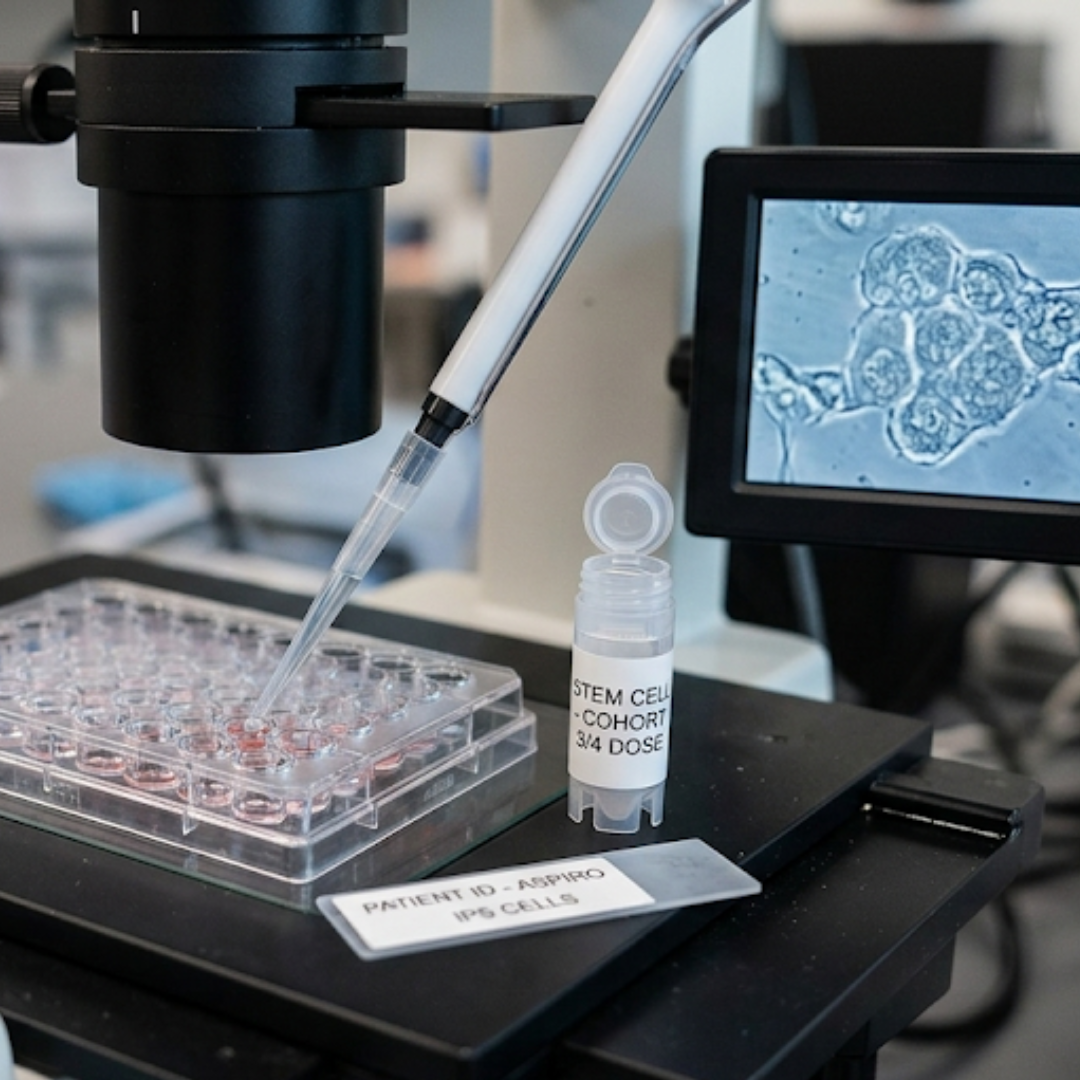
Biotech company Aspen Neuroscience has reached a significant milestone by finishing the dosing for the third and fourth participant groups in its early stage clinical trial of an experimental cell therapy called sasineprocel.
This brings the total number of people dosed in the ASPIRO study to fifteen. It marks one of the largest clinical trials to date using a person's own cells to treat Parkinson's. The trial is an open label study, which means both the researchers and the participants know exactly what treatment is being administered as they monitor its safety and potential effectiveness.
Sasineprocel works by attempting to replace the specific dopamine producing brain cells that are damaged over time. To achieve this, researchers take a small skin biopsy from the individual and reprogramme those cells into stem cells. These stem cells are essentially blank slates, which are then carefully developed into young nerve cells. These new cells are surgically delivered using precise medical imaging directly into the putamen, the specific brain region that requires dopamine signalling.
Because this approach uses the person's own cells rather than donor tissue, it completely avoids the need for strong immunosuppressive drugs that are usually required to stop the body from rejecting foreign material. The ultimate goal is to reconstruct the damaged brain circuitry and potentially slow or even stop the progression of the condition.
The latest stages of the trial introduced a major upgrade to the manufacturing process by utilising a commercial ready formulation. This version uses a cryopreserved thaw and inject system, meaning the cells are frozen and can be quickly thawed and administered the moment they arrive at the medical site. This upgrade drastically cuts down preparation time, increases surgical efficiency, and proves that the therapy can be manufactured reliably on a larger scale.
With the successful completion of these groups, the company is now focusing on the final preparations to launch a large scale Phase Three trial, which is the final testing phase required before a new treatment can be considered for widespread public use. The treatment has already been granted Fast Track designation by the American regulatory body, the Food and Drug Administration, which helps speed up the development and review process for promising new therapies aimed at serious conditions.
Comments (0)
Loading comments...