


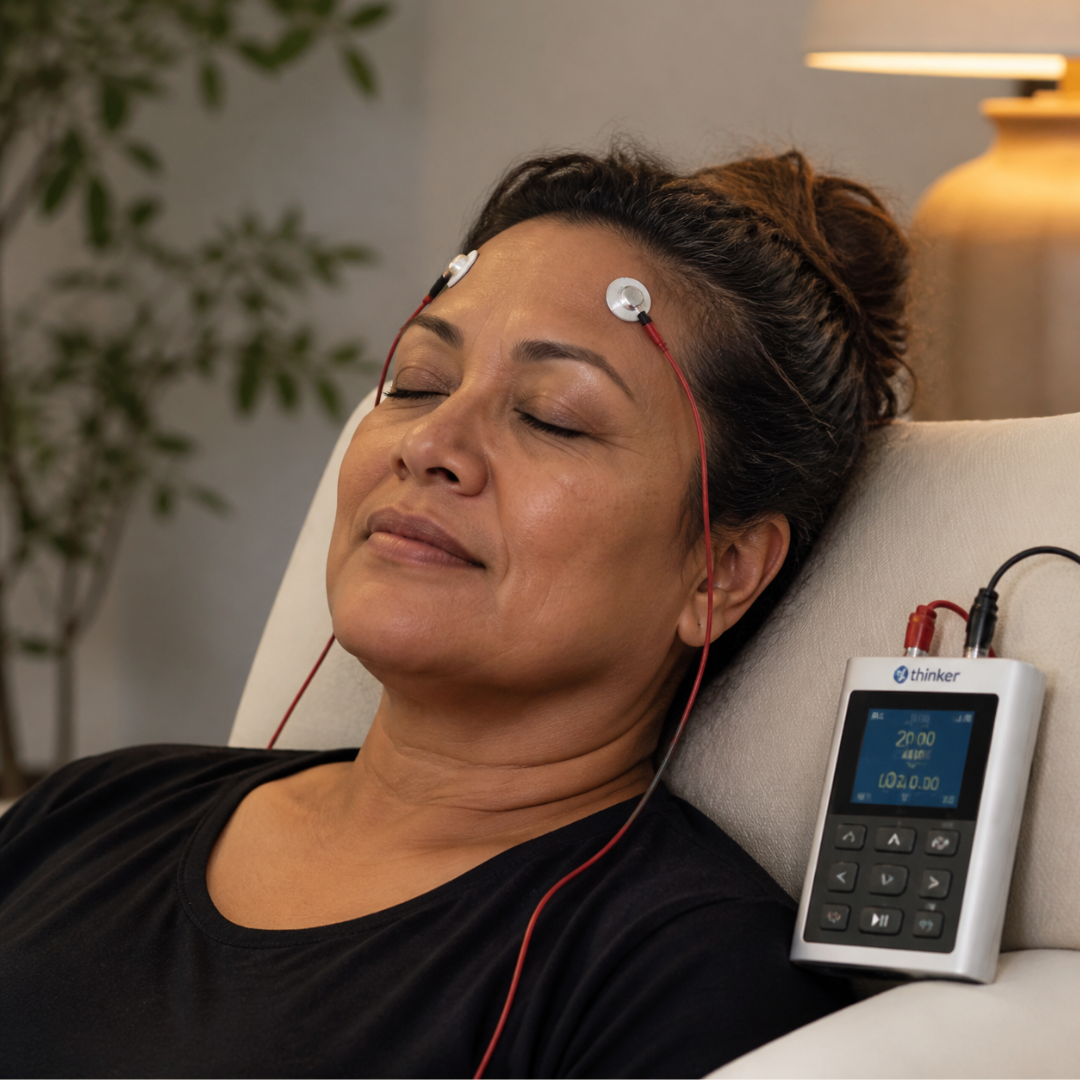
Study finds gentle electrical scalp stimulation does not yet reliably ease movement in Parkinson's
November 11, 2026
 Beatrice
A November 2026 review from German researchers at Carl von Ossietzky University shows that gentle electrical scalp stimulation does not yet consistently improve movement symptoms for people with Parkinson's. Scientists led by Thuy Tien Mai and Christoph Herrmann wanted to find out if an external electrical stimulation technique called tACS can genuinely help people move better. By examining ten clinical studies involving 184 participants, the team discovered that while the technology is very safe, there is not enough solid evidence yet to show it reliably eases movement symptoms.
To understand why scientists test this technology, it helps to view the brain as an orchestra. Smooth movement requires millions of brain cells to fire in a balanced rhythm. When dopamine cells are lost in Parkinson's, certain groups of brain cells get stuck playing the same beat too loudly, creating a traffic jam of movement signals that leads to slowness and stiffness. Deep brain stimulation tackles these rogue rhythms with surgically implanted wires, but surgery is not suitable for everyone. External electrical stimulation offers an alternative by placing small pads on the scalp to send tiny alternating currents through the head, nudging brain waves back into a healthy rhythm.
When the researchers combined data from seven trials involving 146 participants, active stimulation did not show a clear victory over a placebo. There was a tiny hint of improvement in overall movement scores, but it was too small to rule out random chance or daily fluctuations. Tremor results varied widely, and brain wave measurements showed zero difference between real and fake treatments. On the bright side, the intervention is exceptionally gentle, causing no serious adverse events and only minor, temporary side effects like mild skin tingling.
Why did a promising idea produce mixed results? The studies varied drastically in stimulation frequency, current intensity, and where the pads were placed, with sessions lasting anywhere from nine seconds to forty five minutes. Furthermore, one study that showed major movement gains combined the stimulation with physical exercise, making it impossible to isolate the headset alone. The researchers emphasise that these findings do not mean the technology has no future. Instead, they highlight the need for standardised protocols and personalised systems that read individual brain waves in real time, helping determine whether tailored electrical currents can genuinely help people with Parkinson's move more freely.
Comments (0)
Loading comments...