


Soft wearable tech is making vibration therapy comfortable for everyday use
September 21, 2026
 Beatrice
Engineers and clinicians at Virginia Commonwealth University have unveiled a wearable system designed to make vibration therapy genuinely comfortable, flexible, and practical for everyday living.
Vibration therapy has long shown promise for helping ease motor symptoms, improve balance, and counter freezing of gait. Yet in practice, the reality has rarely matched the promise. Most existing setups rely on rigid, heavy motors strapped onto limbs or built into clunky footwear. They are awkward to put on, drain power quickly, and can feel cumbersome after just a short while. As any designer of assistive tools quickly learns, the most sophisticated therapy in the world helps very little if wearing it feels like a daily chore.
To solve this, physicist Daeha Joung and his team decided to discard the usual bulky hardware entirely. Collaborating closely with clinical nursing researcher Ingrid Pretzer-Aboff, who has spent years testing vibration tools in real-world settings, the team reimagined the technology from the ground up using soft electronics.
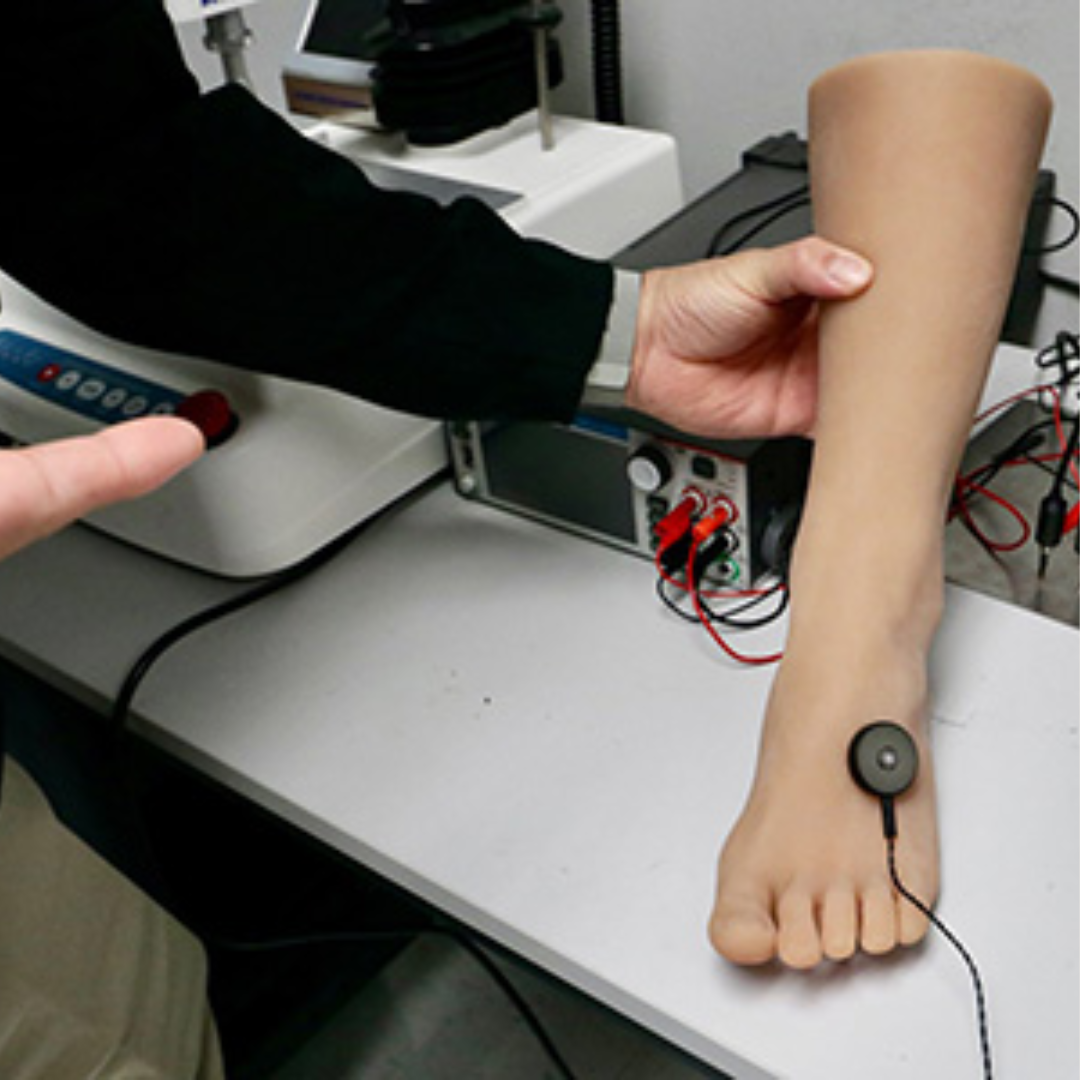
Instead of heavy metal vibrators, the new system uses miniature, flexible electromagnetic actuators known as tactors. Because they are lightweight and pliable, these tactors bend naturally with the curves of the body rather than pressing rigidly against bone and skin. When combined with ultra-thin, 3D-printed pressure sensors made from carbon nanotubes, the whole assembly feels more like a natural fabric extension than a piece of clinical machinery.
The magic lies in how the pieces communicate. Built into everyday items like shoe insoles and lightweight gloves, the sensors register subtle physical cues in real time. Take a step, and the pressure beneath your heel instantly signals small tactors on top of your foot to pulse with a gentle buzzing sensation, similar to a quiet mobile phone alert. This simple tactile cue acts as a bridge, giving the sensory nervous system an immediate reminder of where the foot is and encouraging steady, rhythmic movement.
Crucially, the engineers also tackled another long-standing hurdle in vibration science: finding the right dose. Just as each person responds differently to a medication, everyone's skin, muscle tone, and neural pathways respond differently to physical stimulation. What feels soothing to one person might feel ineffective or overpowering to someone else. Because conventional vibration devices could never measure what actually reached the skin, doctors had to guess the ideal intensity.
By integrating flexible sensors directly alongside the vibrators, the new platform tracks the exact frequency and amplitude being delivered to the body at any second. Linked via Bluetooth to a smartphone, the system lets users and clinicians adjust the vibration levels to suit individual comfort and therapeutic need.
By turning heavy, rigid contraptions into soft and subtle wearables, this new design aims to take vibration therapy out of clinic research rooms and weave it smoothly into daily life, offering reliable physical support with none of the usual awkwardness.
Photo: © Virginia Commonwealth University | https://www.vcu.edu
Comments (0)
Loading comments...