


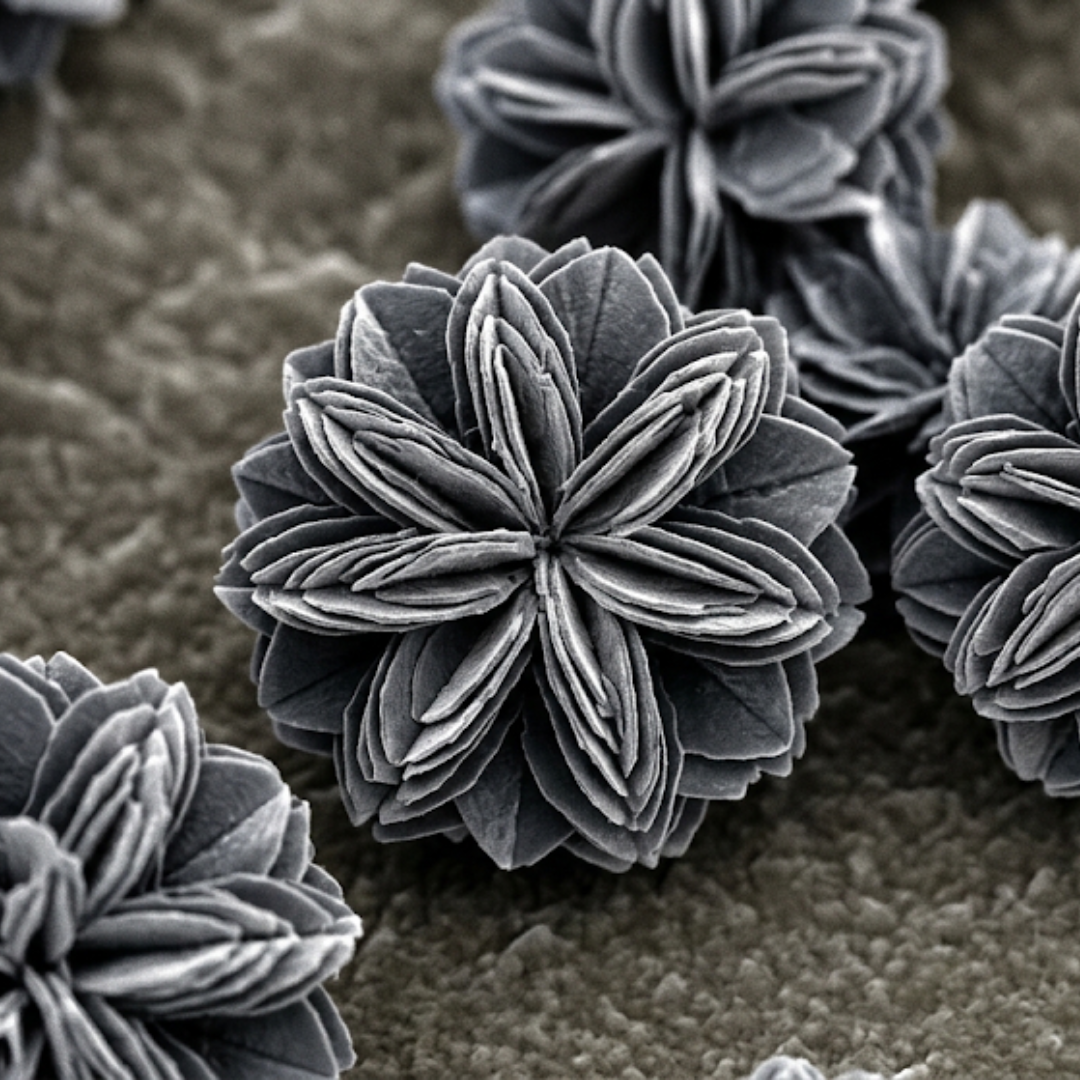
Scientists test microscopic flower shaped particles that clean up harmful proteins and boost energy inside brain cells
September 28, 2026
 Beatrice
Scientists have created microscopic particles that look like tiny flowers under a microscope to help protect brain cells from damage in Parkinson's.
Brain cells need huge amounts of energy to stay healthy and send signals. In Parkinson's, two related problems often happen at the same time. First, a normal brain protein called alpha synuclein starts sticking together into sticky, toxic clumps. Second, the tiny energy factories inside our cells, called mitochondria, begin to break down and run out of steam. This creates chemical waste that stresses the cell, making it harder and harder for neurons to survive.
To help the cells fight back, researchers built minuscule particles made of molybdenum, a mineral already present in small amounts in our bodies and food. When built in the laboratory, these particles form layers that look remarkably like petals on a flower.
This petal shape is not just decorative. It gives each particle a large surface that can mop up harmful cellular waste before it causes harm. At the same time, the particles help stop sticky proteins from bunching together and prompt the cells to rebuild their broken energy factories.
In the laboratory, adding these tiny particles to brain cells helped them produce more energy and cleared away dangerous chemical stress. The scientists then tested the treatment in microscopic worms that had been modified to develop the same sticky human protein clumps. The treated worms had fewer protein bundles, moved around more easily, and lived noticeably longer.
Because this study took place in dishes and simple organism models, there are several essential steps before this technology could ever reach people. The research team first needs to test the treatment in larger animal models to make sure it is completely safe over long periods. They also need to ensure these tiny particles can cross the natural blood filter that protects the brain, and work out the right dose to give. Only after extensive safety checks and regulatory approvals can early clinical trials in people begin, a journey that typically takes several years of careful laboratory work.
Comments (0)
Loading comments...