


The Gut’s Silent Sentinels: How Macrophages Drive Parkinson’s
March 19, 2026
For decades, the mystery of "body-first" Parkinson’s has centered on how a protein misfolding in the gut manages to travel all the way to the brain. New research published in Nature by teams at UCL and the UK Dementia Research Institute has finally identified the couriers: a specialised group of immune cells called muscularis macrophages (ME-Macs).
Rather than acting as simple bystanders, these cells appear to be the early initiators that kickstart the spread of the condition along the gut-brain axis.
The Dysfunctional First Responders
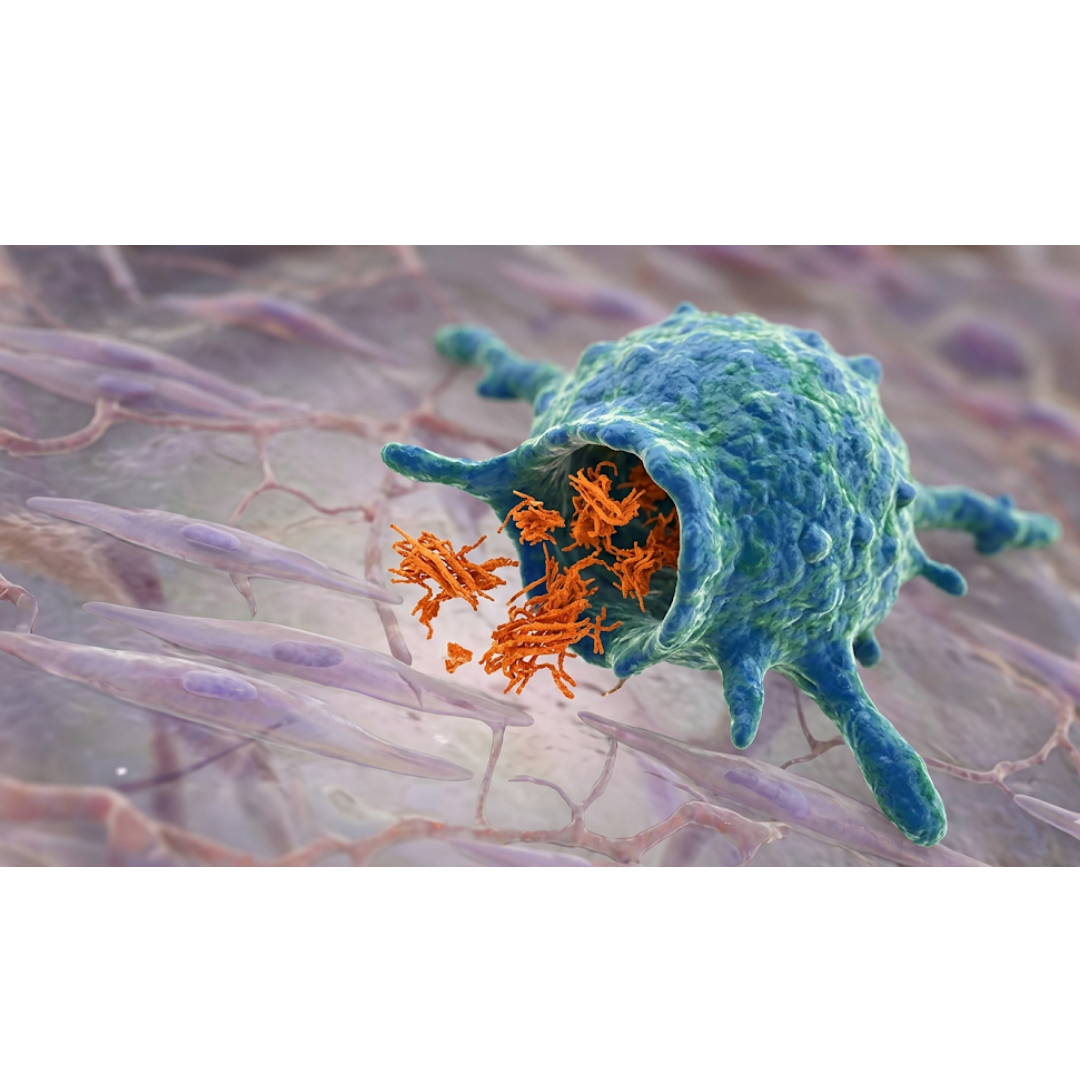
Macrophages are typically the "housekeepers" of the body, responsible for engulfing and destroying harmful invaders. However, in the case of Parkinson’s, these specific gut-resident macrophages—located in the muscular layer of the intestinal wall—seem to fail in their primary duty.
The study found that these ME-Macs engulf misfolded alpha-synuclein but are unable to break it down effectively. Instead of neutralising the threat, the macrophages develop "endolysosomal dysfunction"—essentially a clogged internal waste-disposal system. This failure transforms the cells from protectors into platforms for disease progression.
The T-Cell Relay
The most striking discovery is how these macrophages communicate the danger to the rest of the body. Once they have processed the toxic alpha-synuclein, they "present" it to T-cells, the elite soldiers of the adaptive immune system.
These "gut-instructed" T-cells then become primed to attack. They travel from the gut, through the lymphatic system and the dura mater (the brain's protective lining), and eventually enter the brain itself. Once there, they trigger the inflammatory cascade that leads to the death of dopamine-producing neurons. This relay explains why people with the condition often have T-cells that are highly reactive to alpha-synuclein long before their motor symptoms ever appear.
A New Window for Intervention
The researchers proved this causal link by depleting these gut macrophages in experimental models. The results were definitive: without the ME-Macs to prime the T-cells, the spread of alpha-synuclein was blocked, the brain remained protected, and motor dysfunction was significantly reduced.
This insight offers two major shifts in how we approach the condition:
Early Detection: Since these immune changes happen in the gut decades before tremors or stiffness begin, measuring the activity of these macrophages or the "primed" T-cells in the blood could lead to a diagnostic test for the very earliest stages of the condition.
Gut-Targeted Therapy: Instead of trying to fix the brain after the damage is done, we may be able to intervene in the gut. By boosting the "waste-disposal" function of these macrophages or preventing them from signalling to T-cells, we could potentially halt the "body-first" progression in its tracks.
This research reinforces the reality that the gut is not just a source of side effects like constipation; it is a primary battlefield. Outsmarting the condition requires us to support our internal "housekeepers" before their dysfunction becomes a gateway to the brain.
Comments (0)
Loading comments...