


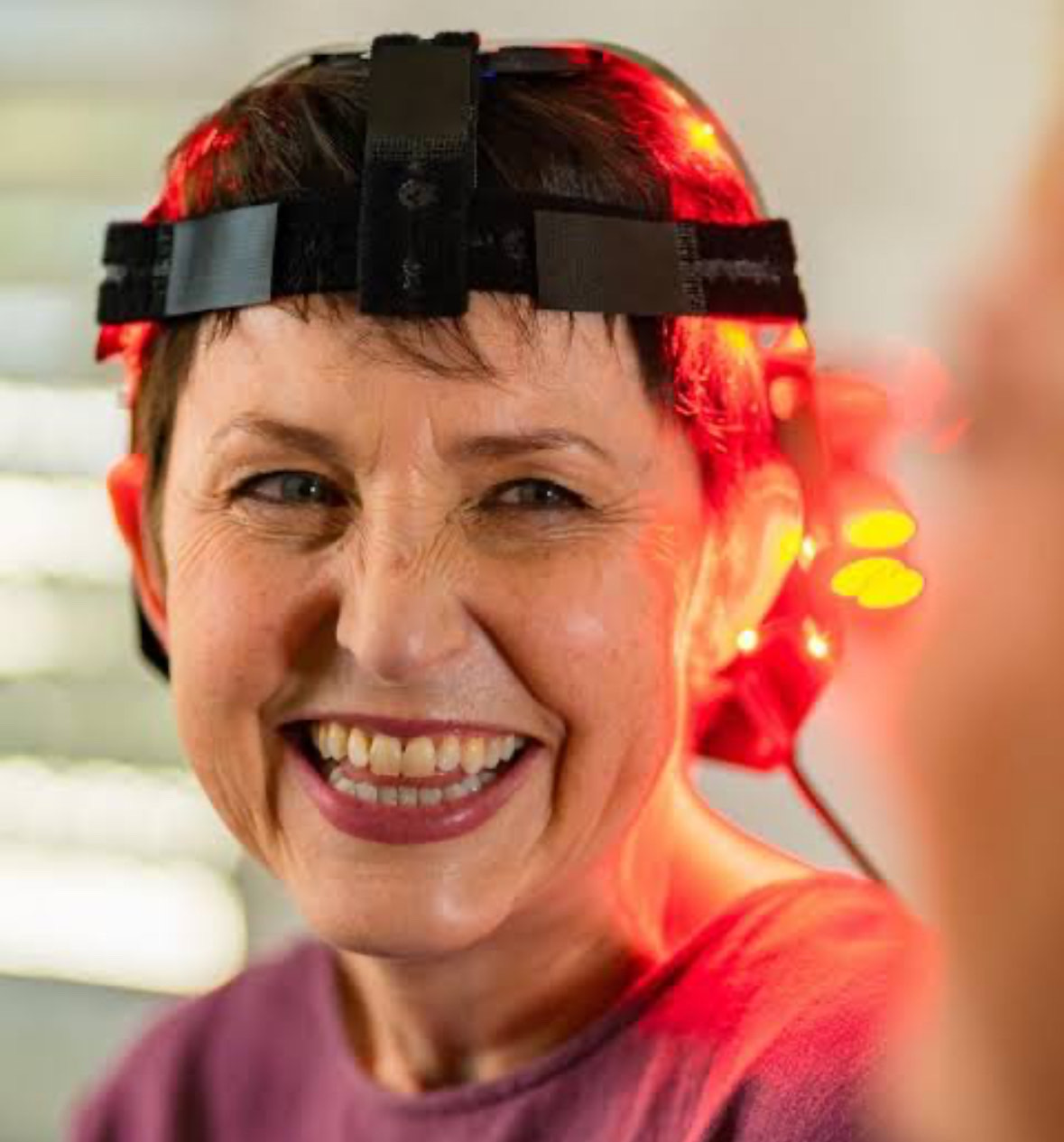
Effectiveness of Photobiomodulation to Treat Motor and Non-Motor Symptoms of Parkinson’s : Randomised Clinical Trial with Extended Treatment
October 24, 2025
 Michel
 Interesting study on the use of light therapy for Parkinson's, published in the Journal of Medical Medicine.
The devices used are:
- the SYMBYX PDCare 904 laser (intervention on the back of the neck and on the abdomen),
- the SYMBYX Neuro Helmet (red light helmet).
Abstract
Background/Objective: Few treatment options improve symptoms and the quality of life of Parkinson’s disease (PD); more treatment choices are needed. This study examined the effectiveness of photobiomodulation therapy (PBMt) combined with exercise to improve PD symptoms and quality of life.
Methods: Participants were randomised into Active (n = 32) or Sham (n = 31) PBMt groups. Stage 1 was an 8-week double-blind, randomised, placebo-controlled trial using either active or sham PBMt to the head, back of the neck and abdomen three times weekly at home, followed by a 4-week washout. Stage 2 was 8 weeks of active PBMt for all participants. In Stage 3, participants chose to continue active PBMt treatment (‘continuers’) or receive no PBMt treatment (‘non-continuers’) for up to 48 weeks. Participants continued vigorous exercise throughout the study. Participants were assessed on enrolment and after each stage. The primary outcome measure was timed up-and-go, with a range of secondary motor and non-motor outcomes, including UPDRS.
Results: There was no significant difference between the Active and Sham Groups after Stages 1 or 2, apart from minimal increase in MoCA score/cognition (Sham Group) in Stage 1. After Stage 3, continuers showed a significant improvement in the primary outcome measure compared to non-continuers. Anxiety and the motor experiences of daily living (MDS-UPDRS Part II) were also significantly improved, while other outcomes approached significance, including MDS-UPDRS Total score (p = 0.062).
Conclusions: As the largest study to date, results add increasing weight to previous clinical trials and highlight potential for at-home, scalable treatment as adjunctive therapy alongside medication and exercise.
Comments (0)
Loading comments...