


A wearable device aims to reduce Parkinson’s tremor
October 12, 2026
 Beatrice
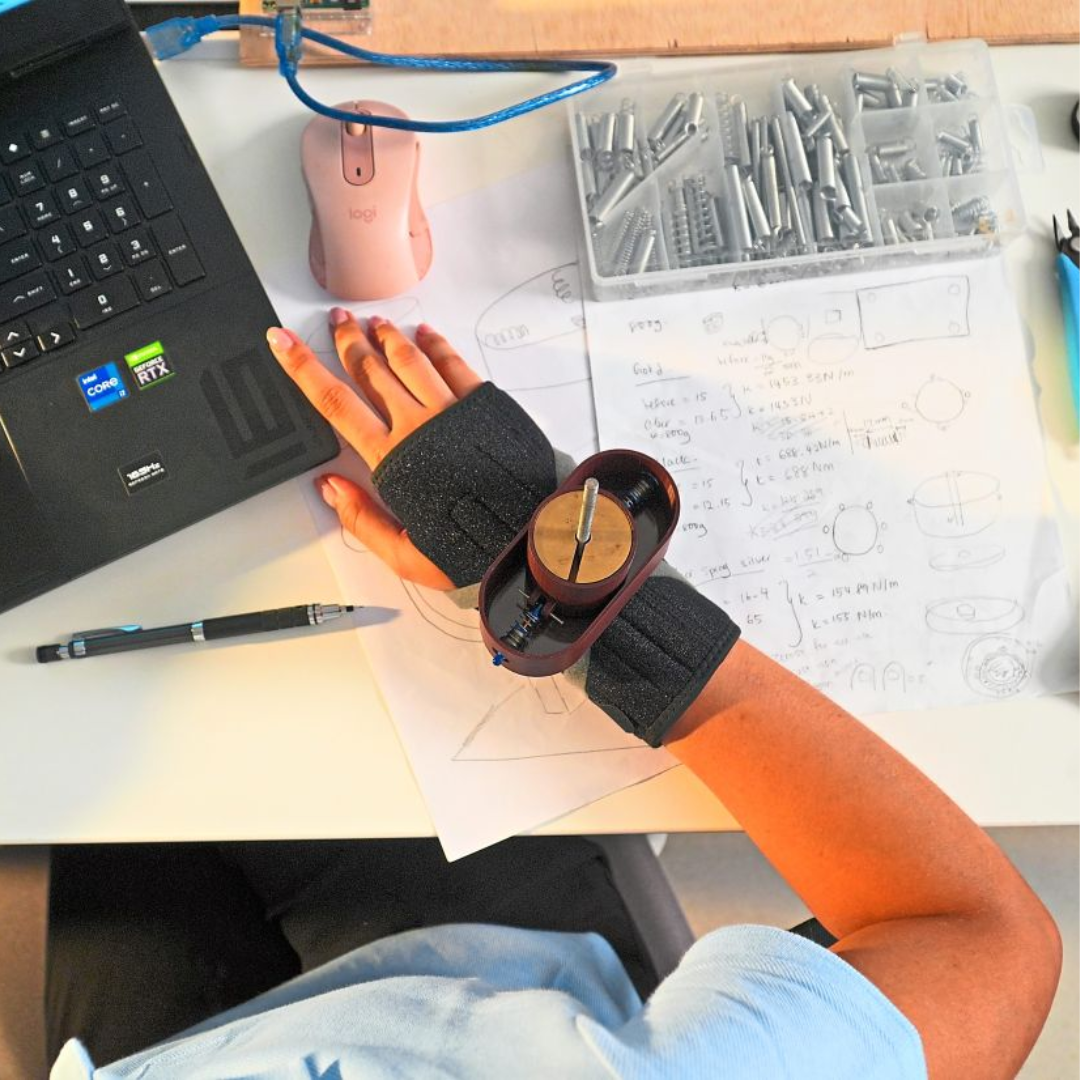
A Malaysian engineering student has developed a wearable device designed to reduce hand tremors using a simple mechanical system rather than batteries or electronic motors. Called ZeMor, the device was created by Hayley Nea Iaduray, a robotics and mechatronics engineering student at Monash University Malaysia, and won Malaysia’s 2026 James Dyson Award.
ZeMor is based on a principle used in tall buildings to reduce unwanted movement. Known as a tuned mass damper, the technology uses a moving weight to absorb some of the energy produced by shaking. In ZeMor, a small internal weight moves against springs and dampers to counteract some of the hand’s tremor. The mechanism is passive, meaning it does not require electrical power to operate.
The device can be adjusted by adding or removing small weights to match different tremor frequencies. Its prototype uses components such as steel ball bearings, springs and small dampers, housed in a 3D-printed casing. This approach could offer a simpler alternative to electronic devices that use powered mechanisms to stabilise the hand.
For people with Parkinson’s, hand tremor can interfere with activities such as eating, drinking and writing. A wearable device that reduces shaking could potentially make these tasks easier. However, ZeMor is still at an early stage of development, and its effectiveness in people with Parkinson’s has not yet been established.
So far, the device has been tested using a specially built rig that simulates tremor. The current design also addresses movement in only one direction, whereas tremors in real life can involve several directions. Further development will be needed to address this limitation.
The next step is to test ZeMor with people with Parkinson’s, working with medical professionals and research partners. These studies will need to establish how much it reduces tremor during everyday activities, whether it is comfortable to wear, and whether it interferes with purposeful hand movements.
ZeMor is not yet a clinically proven treatment or a device known to be available to patients. Its potential value lies in exploring whether a relatively simple, adjustable mechanical wearable could become another option for managing Parkinson’s tremor.
Comments (0)
Loading comments...