


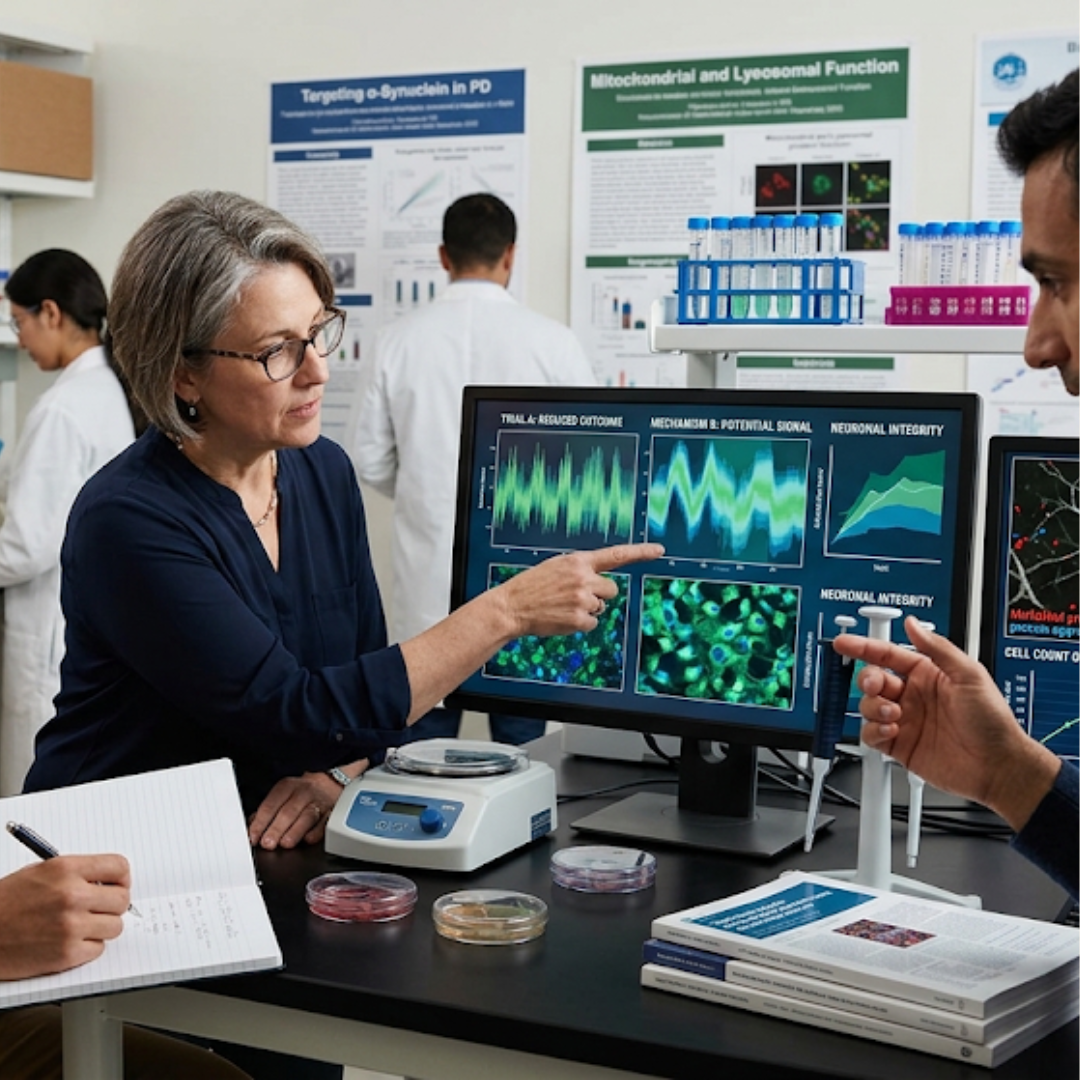
How failed clinical trials are guiding new treatments to slow Parkinson's
August 24, 2026
 Beatrice
For decades, treatments for Parkinson’s have successfully managed everyday movement challenges by topping up dopamine, the vital chemical messenger that brain cells use to talk to each other. However, these therapies act like pain relief for a headache. They soothe the symptoms without fixing the root cause beneath the surface. The ultimate prize in modern neuroscience is finding a therapy that actually slows down, halts, or reverses the loss of nerve cells.
Achieving this goal has proved remarkably tough. A recent scientific initiative published in Frontiers in Neuroscience looks closely at why a series of high-profile clinical trials have not delivered the clear slowing of cell loss that researchers hoped for. Instead of viewing these trial outcomes as complete dead ends, scientists are treating them as crucial roadmaps. By examining why specific experimental drugs did not succeed, the scientific community is uncovering vital clues about how nerve cells behave and fail.
Recent trials have tested several clever biological ideas. One approach used a drug named deferiprone to remove excess iron from the brain. Dopamine cells naturally accumulate iron, and too much iron can trigger a destructive, rust-like chemical reaction that damages cellular membranes. Another approach tested NLY01, a drug designed to calm overactive immune cells in the brain that trigger damaging inflammation. Other trials focused on clearing alpha-synuclein, a protein that misfolds and clumps together inside brain cells.
When these treatments reached clinical trials, they did not show the expected protection for brain cells. Scientists are now asking whether the laboratory models fully mirrored human biology, whether the drugs reached their cellular targets in high enough amounts, or whether treatments were given too late in the process. Nerve cells in Parkinson’s face multiple challenges at the same time, meaning that fixing just one issue might leave others running unchecked.
Inside a vulnerable brain cell, several systems work together. Mitochondria produce the energy required for cells to survive. Lysosomes act as recycling centres that break down worn-out parts and clear away unwanted protein clusters. Microglia patrol the area like security guards to keep tissue healthy. If mitochondria run out of power, the recycling systems stall. This allows toxic proteins to gather, iron to build up, and immune cells to trigger chronic inflammation.
Because of this interconnected web, researchers are refining their laboratory tools. They are now growing dopamine cells and mini brain tissue models in dishes using cells donated by people with Parkinson’s. This allows scientists to observe how genetic variations, such as changes in genes like GBA or LRRK2, alter cell behaviour before testing new compounds.
Scientists are also improving precision tests that track microscopic changes inside the living body. New tests can detect tiny seeds of misfolded proteins in spinal fluid, while sensitive blood tests can measure fragments released when nerve cells are injured. These biological markers help doctors confirm whether an experimental medicine is genuinely hitting its target and protecting brain cells.
The path forward relies on matching the right biological mechanism to the right person at the right moment. By turning past trial challenges into practical biological knowledge, researchers are building a much more accurate foundation to protect nerve cells and alter the progression of Parkinson’s for good.
Comments (0)
Loading comments...