


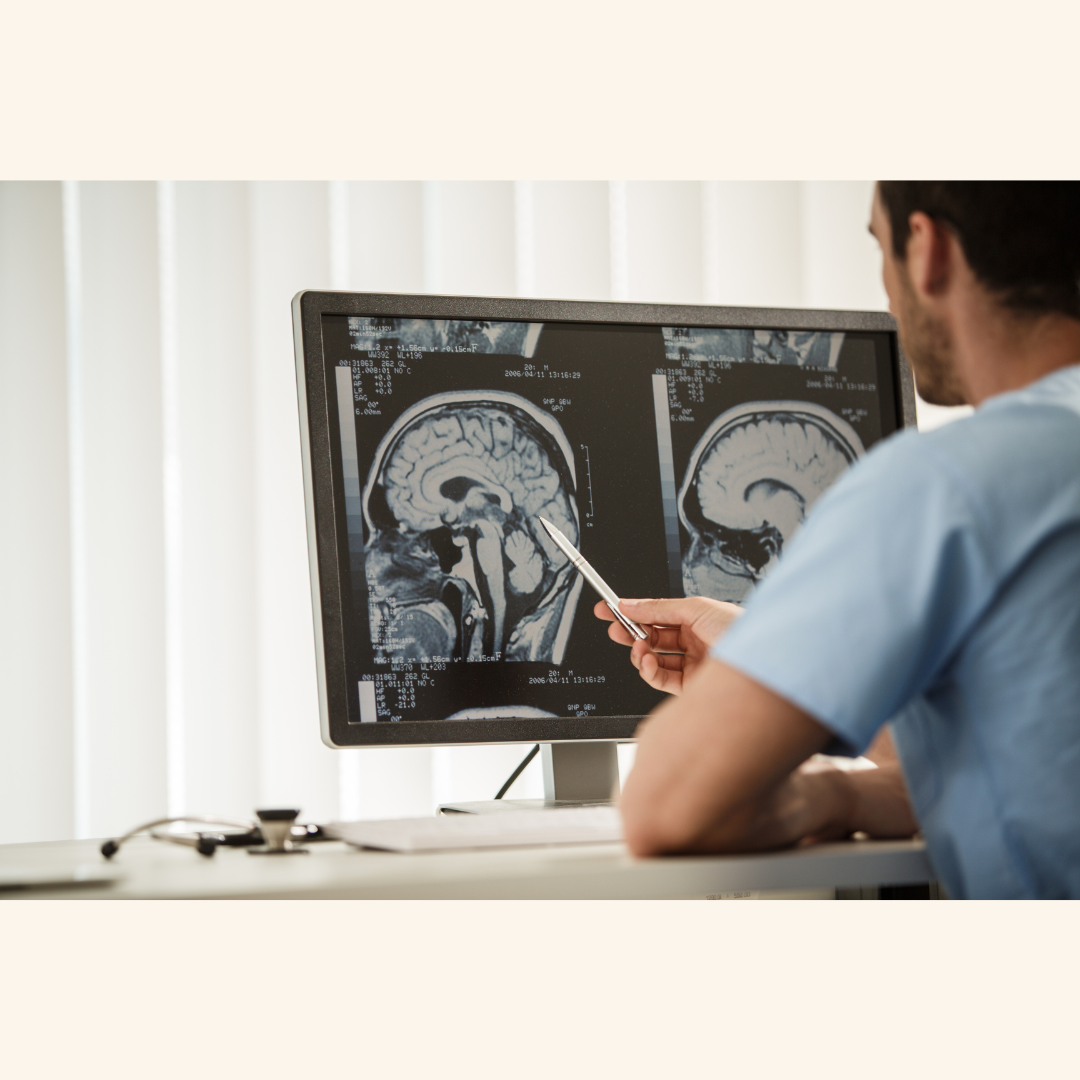
New Brain Scan Study Reveals Key Differences Between Types of Parkinson’s
August 24, 2025
A new study using advanced brain scans has found fresh evidence that Parkinson’s isn’t just one condition, but many. By looking closely at the brains of 92 people with Parkinson’s and comparing them to 39 healthy people, researchers discovered clear differences between the two main motor subtypes: tremor-dominant (TD) and postural instability and gait difficulty (PIGD).
The researchers used a new MRI technique called Synthetic MRI, which can measure both brain volume and myelin—the protective “insulation” around nerve fibres that helps signals travel smoothly.
What They Found
People with Parkinson’s showed more overall brain shrinkage and lower myelin levels compared to healthy participants. But when the two Parkinson’s subtypes were compared, important differences stood out:
The PIGD subtype showed more widespread brain changes and unusually higher myelin levels in both sides of the caudate nucleus, a region that helps control movement.
The TD subtype showed uneven changes in another area called the thalamus, with some parts gaining myelin and others losing it.
Myelin levels in the left caudate and right globus pallidus interna were also very different between the two groups.
Why This Matters
This research is another step towards personalised medicine for Parkinson’s. For years, the condition has been treated as if everyone experiences it in the same way. But we now know that’s not true. Some people struggle mainly with tremor, while others face bigger problems with balance and walking. These brain differences help explain why.
In the future, insights like these could lead to treatments tailored to each person’s specific Parkinson’s subtype, instead of a one-size-fits-all approach.
A Sign of Progress
This study highlights the growing recognition that Parkinson’s is not a single disease but a collection of different conditions that share some symptoms. The more we learn about these differences, the closer we get to truly personalised care.
Comments (0)
Loading comments...