


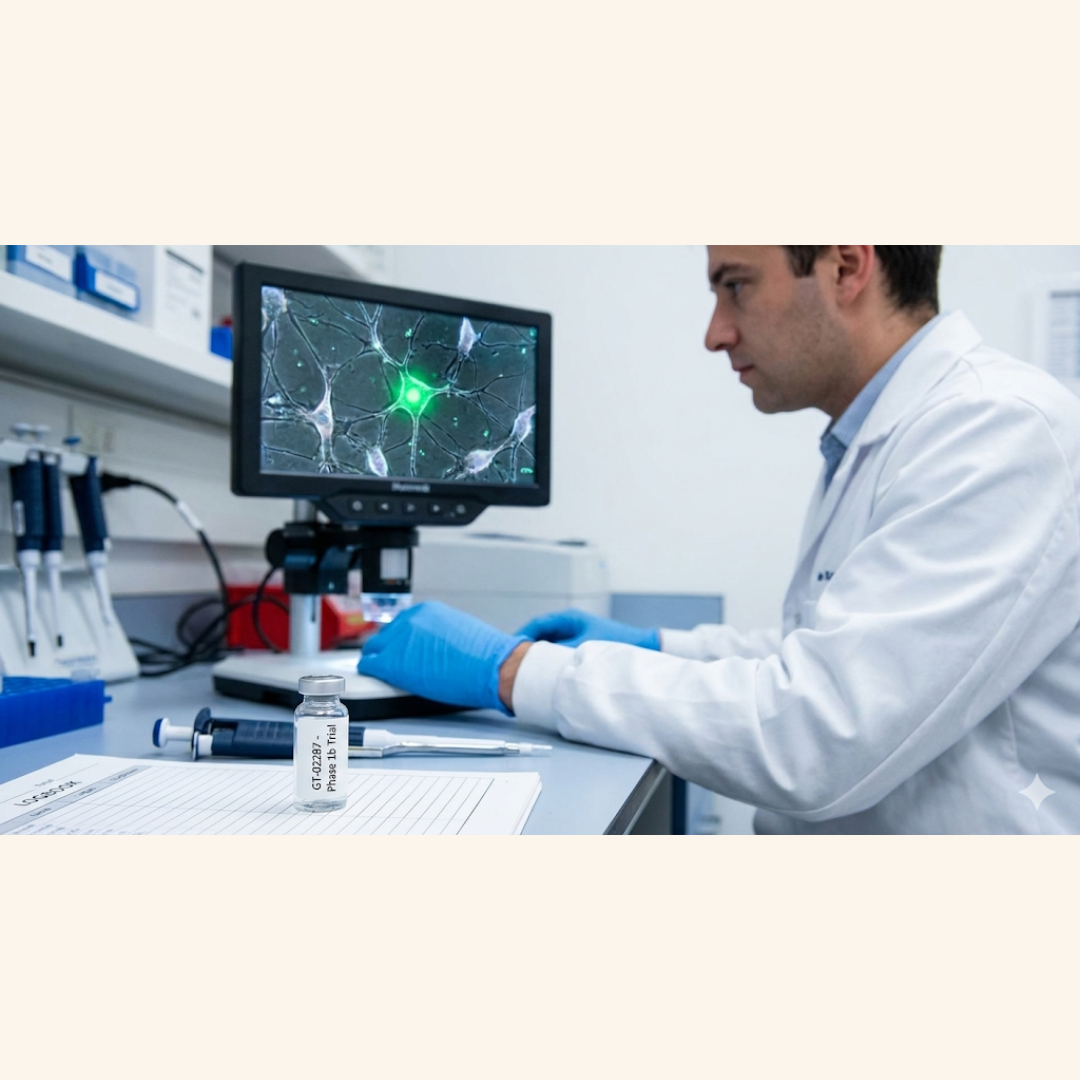
Gain Therapeutics' Drug GT-02287 Reduces Toxic Biomarkers by 81% in Phase 1b Parkinson's Trial
January 14, 2026
There is encouraging news this week from the world of clinical trials, particularly for those interested in treatments that go beyond simply masking symptoms. Gain Therapeutics has released early data from a Phase 1b trial of their investigational drug, GT-02287, and the results suggest we might be inching closer to a therapy that tackles the biological roots of Parkinson's.
To understand why this is significant, we first need to look at what is happening inside the brain cells. You can think of your cells as having their own internal waste disposal service, driven by an enzyme called GCase. Its job is to break down fatty substances and keep the cell clean. In many people with Parkinson’s—especially those with a specific genetic variation known as GBA1, but also in the wider community—this waste disposal system malfunctions. The enzyme becomes misshapen and stops working, causing toxic waste to pile up. This buildup clogs the cell and is believed to drive the damage we see in the condition.
This is where the new drug, GT-02287, steps in. It is designed to act like a mechanic for that specific enzyme. It finds the misshapen GCase enzyme, physically helps it regain the correct shape, and gets the waste disposal system running again.
The recent trial tested this theory in 21 people with Parkinson’s over a period of three months. The headline result was a dramatic improvement in what scientists call "biomarkers." In participants who started with high levels of a specific fatty waste product in their spinal fluid, the drug reduced those levels by an average of 81 per cent. This is a crucial piece of evidence because it proves the drug is not only getting into the brain but is actively unclogging the system exactly as intended.
Even more promising were the clinical observations. While this small trial was primarily designed to check for safety rather than effectiveness, the participants actually showed improvements in their movement and daily living abilities. Rather than their symptoms worsening over the three months, many saw their scores on standard medical charts improve.
It is important to remember that these are early days. The trial was small and short, but seeing such a clear biological effect in humans is a major milestone. It moves the drug from a hopeful theory to a proven biological mechanism. The company is now preparing for a larger Phase 2 study later this year, which will give us a clearer picture of how this "waste disposal" fix translates into long-term benefits for daily life. For now, it stands as a strong beacon of hope that we are moving towards treatments that repair the brain, rather than just patching it up.
Comments (0)
Loading comments...