


A New Direction for Parkinson’s Treatment: Focused Ultrasound Tractotomy
November 14, 2025
A recent study in The Lancet Neurology looks at an emerging treatment for Parkinson’s disease that could offer real hope to people whose symptoms are difficult to manage. The treatment is called MR guided focused ultrasound tractotomy. Although the name sounds technical, the idea behind it is quite simple. It aims to ease movement symptoms without the need for traditional brain surgery.
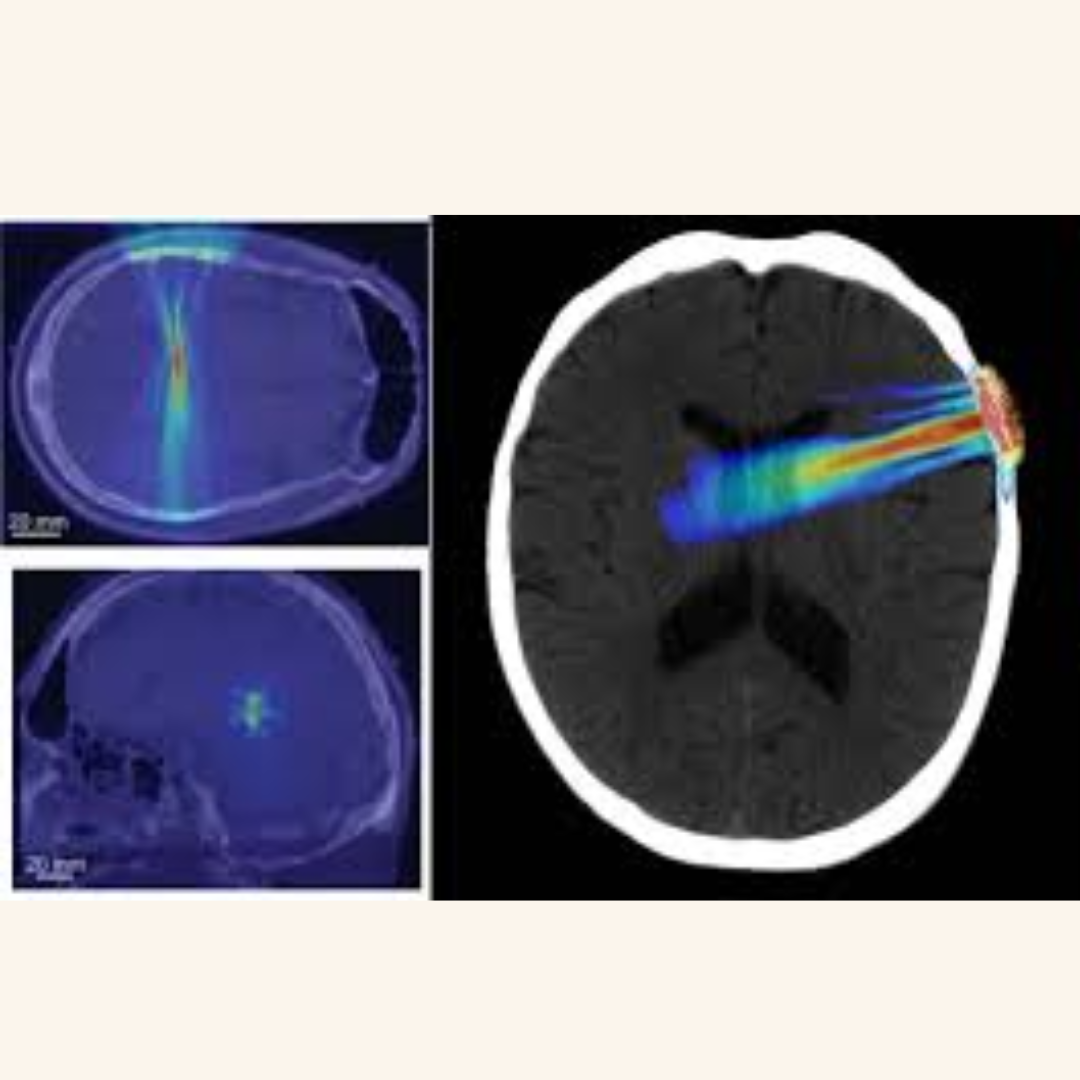
This approach uses powerful sound waves that pass through the skull and reach a deep structure in the brain connected to movement. The area the treatment focuses on is called the pallidothalamic tract. This is a pathway that helps control movement. By aiming ultrasound energy at this pathway, doctors create a very small controlled break in the tissue. The goal is to reduce tremor, stiffness and uncontrolled movements.
The most important point is that this is done without any cutting. The patient lies in an MRI scanner while the ultrasound is directed with great accuracy. Many people find this idea less daunting than an operation that involves opening the skull or placing implants.
The study reports that many people treated in this way show a clear improvement in their movement. Some have less tremor, less stiffness and fewer unwanted movements. In several cases, people were able to reduce their Parkinson’s medication after treatment. The results are encouraging and suggest that focused ultrasound could become an important option for those who cannot get enough relief from tablets alone.
There are risks, as with any medical treatment. Some people experienced problems with balance, speech or tiredness after the procedure. In many cases these issues settled with time, but not always. Treating both sides of the brain may increase the chance of side effects, so researchers are being cautious and are studying this stage very carefully.
The wider picture is also interesting. In the United States this treatment has already been approved for clinical use. People can receive the treatment on one side of the brain and, when suitable, return later for treatment on the other side. In Europe the treatment is already available in a number of centres, although it is not yet widely offered. Access depends on specialist teams, the right equipment and careful patient selection.
For people living with Parkinson’s, this is a promising development. It may offer a meaningful reduction in symptoms without the commitment of implanted devices or open surgery. It is not a cure and it will not stop the condition progressing, but it may make daily life easier for carefully chosen patients.
The study also reminds us that research in this area is moving fast. New trials, larger groups of patients and longer follow up periods will help doctors understand who will benefit most and how safe the treatment remains over many years.
Overall, focused ultrasound tractotomy represents an exciting step forward. It is still developing, but the progress so far shows how rapidly Parkinson’s treatment is evolving and how new options may become available for people who need them most.
Comments (0)
Loading comments...