


Targeted ultrasound to the motor cortex reduces abnormal brain rhythms and improves movement in Parkinson's
May 21, 2026
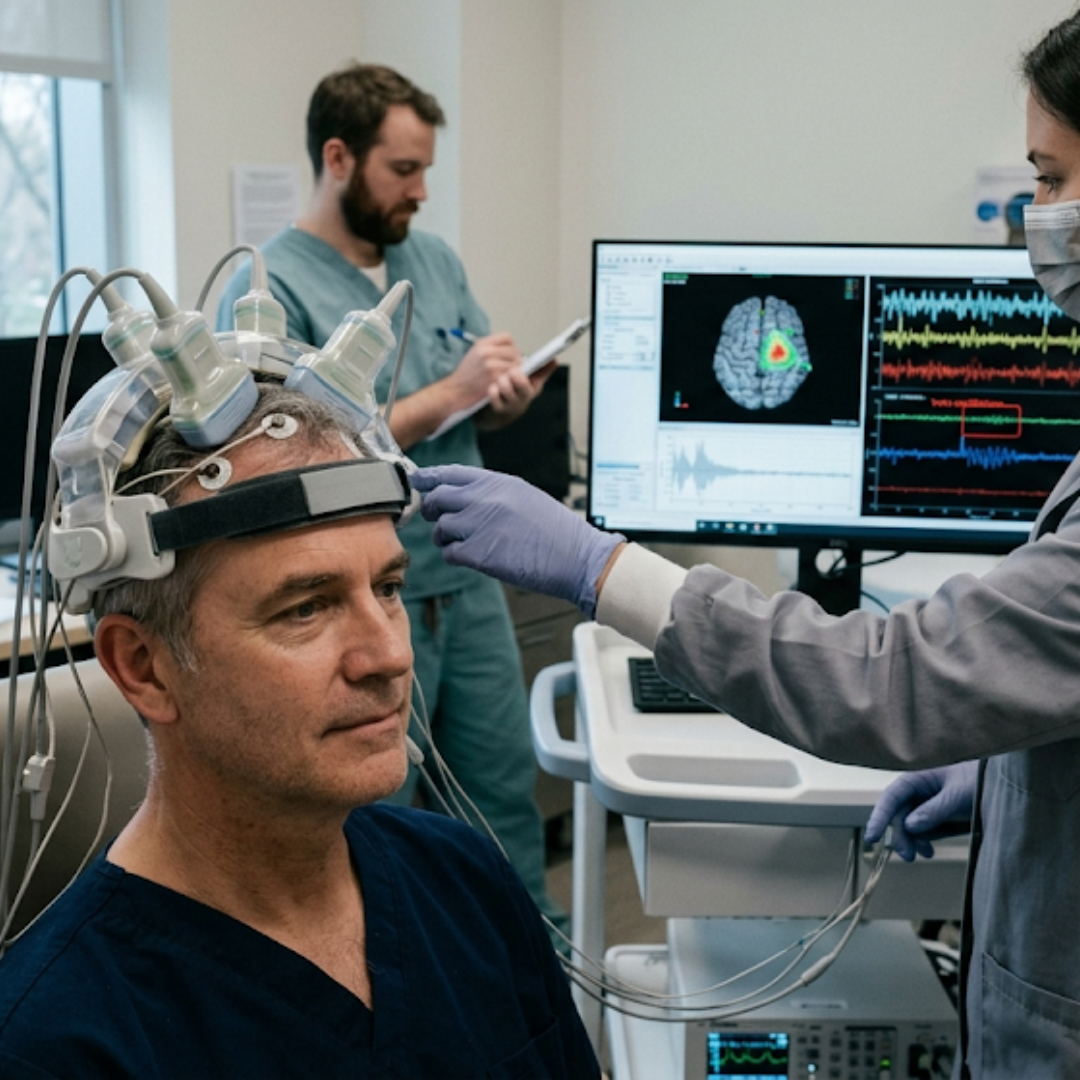
Researchers in Canada and Sweden have successfully used targeted sound waves to alter the internal electrical rhythms of the brain, improving movement control without major surgery. This clinical study focused on a non-invasive technique called transcranial ultrasound stimulation, which directs low-intensity sound waves deep into the brain with high precision. By combining this technology with real-time brain imaging and computerised acoustic modeling, the team safely altered the chaotic brain signals responsible for movement difficulties.
To observe exactly what happens inside the brain during the procedure, the researchers studied seventeen individuals who already had electrodes implanted in a deep structure called the subthalamic nucleus for deep brain stimulation therapy. This setup allowed the team to record live electrical activity, known as local field potentials, while the ultrasound was being applied.
The study revealed that the effects of the ultrasound waves depend entirely on which part of the brain network is targeted. When the sound waves were focused on the primary motor cortex, an area on the outer surface of the brain that controls movement, they significantly reduced abnormal, high-frequency electrical patterns called beta oscillations. This reduction in beta activity directly correlated with a noticeable improvement in physical motor signs. Interestingly, this beneficial effect changed depending on whether the person was resting or moving, showing that the technology adapts to the state of the brain.
Conversely, when the ultrasound was aimed at a deeper structure called the globus pallidus internus, it actually increased these beta rhythms and did not ease motor signs. Focusing the ultrasound on a control area at the back of the head produced no effect at all. By proving that sound waves can safely, selectively, and non-invasively tune the pathological rhythms of the brain, this research marks a significant step forward toward personalized, non-invasive acoustic therapies.
Comments (0)
Loading comments...