


Help us fundraise for Swansea University postgraduate Euan Piercy as he builds a smart walking stick to help people with Parkinson's overcome freezing of gait
July 15, 2026
 Beatrice
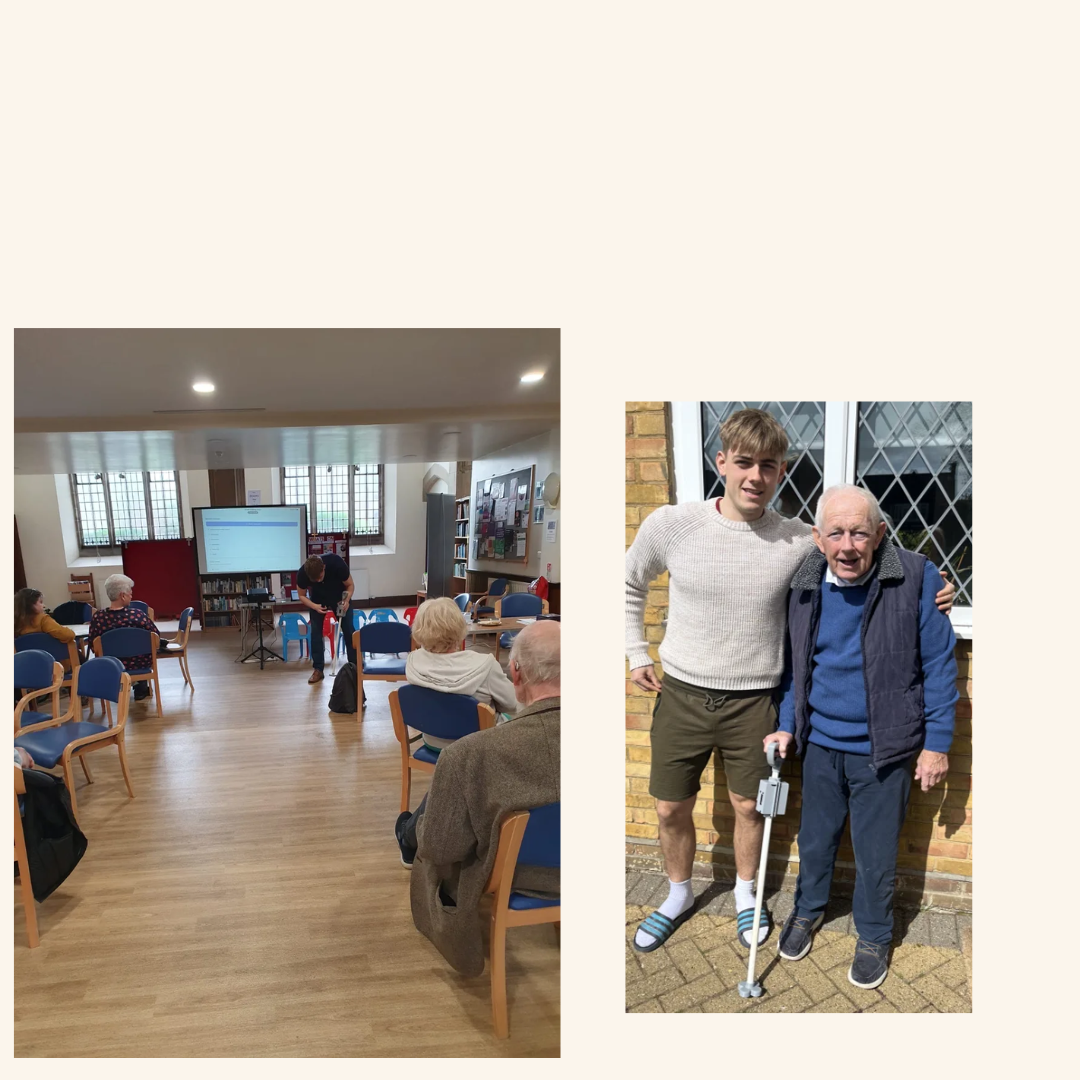
Every engineering project starts somewhere, and for Euan Piercy, a first class mechanical engineering graduate from Swansea University, it began at home. Watching his grandfather live with Parkinson's, Euan saw firsthand the daily challenges the condition brings. He watched the unpredictability of freezing episodes, the sudden loss of independence, and the quiet frustration of a body that does not always respond the way it should.
When it came to choosing his final year dissertation project, Euan knew he did not want to design something abstract just to satisfy an academic exercise. He wanted to build something that could genuinely make a difference to his grandfather's life and to the wider Parkinson's community. That drive led him to create the Smart Walking Stick, a project he is now continuing as a Master of Research student at Swansea University under the supervision of Dr Eifion Jewel.
Freezing of gait is one of the most debilitating symptoms of the condition. The brain sends the signal to walk, but the feet suddenly fail to respond, feeling as though they are glued to the floor. These episodes strike without warning, raising the risk of falls and chipping away at a person's confidence to move independently.
Fortunately, clinical research consistently shows that providing an external rhythm, known as external cueing, can help the brain bypass the neural bottleneck, break out of a freeze, and restore walking momentum. While some expensive, bulky walking frames on the market offer this technology, there has been a distinct lack of affordable, compact, all in one devices in a familiar, everyday walking stick form. Euan set out to change this.
The Smart Walking Stick uses multimodal cueing, delivering three types of sensory signals at once to help the brain re-establish a walking rhythm. The first is rhythmic auditory stimulation, which plays a clear, steady beat through a built-in speaker, behaving like a metronome to improve stride length and walking speed. The second is haptic vibration feedback, which pulses gently in the handle in time with the audio beat, offering a tactile cue that works even in noisy environments. The third is visual laser cueing, which projects a bright line on the floor ahead, giving the brain a clear physical target to step over.
The initial prototype utilised a Raspberry Pi Zero 2W running Python code, housed in a custom 3D printed enclosure. This was controlled via a companion Android mobile application that Euan developed using React Native, allowing wireless control over the beat speed, individual cue toggles, and voice commands.
In April 2026, Euan took his prototype to the Parkinson's UK Southend support group. The response from the community was incredibly encouraging, and it also provided invaluable design feedback. For instance, while the app is a powerful tool, feedback made it clear that reaching for a smartphone screen in the middle of a freezing episode is not realistic.
This feedback is directly shaping Prototype 2, which is currently in development. Euan is migrating the system to a compact ESP32 microcontroller, which reduces size, weight, and power consumption. Crucially, this new version will feature physical buttons mounted directly on the walking stick handle, allowing users to activate the cues instantly and independently without needing a phone at all. Future iterations will also swap the original red laser for a green laser, which patients found much easier to see under typical indoor lighting.
Looking ahead, Euan has highly ambitious research plans. He intends to use his postgraduate studies to conduct structured clinical trials to measure quantitative gait parameters with the stick. He is also planning to develop an automated freeze detection system. By using a motion sensor built into the stick to gather accelerometer and gyroscope data, he hopes to train a machine learning model to recognise the specific patterns of a genuine freeze in real time and automatically trigger the cueing response, without the user needing to press a single button.
As a student self funding his postgraduate studies, Euan is working hard to advance this project from a brilliant prototype into a clinically validated, affordable tool that can eventually reach those who need it. He is raising £700 this summer to purchase the components, refine the custom printed circuit board, and build the physical Prototype 2.
If you would like to read more about his work, you can explore his personal story, learn exactly how the technology works, and check out his future development roadmap on his official website at smartwalkingstick.co.uk.
We have a wonderful opportunity as a community to back a young engineer who is designing tools directly for us. To help Euan hit his summer fundraising goal of £700 (or $940) and build this next crucial prototype, please consider donating whatever you can today by visiting his secure payment link at DONATE. Every contribution brings this innovative, independent, and truly helpful device one step closer to reality.
Comments (0)
Loading comments...