


Could an Arthritis Drug Help Protect the Brain in Parkinson’s?
July 15, 2025
A recent study has shed new light on a hidden villain in Parkinson’s disease: the blood-brain barrier (BBB). This protective shield, designed to keep harmful substances out of the brain, may itself be breaking down—and making Parkinson’s worse.
And the trigger? A toxic form of the protein alpha-synuclein, which plays a central role in the disease.
What’s the Blood-Brain Barrier, and Why Does It Matter?
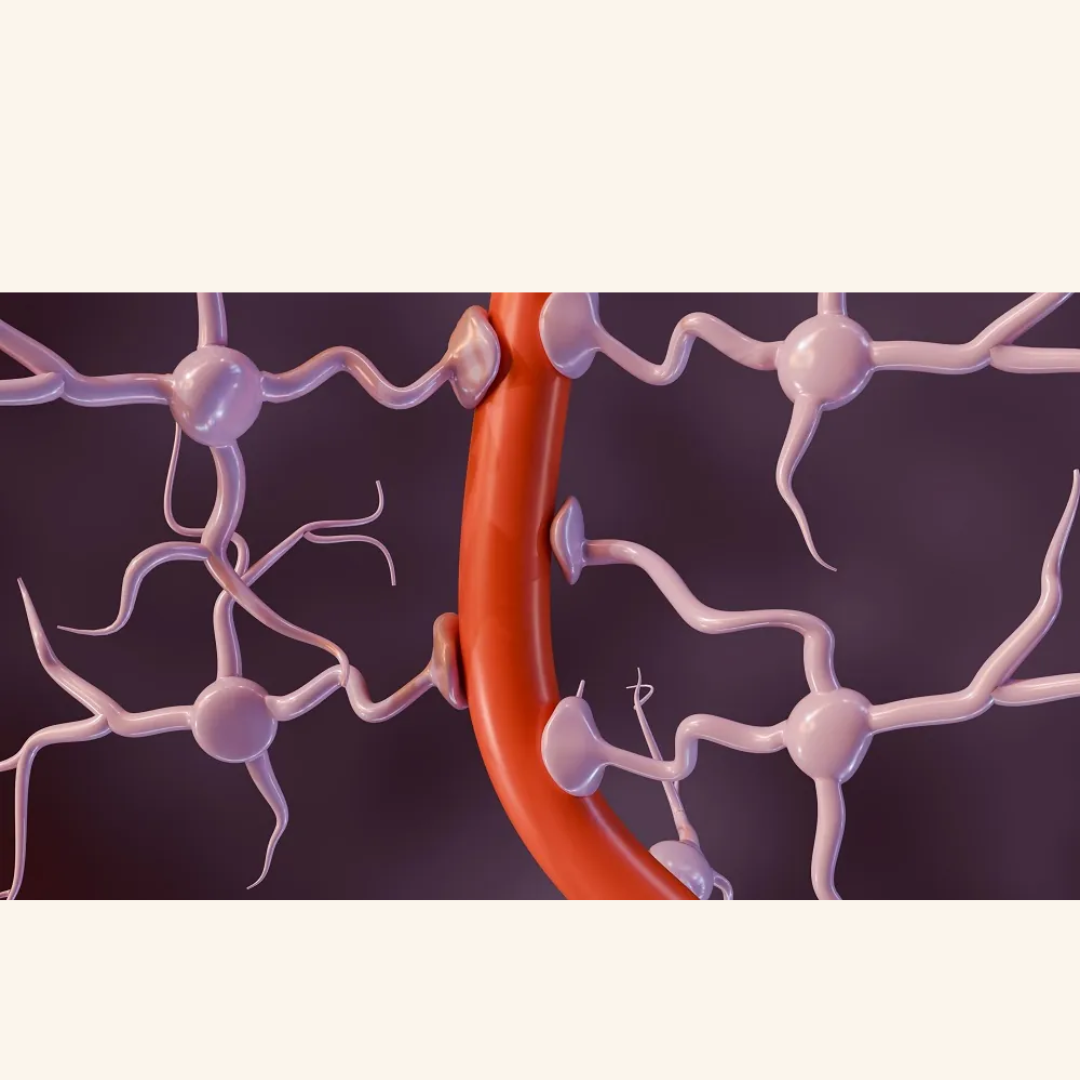
Your brain is precious—and your body knows it. That’s why it’s protected by the BBB, a complex wall of tightly packed cells that separates your brain from the bloodstream. It keeps out infections, toxins, and unwanted substances, while still letting in oxygen and nutrients.
But in Parkinson’s, this wall may be leaking. And when it leaks, all kinds of unwanted molecules can sneak into the brain, triggering inflammation and further damage.
What’s Causing the Leaks?
Scientists already knew that clumps of alpha-synuclein build up in Parkinson’s, harming brain cells. But now, they’ve discovered something new: these clumps (called fibrils) may also damage the BBB itself.
In lab tests, researchers exposed blood vessel cells to two versions of alpha-synuclein: the normal, single-protein version, and the clumped-up version found in Parkinson’s brains. The clumps caused the vessel cells to weaken and become more porous, allowing substances to leak through that would normally be blocked.
The researchers also spotted a huge surge in an inflammatory molecule called TNF-α—up by 250 times. That’s a red flag. TNF-α is known to worsen inflammation in the body and brain, and it may be fuelling the leakiness of the BBB.
The Brain Barrier Gets Weaker With Age—Especially in Parkinson’s
The study didn’t stop at petri dishes. Scientists also studied mice genetically modified to develop Parkinson-like symptoms. Over time, their brain barriers grew leakier—especially by 13 months of age (equivalent to middle-aged in mouse years).
In these mice, signs of stress showed up all over the brain. The cells responsible for supporting the BBB (like astrocytes and pericytes) were working overtime. But they couldn’t keep up. There was evidence of nerve damage, inflammation, and waste buildup—all typical features of Parkinson’s.
Could This Lead to a New Treatment?
Here’s the most exciting part: when researchers gave the mice a drug called etanercept—a TNF-α inhibitor used to treat arthritis—the leaks reduced dramatically.
Etanercept doesn’t normally cross the BBB, but it still had an impact, likely by calming the inflammation around the barrier. Treated mice had:
Less inflammation
Stronger BBB integrity
Better movement and memory
The result? Mice with Parkinson-like symptoms performed better in movement and memory tests.
This raises an exciting possibility: Could TNF-α inhibitors help people with Parkinson’s too?
What This Means for People With Parkinson’s
It’s early days—these findings are from mice, not humans. But the results are compelling.
They suggest that Parkinson’s disease isn’t just about the loss of dopamine-producing brain cells. It’s also about the breakdown of the brain’s protective barrier and the inflammation that follows.
This opens the door to new ways of treating Parkinson’s, possibly by protecting the blood-brain barrier or reducing inflammation with existing drugs.
And while we’re not there yet, this kind of research gives real hope—especially since etanercept is already used safely for other conditions.
Bottom Line
Your brain’s barrier might be more than a gatekeeper—it could be a key player in the progression of Parkinson’s disease. And researchers are beginning to uncover how stopping the leaks might slow the disease down.
It’s a whole new way of thinking about Parkinson’s—and it could lead to treatments that not only manage symptoms but also protect the brain itself.
Photo: Lifespan Research Institute
Comments (0)
Loading comments...