


The α-Synuclein Debate: A Failed Promise or the Next Frontier?
March 12, 2026
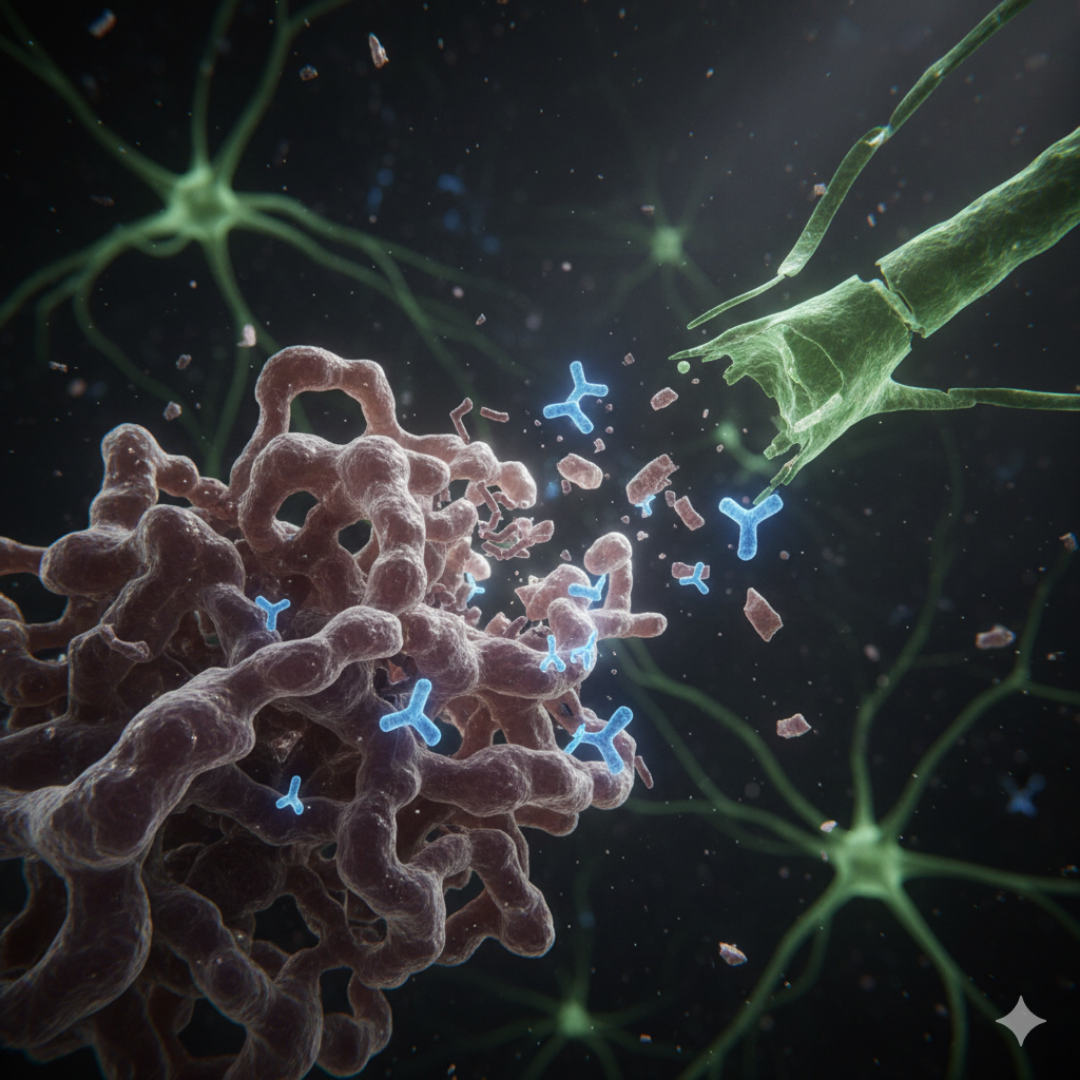
For years, the scientific world has been fixated on a single protein: alpha-synuclein. Widely regarded as the primary "villain" in the progression of the condition, it is known to clump together in the brain, forming toxic deposits that damage neurons. The medical community placed a massive bet on monoclonal antibodies—designer proteins meant to find and clear these clumps—hoping they would finally provide a way to slow or stop the condition. However, a series of high-profile clinical trials recently failed to show significant clinical benefit, leading many to ask: was this a failed promise?
A new perspective published in the Journal of the Neurological Sciences and highlighted by the World Federation of Neurology tackles this exact question. The article, titled α-synuclein monoclonal antibodies in Parkinson's disease: A failed promise or unmet potential?, suggests that we shouldn't abandon the idea just yet. Instead, the researchers argue that the "failure" of these trials might be a matter of timing and precision rather than a fundamental flaw in the theory.
The Challenge of Timing
The core issue highlighted in the research is that by the time people are diagnosed and enrolled in clinical trials, the condition has often been progressing silently for a decade or more. The "toxic" alpha-synuclein may have already done significant damage. Attempting to clear the protein at this late stage might be like trying to put out a forest fire after half the trees have already burned down.
Furthermore, the study points out that alpha-synuclein exists in many different forms. Some antibodies used in trials may have been targeting the "wrong" version of the protein or perhaps were not potent enough to cross the blood-brain barrier in sufficient quantities to make a difference. The research suggests that for these therapies to work, they likely need to be administered much earlier in the journey, perhaps even before motor symptoms appear.
Moving Toward Personalised Solutions
One of the most important takeaways from this latest scientific review is the push for better "biomarkers." If we can identify exactly which type of alpha-synuclein is causing the problem in a specific person—and detect it earlier—we can tailor the antibodies to be far more effective. The researchers argue that the "unmet potential" lies in our ability to match the right treatment to the right person at the right time.
The condition is notoriously diverse; what drives the progression in one person might be different from another. This research reinforces the idea that there is no "one size fits all" solution. Instead of viewing the recent trial results as a dead end, the scientific community is now looking at them as a vital lesson in how to refine the next generation of therapies.
The Path Forward
While the initial results of these antibody trials were disappointing for many, the research concludes that the alpha-synuclein hypothesis is still very much alive. The focus is now shifting toward more sophisticated delivery methods and the development of "seed amplification assays"—tests that can detect tiny amounts of toxic protein very early on.
Ultimately, the "failed promise" may yet turn into "unmet potential." By learning from these setbacks, scientists are developing a more nuanced and powerful toolkit to protect the brain. The journey toward a breakthrough is rarely a straight line, and this research serves as a reminder that every "failure" brings us one step closer to understanding how to truly hold the line against the condition.
Comments (0)
Loading comments...