


Stopping the Spread: New Antibody Acts as a "Roadblock" for Parkinson’s and MSA Pathology
January 31, 2026
We often talk about alpha-synuclein as the "bad guy" in Parkinson’s. We know these sticky protein clumps accumulate in our brain cells, causing chaos. But for a long time, scientists have been trying to answer a more specific question: how exactly does this toxic protein travel from one cell to another, spreading the damage like a contagion?
A groundbreaking study just published in Nature Communications might have finally found the answer—and, more importantly, a way to stop it.
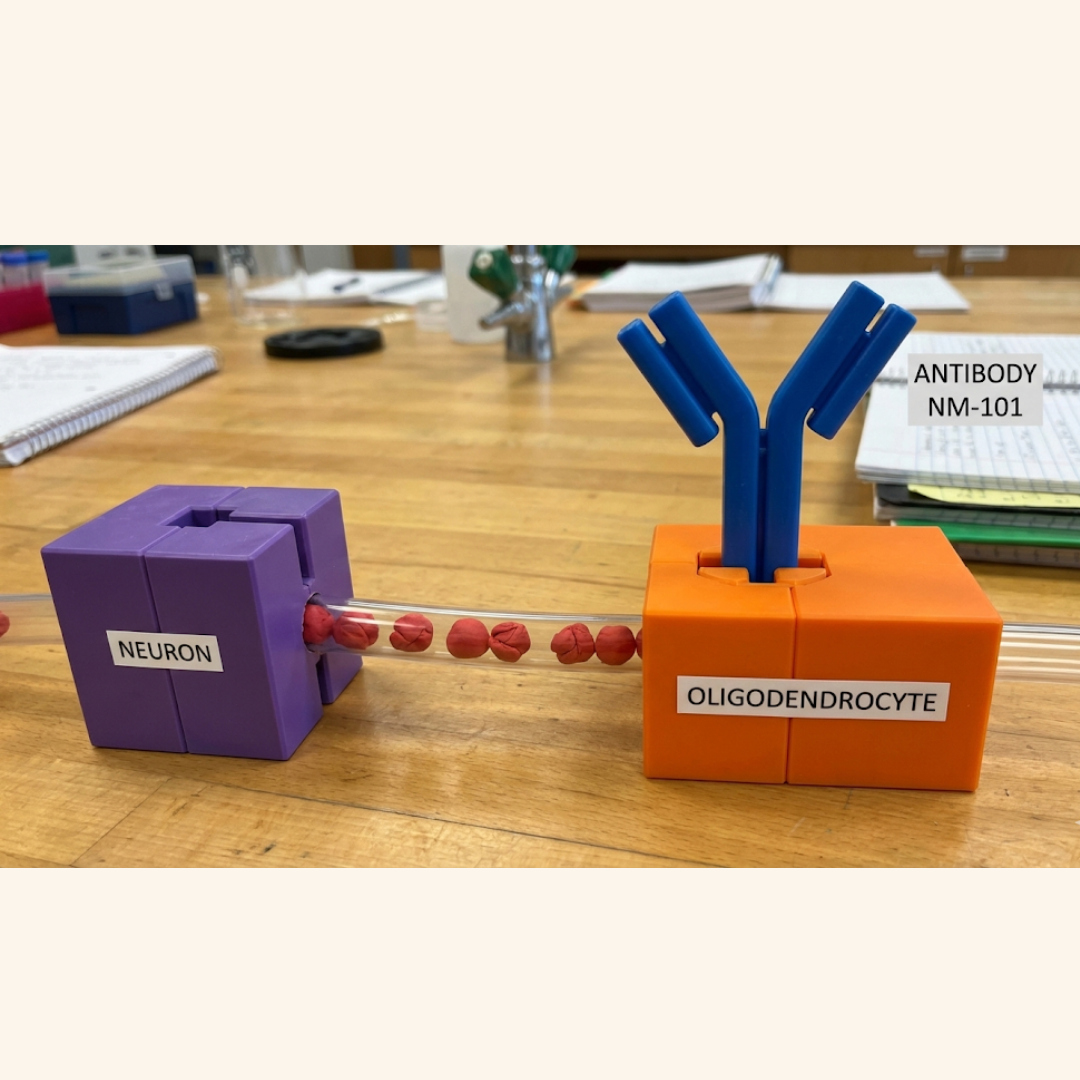
The research, led by a team at Seoul National University and Neuramedy, focuses on a specific "doorway" called TLR2 (Toll-like receptor 2). Think of TLR2 as a gatekeeper. In a healthy brain, it helps with immune response. But the researchers discovered that in conditions like Parkinson’s and Multiple System Atrophy (MSA), alpha-synuclein uses this receptor to hijack the system. It effectively uses TLR2 as a bridge to travel from neurons (the nerve cells) into oligodendrocytes (the support cells that insulate our brain’s wiring).
This transfer is disastrous. When alpha-synuclein invades these support cells, it forms "Glial Cytoplasmic Inclusions"—essentially trash bags of toxic protein that stop the cells from doing their job. This leads to the loss of myelin, the protective sheath around our nerves, causing the rapid decline seen in these conditions.
But here is the good news. The team didn’t just identify the problem; they tested a solution.
They developed a novel immunotherapy antibody called NM-101. In mouse models, this antibody acted like a security guard, blocking the TLR2 doorway. The results were remarkable. By shutting down this specific route of transmission, the antibody significantly reduced the spread of the toxic protein, lowered neuroinflammation, and preserved the white matter in the brain.
While this study is a massive win for the Multiple System Atrophy (MSA) community—where this specific type of spread is the primary driver of the disease—it is a beacon of hope for everyone with a synucleinopathy, including Parkinson’s. It proves that we can potentially intercept the disease process mid-stream, stopping the "bad traffic" in the brain rather than just trying to clean up the mess afterwards.
The study has now moved this approach from "theory" to "proof of concept" in animal models, clearing the path for future human trials. It is yet another piece of evidence that the future of neurology isn't just about replacing dopamine; it is about blocking the biological mechanisms that drive the disease in the first place.
Comments (0)
Loading comments...