


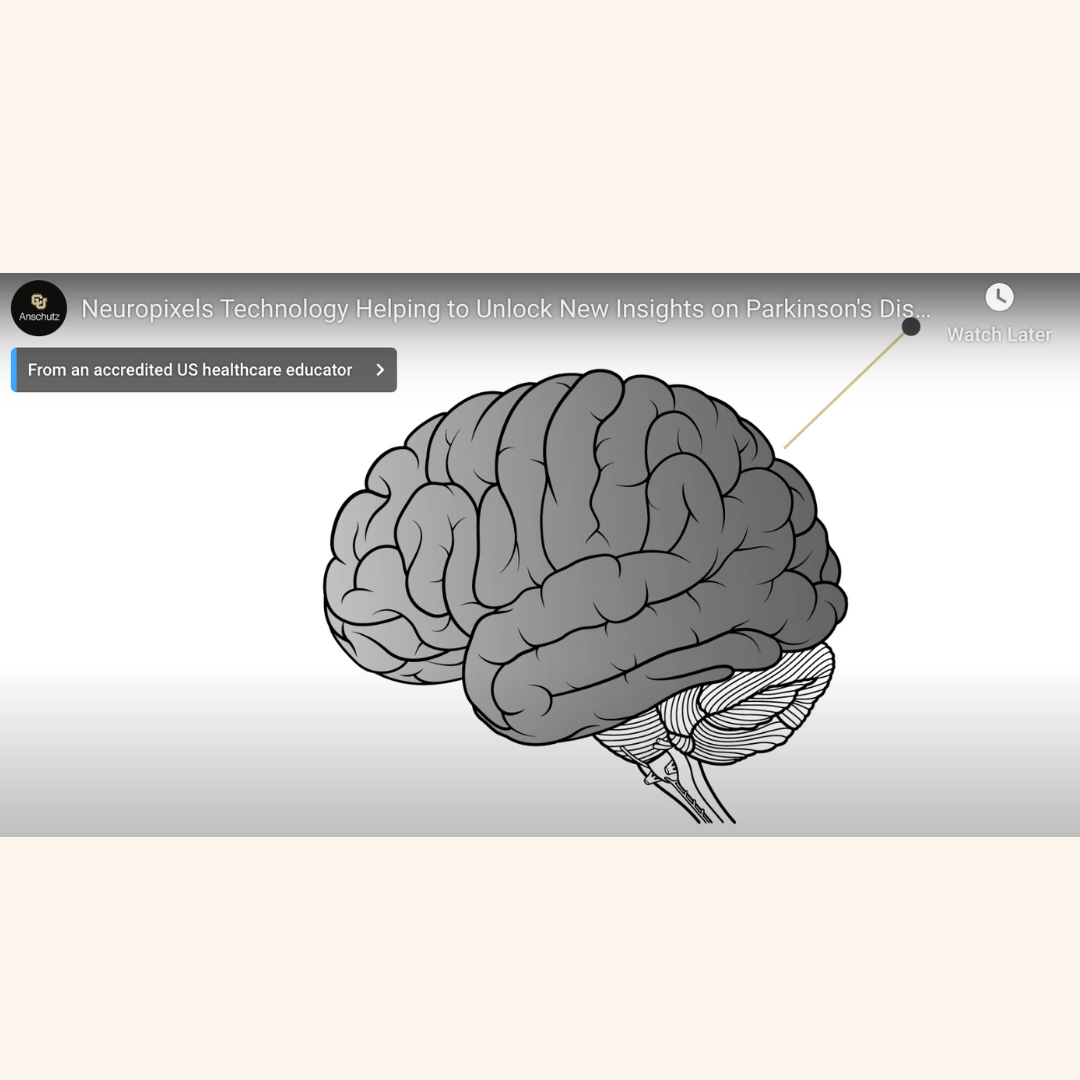
Needle-thin “Neuropixels” could rewrite what we know about Parkinson’s
October 1, 2025
Researchers at the University of Colorado Anschutz Medical Campus are launching a study that uses a new kind of brain sensor—called Neuropixels—to watch thousands of brain signals at once. The goal is straightforward but ambitious: capture a clearer picture of how Parkinson’s disease disrupts movement circuits in real time, and use that knowledge to guide better treatments.
Neuropixels are hair-thin silicon probes studded with hundreds of microscopic electrodes along their shaft. Traditional clinical electrodes listen to activity from a small patch of brain tissue; Neuropixels can sample from many layers and regions simultaneously. Think of the difference between a single security camera and a wall of high-definition feeds. That extra resolution matters in Parkinson’s, where symptoms like slowness, stiffness, tremor, and freezing arise from misfiring networks that loop between the deep brain, the thalamus, and the cortex.
In this study, scientists plan to place Neuropixels in carefully targeted areas during neurosurgical procedures that patients are already undergoing (such as deep brain stimulation surgery). That setting allows researchers to record living human brain activity while people perform simple movement or decision tasks. By matching those moment-to-moment neural patterns with what the hands, arms, or face are actually doing, the team hopes to pinpoint the signatures of Parkinson’s—what abnormal rhythms look like, when they start, and how they spread.
Why it matters is practical as well as scientific. If Neuropixels can reveal reliable “biomarkers” of symptoms—specific patterns that predict tremor, freezing, or medication wearing-off—surgeons could tune deep brain stimulation more precisely, and engineers could build smarter, adaptive stimulators that respond to the brain in real time. The data could also help drug developers test whether a therapy is hitting the right circuit before waiting weeks or months for clinical scores to change.
The technology doesn’t treat Parkinson’s by itself, and it won’t replace standard care. It’s a measurement tool—albeit a powerful one—that may explain why the same dose of medication or the same DBS setting helps some people more than others. With clearer maps of how signals go wrong, clinicians can individualize therapy rather than using a one-size-fits-all approach.
Parkinson’s research has long needed a way to look under the hood while the engine is running. Neuropixels offer that peek—thousands of channels at once, recorded in the very circuits that move us—bringing the field closer to truly personalized brain therapy.
Comments (0)
Loading comments...