


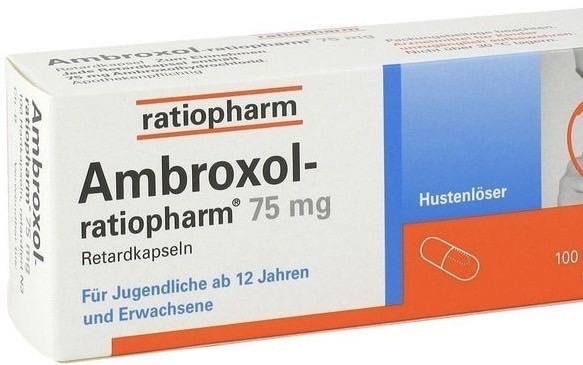
Ambroxol: Why the Hype Around This Old Cough Medicine Deserves Caution
August 16, 2025
Every so often, an everyday medicine makes headlines because it might have potential beyond its original use. That’s what happened with ambroxol—a decades-old drug originally developed to treat coughs. Recently, people in the Parkinson’s community have been buzzing with excitement about it, especially after hints that it might help protect the brain. Some even hoped it could slow or reverse problems with memory and thinking.
JAMA Neurology just published one of the most closely watched studies of ambroxol to date. It was an ambitious clinical trial designed to test whether the drug could protect thinking and memory in people with Parkinson’s disease. Researchers looked at a wide range of mental skills, including memory, speech, and decision-making, while also checking motor function through both direct tests like the “timed up and go” test and standardised scales such as the UPDRS (a tool doctors use to measure Parkinson’s symptoms overall).
The study itself was relatively small, involving 55 people randomly assigned to either ambroxol or a placebo. But given that it was carried out at a single research centre, this was still a major undertaking.
Why all the excitement in the first place? Two main reasons. First, ambroxol has been shown to improve lysosomal function—the cell’s waste-disposal system—which is a key area of dysfunction in the brain cells of people with Parkinson’s. Second, it’s a repurposed drug, which means its safety record is already well known. In fact, ambroxol is considered so safe that doctors sometimes prescribe it to pregnant women.
So, what did the trial find?
The short version: ambroxol was safe and well tolerated overall, but it didn’t improve memory, speech, or other cognitive skills over the course of a year. The researchers found no significant differences between the ambroxol and placebo groups, not only in cognition but also across a wide set of secondary measures they tested. The sheer number of these additional assessments makes the negative result even more convincing.
That doesn’t mean ambroxol is completely off the table. The trial was too small to prove the drug never works, and other studies are ongoing—particularly in people with a specific genetic change (the GBA1 variant), which may make them more likely to respond. But at this point, the evidence doesn’t support using ambroxol as a treatment for Parkinson’s.
And here’s where caution is needed. While the study didn’t find a higher risk of serious life-threatening events, there were worrying signals. More people in the ambroxol group stopped treatment because of neuropsychiatric issues or other side effects compared with those on placebo (26% vs 12.5%). The ambroxol group also had more hospitalisations linked to adverse events (20% vs 12.5%). Those numbers suggest that, even though ambroxol has a reputation for being “safe,” it may cause problems in people with Parkinson’s that aren’t usually seen in its traditional use.
This is why self-experimentation is risky. It’s understandable that many people are eager to try something new, especially when a cheap and widely available drug is involved. But taking ambroxol outside of a clinical trial, without medical supervision, could do more harm than good.
For now, the take-home message is this: ambroxol remains an interesting idea, and scientists are continuing to test it, especially in people with genetic subtypes of Parkinson’s. But the latest, most rigorous study shows no benefit for memory or thinking, and it raises red flags about side effects. Until larger and more targeted trials are completed, ambroxol does not have a place in routine Parkinson’s treatment—even in countries where it’s available over the counter.
Comments (0)
Loading comments...