


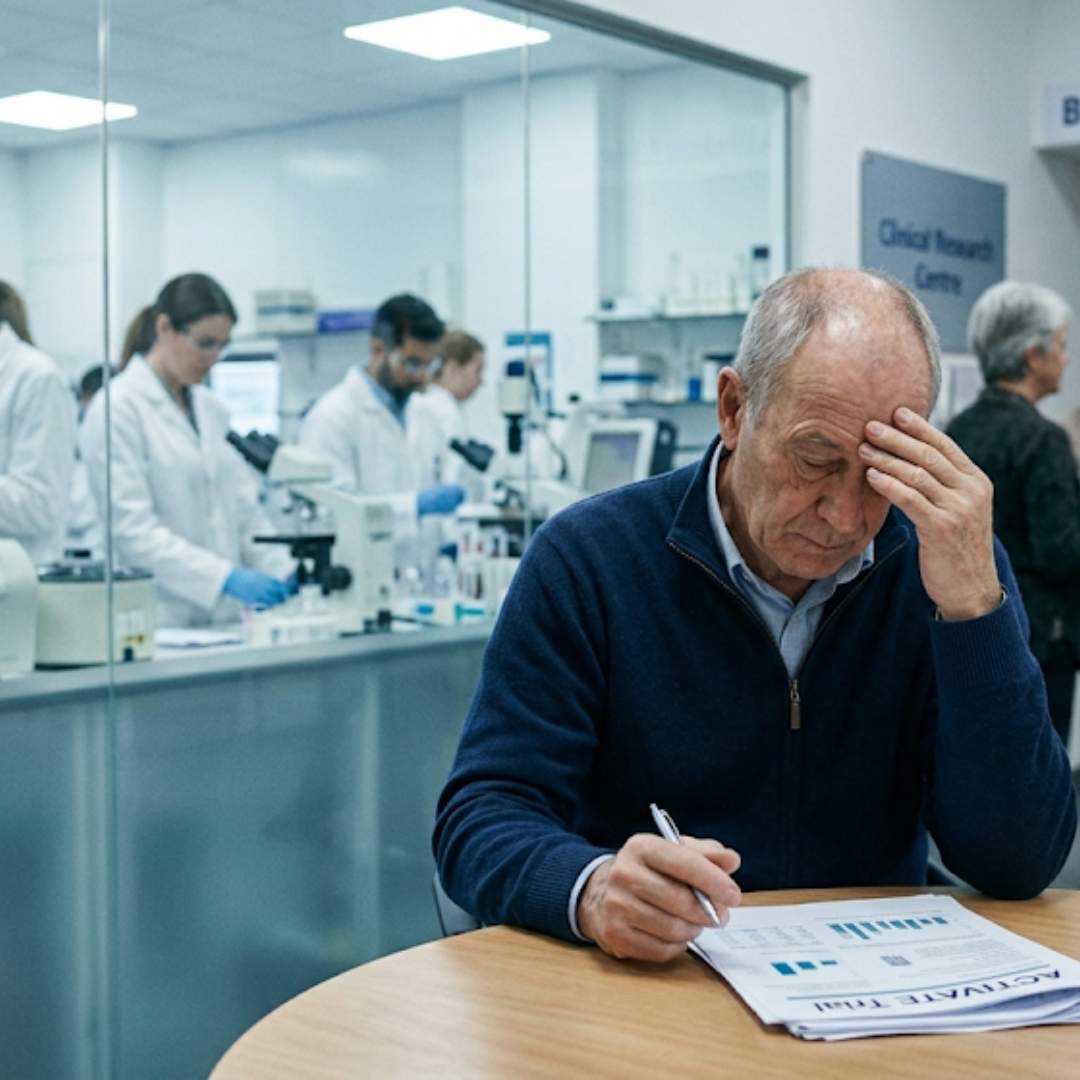
Bial halts development of a targeted therapy after it fails to change the progression of a specific form of Parkinson's in clinical trials
June 16, 2026
The clinical trial space saw a setback today as the pharmaceutical company Bial announced the end of its research into a hopeful new drug. The treatment was designed to slow down the progression of a genetic form of Parkinson's but it unfortunately failed to show any real difference when compared to a dummy pill.
The trial called ACTIVATE looked at an experimental daily tablet called BIA 28-6156. Researchers hoped this drug would help people who have a specific change in a gene called GBA1. This genetic variant is a well known risk factor and usually leads to a form of the condition that progresses more rapidly. The tablet was designed to boost the activity of an enzyme called GCase which helps cells clear out waste. Scientists believed that keeping this enzyme working would prevent the build up of toxic proteins and keep brain cells healthy for longer.
The study was a major international effort involving 273 people across 11 countries including Europe and North America. Participants took either the real drug or a placebo for up to 18 months while doctors tracked their physical symptoms and changes in daily life.
When the final data came in the numbers revealed that the drug did not achieve its main goals. It did not slow down the physical progression of the condition and it did not outperform the placebo pill. On a positive note the trial did prove that the drug was safe and well tolerated with no unexpected side effects or safety alarms. However because the main purpose was to alter the course of the condition the lack of real benefit means Bial is stopping all further development of this specific molecule.
While the news is disappointing for everyone hoping for a breakthrough the research team emphasized that the trial is not a complete loss. The detailed biological data collected from the participants over 18 months will be shared with the wider scientific community. This information will help researchers better understand how the GBA1 gene behaves and will guide future attempts to create targeted treatments.
Comments (0)
Loading comments...