


The Electric Fence Protecting Your Neurons: Why DC Stimulation Might Be More Than Just a Buzz
January 5, 2026
For years, the conversation around electrical brain stimulation has been focused firmly on the "now." We use it to zap tremors into submission or jolt a freezing gait back into motion. It has largely been viewed as a high-tech plaster—a brilliant way to mask the cracks, but essentially doing nothing to stop the wall from crumbling further.
But a groundbreaking new study led by researchers Z. Tian and colleagues has just flipped that script. Their findings suggest that simple Direct Current (DC) stimulation might actually be doing the heavy lifting of protecting the neurons themselves.
The Brain’s Cleaning Crew
To understand why this matters, you have to look at the microscopic housekeeping that goes on inside your head. Your brain cells have a built-in cleaning crew known as "autophagy." This system sweeps up damaged proteins and cellular junk, recycling them to keep the neuron healthy. In this condition, that cleaning crew often goes on strike. The rubbish piles up, the cells get overwhelmed, and eventually, they shut down.
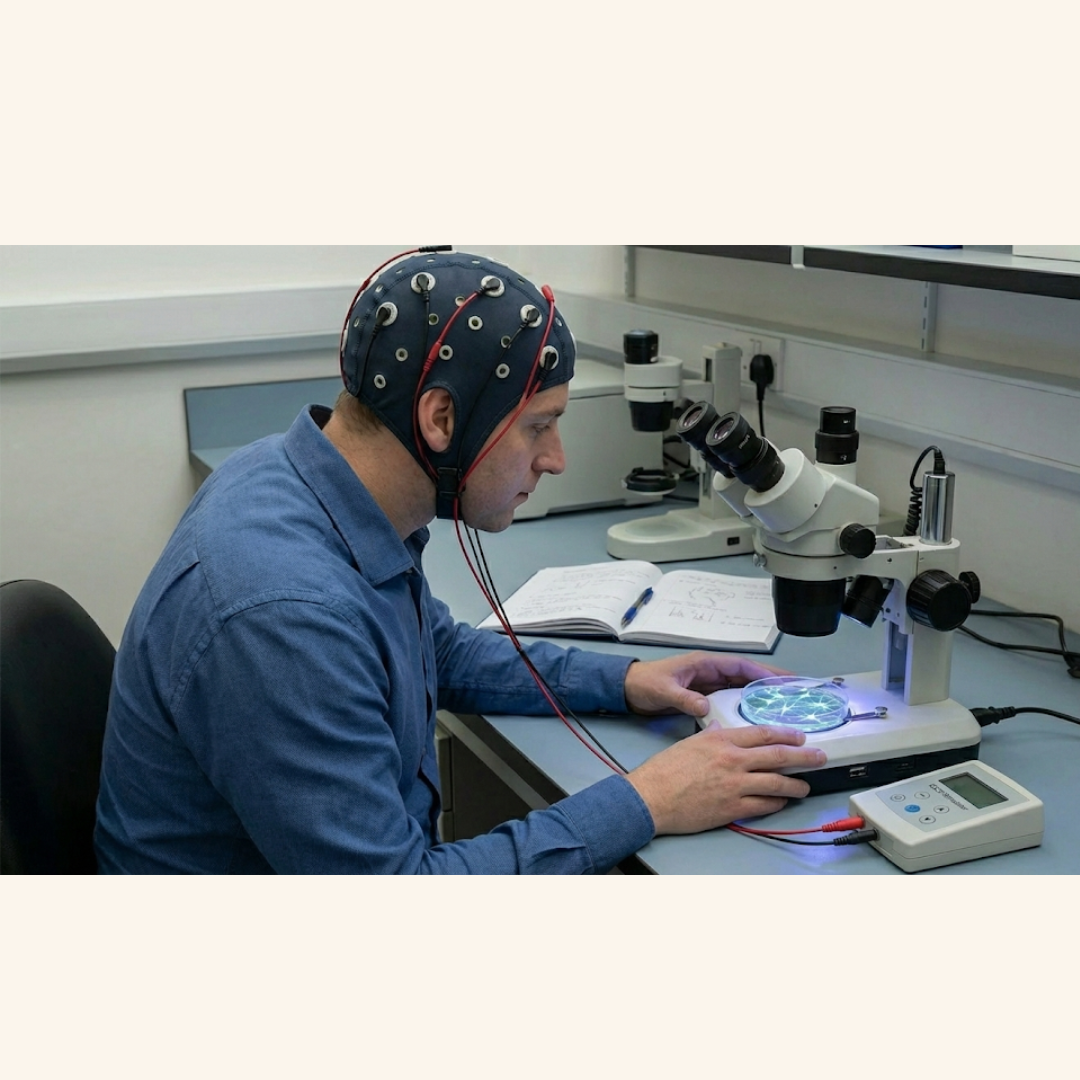
The researchers discovered that applying transcranial direct current stimulation (tDCS)—essentially a gentle electrical current delivered through the scalp—kickstarts this stalled cleaning process. Specifically, they found that the electricity restores the function of a protein called Mlst8. Think of Mlst8 as the foreman of the cleaning crew; when the electricity wakes him up, the whole team gets back to work, scrubbing away the toxic buildup that endangers the cell.
From Band-Aid to Bodyguard
This is a massive shift in perspective. Until now, technologies like tDCS were seen primarily as symptomatic treatments—tools to help you walk better or think clearer for a few hours. This study, which yielded robust results across both lab cultures and animal models, implies that the therapy could be "neuroprotective." In plain English, it isn't just treating the smoke; it might actually be dousing the fire.
The Road Ahead
Before we all rush out to buy home stimulation kits, a note of caution is necessary. These results are fresh from the lab bench, and while the animal models are promising, human brains are a fair bit more complicated. We need comprehensive clinical trials to confirm that this "protective" effect translates to people over the long term.
However, the implication is tantalising. It suggests that the future of bioelectronic medicine isn't just about managing the decline—it is about actively fighting back. If a simple, non-invasive battery pack can help our brain cells take out the trash, we might finally have a tool that works on the cause, not just the consequence.
Comments (0)
Loading comments...