


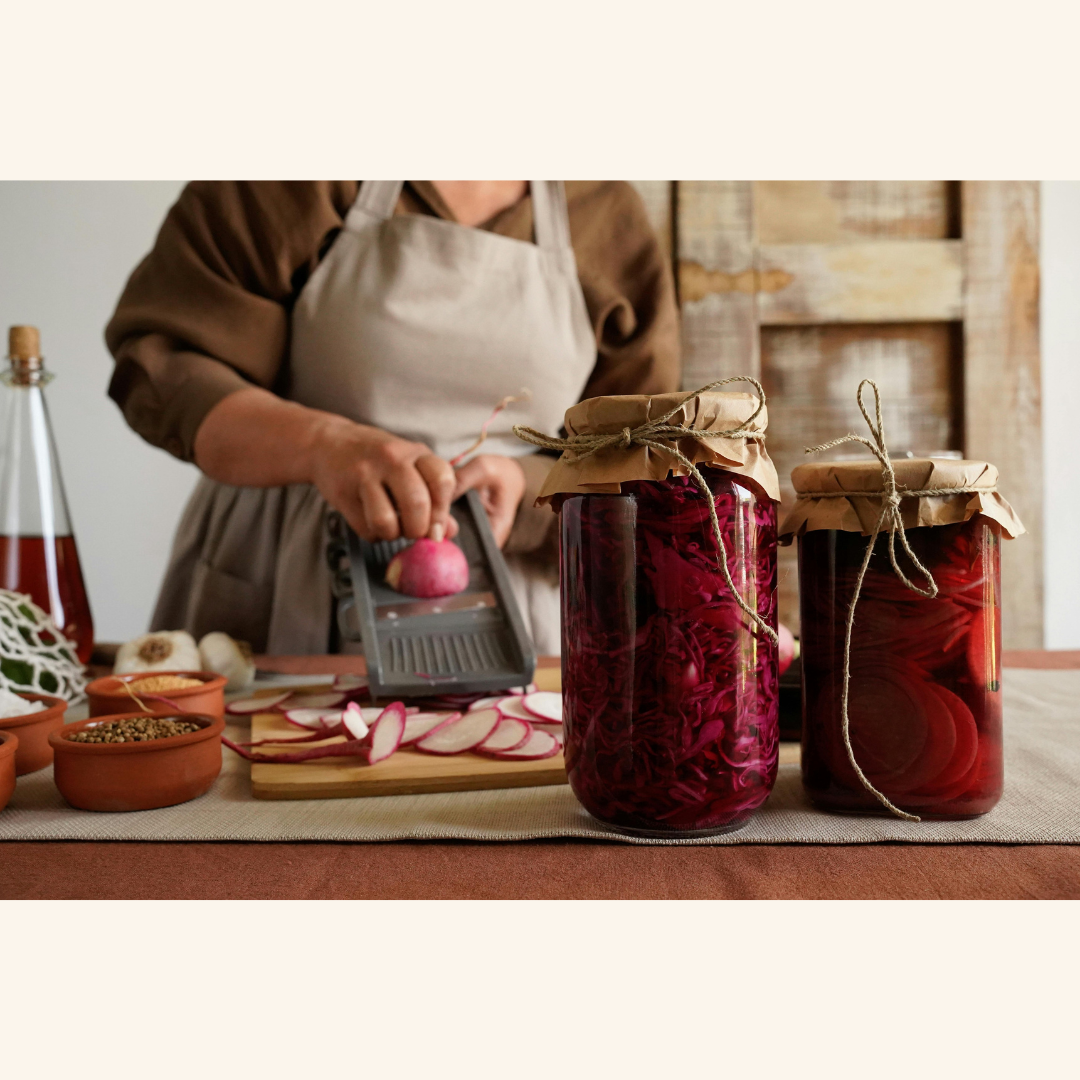
Fermented Foods: Funky, Fizzy and Fantastic for Parkinson’s?
June 3, 2025
🥬 What on Earth Is Fermentation?
Fermentation is one of the oldest tricks in the culinary book. Long before fridges, humans discovered that by letting certain foods sit and “go off” in a very particular way, something magical happened. They not only lasted longer—but they tasted better and, as it turns out, could do wonders for your health.
In simple terms, fermentation is the process where friendly microbes—like bacteria and yeast—break down the sugars and starches in food. This process produces things like acids or alcohol, which preserve the food and give it that signature tangy, slightly funky flavour.
But fermentation isn’t just about taste. It transforms ordinary ingredients into nutritional powerhouses, bursting with probiotics—the “good” bacteria that can help balance your gut microbiome.
🧫 Why Is This Good for People with Parkinson’s?
Here’s where it gets interesting. Recent research shows that the gut isn’t just a digestion machine—it’s deeply connected to the brain via the gut-brain axis. In Parkinson’s, many people experience gut symptoms like constipation years before movement issues start. Scientists now believe that problems in the gut might even play a role in the development of the disease.
So keeping your gut bacteria happy and balanced isn’t just a wellness trend—it could be a crucial piece of the Parkinson’s puzzle.
Fermented foods help by:
Boosting gut diversity – more types of bacteria = a healthier gut
Improving digestion – especially important if you’re dealing with constipation
Reducing inflammation – which may help slow disease progression
Supporting immunity – 70% of your immune system lives in your gut
🥄 So What Counts as Fermented Food?
You’ve probably eaten fermented food without realising. Here are some popular (and delicious) options:
🧃 Kefir
A fermented milk drink similar to a runny yoghurt. Full of beneficial bacteria and slightly fizzy. Excellent in smoothies or on its own.
🥬 Sauerkraut
Finely shredded cabbage fermented in its own juices. Crunchy, tangy, and brilliant with roasted veg or in a sandwich.
🌶️ Kimchi
Korean cousin of sauerkraut. Spicier, funkier, and packed with garlic and chilli. Great for the adventurous gut!
🧂 Miso
A savoury paste made from fermented soybeans (or barley/rice) used in Japanese cooking. Stir into warm water for an instant soup.
🧀 Tempeh
A fermented soybean cake with a nutty flavour. A superb source of protein, especially for vegetarians.
🧁 Sourdough Bread
Real sourdough is made with fermented flour and water instead of commercial yeast. Easier to digest and full of character.
🍶 Live Yoghurt
Not all yoghurts are created equal. Look for ones that say “live cultures” or “probiotic” on the label.
🧪 How Is It Made?
Most fermented foods are made with three simple ingredients: a base food, a bit of salt, and time. No fancy kit needed.
For example, to make sauerkraut:
Shred cabbage
Mix with salt
Squeeze until it releases liquid
Pack it tightly in a jar so it’s submerged
Leave at room temperature for 1–2 weeks
The salt keeps out harmful bacteria, and the natural microbes on the cabbage get to work, creating lactic acid that gives it that zingy flavour.
(Just be sure to follow a safe recipe—fermentation is a science and an art.)
🔙 Why the Sudden Comeback?
Fermented foods are having a proper renaissance. After decades of being seen as weird or old-fashioned, they’re back on menus in trendy cafés, health food shops, and even mainstream supermarkets.
Why now?
More people are waking up to the power of the gut microbiome
There's growing concern about ultra-processed foods
People with chronic conditions, like Parkinson’s, are exploring diet as part of symptom management
And let’s face it—sourdough is just delicious
Plus, they’re natural, low-tech, and can often be made at home.
🧠 For People with Parkinson’s: What to Know
If you’re living with Parkinson’s, incorporating fermented foods into your diet can be a gentle and tasty way to support your gut—and possibly your brain.
Some studies have found differences in the gut bacteria of people with Parkinson’s compared to those without. While we don’t know yet whether this causes or contributes to the disease, researchers agree that a healthy, diverse microbiome is something worth aiming for.
Just go slow to start—especially if your gut isn’t used to high-fibre or fermented foods. Try a spoonful of sauerkraut, a few sips of kefir, or a cup of miso soup a few times a week, and see how you feel.
Also, remember:
Not all fermented foods contain live bacteria (e.g., shelf-stable sauerkraut may be pasteurised)
Too much of anything can upset the gut—balance is key
If you're on immunosuppressive treatment or have dietary restrictions, check with your GP or dietitian first
🍽️ Final Thoughts: A Gut Decision Worth Making
Fermented foods aren’t a magic cure—but they might just be one of the easiest, most delicious ways to support your overall health, especially if you’re living with Parkinson’s.
They’re rich in tradition, brimming with good bacteria, and deeply satisfying. So don’t be afraid to try that weird-looking jar of kimchi, or make friends with a bottle of kefir. Your gut—and perhaps your brain—may thank you for it.
Comments (0)
Loading comments...