


The Liver-Brain Axis: How Immune Sensors Link Fatty Liver to Parkinson’s
March 2, 2026
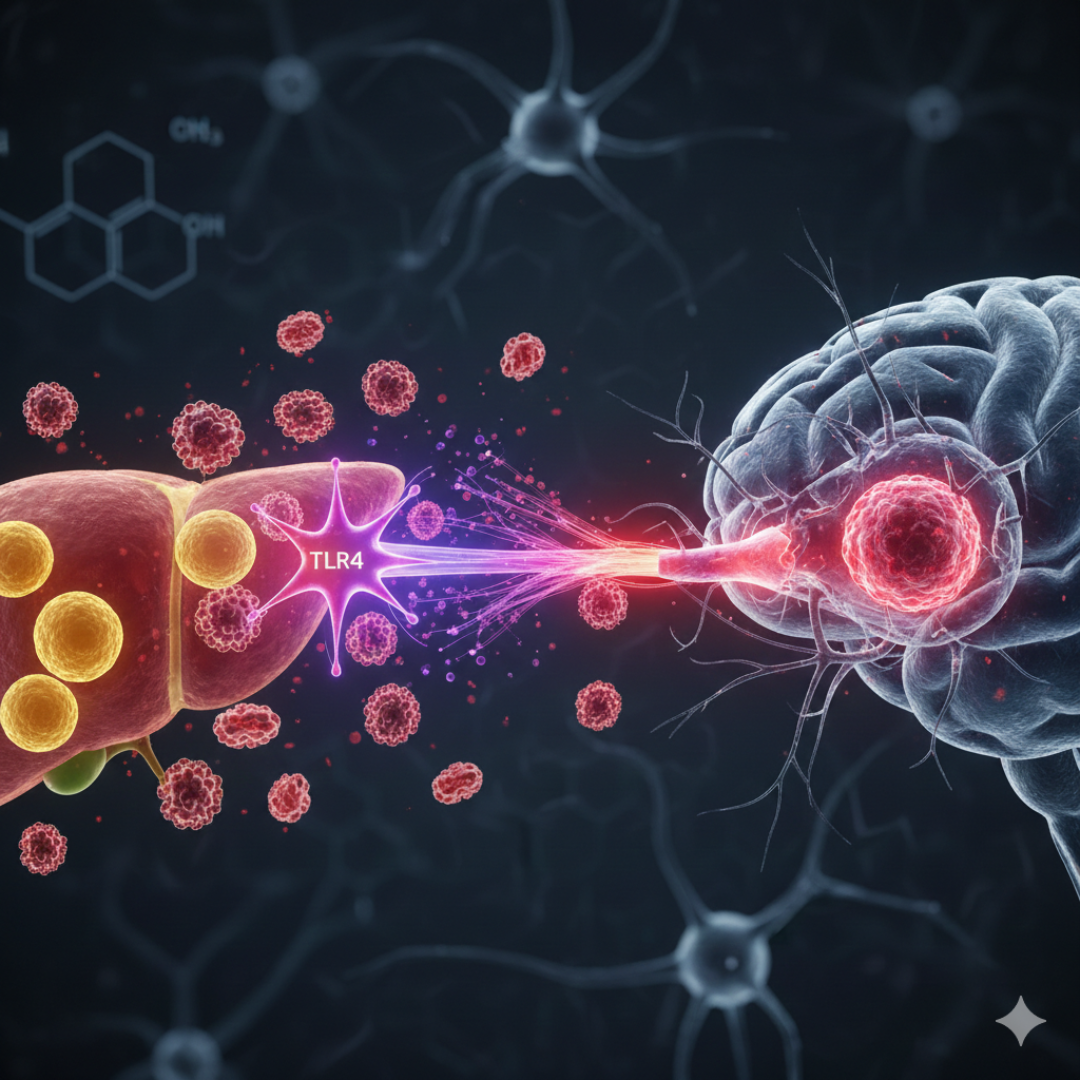
A new study published in Metabolites has shed light on a surprising connection between the liver and the brain, specifically linking Metabolic Dysfunction-Associated Steatotic Liver Disease (MASLD)—commonly known as fatty liver—to Parkinson's. Researchers used "omics-based network analysis," a powerful computing method that maps thousands of biological signals, to discover that both conditions share a faulty immune "alarm system" controlled by a protein called TLR4.
The Shared Immune Alarm
TLR4 (Toll-like Receptor 4) acts as a sentry for the immune system. Its job is to detect damage and trigger an inflammatory response to protect the body. However, the study found that when this system becomes overactive, it stops being protective and starts causing damage across different organs.
In the liver, this immune dysfunction drives the progression of MASLD, causing fat to build up and eventually leading to scarring. At the same time, the research shows that the very same TLR4-mediated inflammation is a key player in the brain. It appears that the "liver-brain axis" allows inflammatory signals to travel between these two distant organs, suggesting that what happens in the liver can directly influence the health of the brain.
A Common Link in Inflammation
The data suggests that the inflammation seen in Parkinson's is not an isolated event happening only in the head. Instead, it is part of a broader "immunometabolic" problem. When the TLR4 pathway is disrupted:
Alpha-synuclein Clumping: The immune system’s overreaction makes it harder for the brain to clear out toxic alpha-synuclein proteins, which are the main culprits in the condition.
Gut-Brain Communication: The study reinforces the idea that inflammation often starts in the gut or the liver and uses the TLR4 pathway as a "highway" to reach the central nervous system.
Lipid Imbalance: Both fatty liver and Parkinson’s involve a breakdown in how the body handles fats (lipids). The TLR4 sensor seems to be the common link that ties these metabolic errors to immune attacks on healthy cells.
Potential for New Treatments
One of the most exciting findings of this network analysis is the possibility of "repositioning" existing drugs. Because the TLR4 pathway is so central to both conditions, medications that are already used to treat metabolic issues—such as statins or certain anti-inflammatory drugs—might hold potential for protecting the brain as well.
This research moves us closer to a "whole-body" approach to the condition. It suggests that by managing liver health and reducing systemic inflammation, we might be able to slow down the progression of Parkinson's. It highlights that the condition is not just a brain disorder, but a complex interaction between our metabolism, our immune system, and our various organs.
Comments (0)
Loading comments...