


Bright Light Therapy Shows Promise for Vision and Wellbeing in Parkinson’s
September 9, 2025
A new study has found that daily sessions of bright light therapy could help people with Parkinson’s see more clearly and feel better overall. After just one month of treatment, patients experienced improvements not only in visual function but also in symptoms like daytime sleepiness and anxiety.
The research, published in BMC Psychiatry, looked at how light affects the retina — the layer at the back of the eye that sends signals to the brain. Previous studies have shown that people with Parkinson’s often have changes in their retinas, including thinner nerve fibre layers and slower response times when processing visual information. The researchers wanted to test whether bright light could boost the way these visual pathways work.
The team, led by Wei-ye Xie of the Second Affiliated Hospital of Soochow University in China, conducted a small but carefully controlled study with 23 participants. Each person took part in both treatments: 30 days of bright light therapy followed by a break (a 30-day “washout” period), and then 30 days of a dim light placebo treatment, or the other way around.
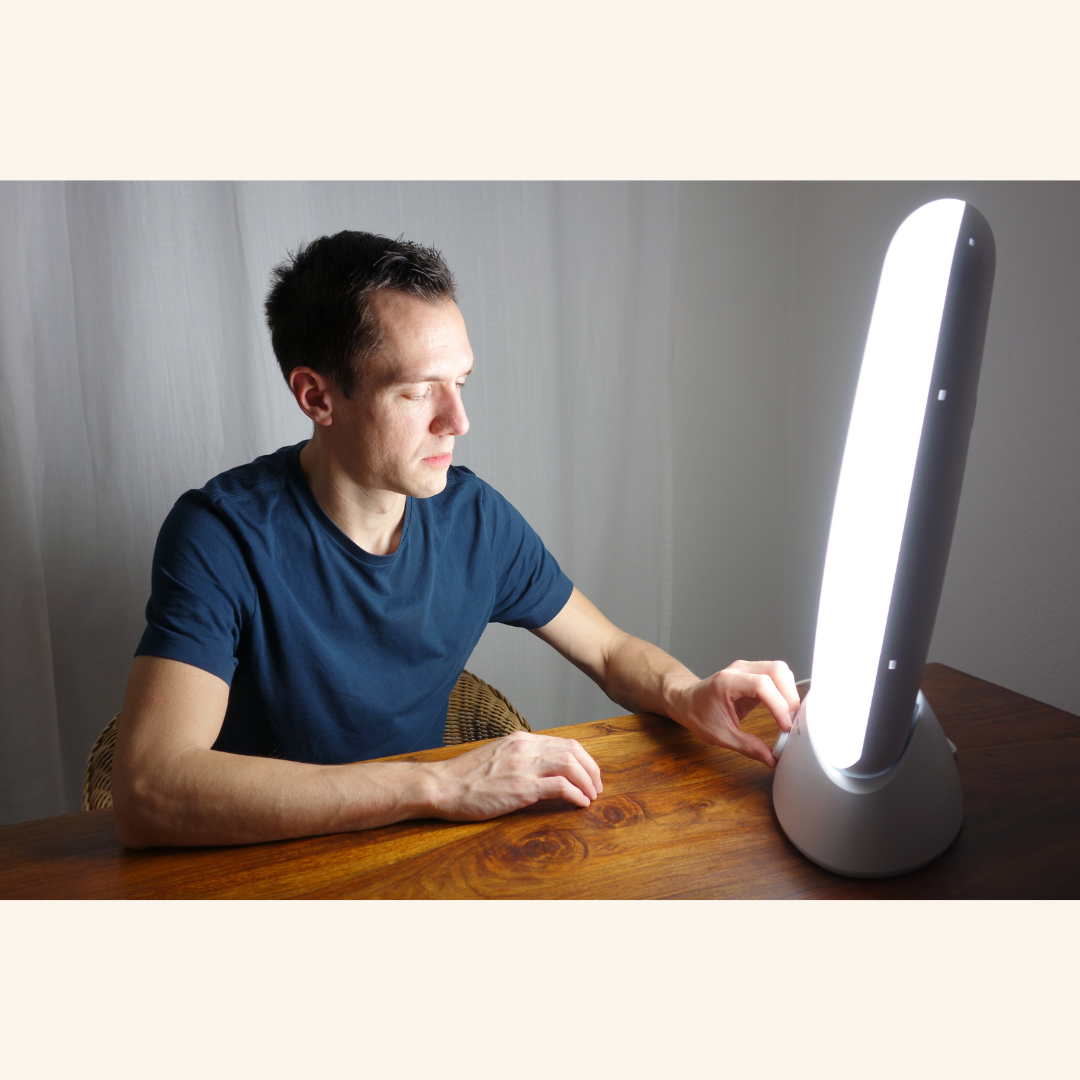
Both treatments involved sitting in front of a light source for one hour in the morning and one hour in the afternoon. The bright light measured 10,000 lux — about the intensity of outdoor daylight — while the placebo dim light was only 200 lux. Both were positioned at a 45-degree angle from the patient’s line of sight.
The results were striking. Eye tests showed measurable improvements in how the retina and visual pathways were working, specifically faster N95 and P100 latencies, which are markers of how quickly visual signals travel from the eye to the brain. Importantly, the structure of the retina itself did not change, suggesting the therapy improved function without altering anatomy.
Patients also reported feeling better in daily life. Scores improved on several standard measures, including the Epworth Sleepiness Scale, the Hamilton Anxiety Scale, the Parkinson’s Disease Questionnaire-39, and the Autonomic Scale for Outcomes in Parkinson’s Disease. In other words, beyond the eye tests, patients noticed they were sleeping better, feeling less anxious, and coping better overall.
This was the first study to demonstrate the safety and effectiveness of bright light therapy in Parkinson’s using detailed eye-related tests. The authors concluded that the therapy likely works by improving the function of the brain’s visual pathways.
Still, there are some caveats. The study only included 23 patients, which is a very small group, and it excluded anyone who had undergone eye surgery such as cataract removal, which is common in this age group. The study also only measured results over 90 days, so it remains unclear whether the benefits last in the long term or whether ongoing treatment is needed.
Dr Joann Cherian, an optometrist not involved in the study, noted that while the results are promising, the practicality may be an issue. Two hours a day of sitting in front of a light box at a specific angle may be a big ask for many patients, especially if the devices are not easily available or affordable. However, she added that it is encouraging to see a non-drug option showing benefits, since many people with Parkinson’s are already juggling multiple medications every day.
Future studies will need to test whether these improvements hold up after one year or even five years, and whether light therapy could lead to longer-term structural changes in the retina. For now, this early research suggests that bright light therapy could be a safe and potentially valuable addition to Parkinson’s care, helping patients see more clearly and feel a little brighter in daily life too.
Comments (0)
Loading comments...