


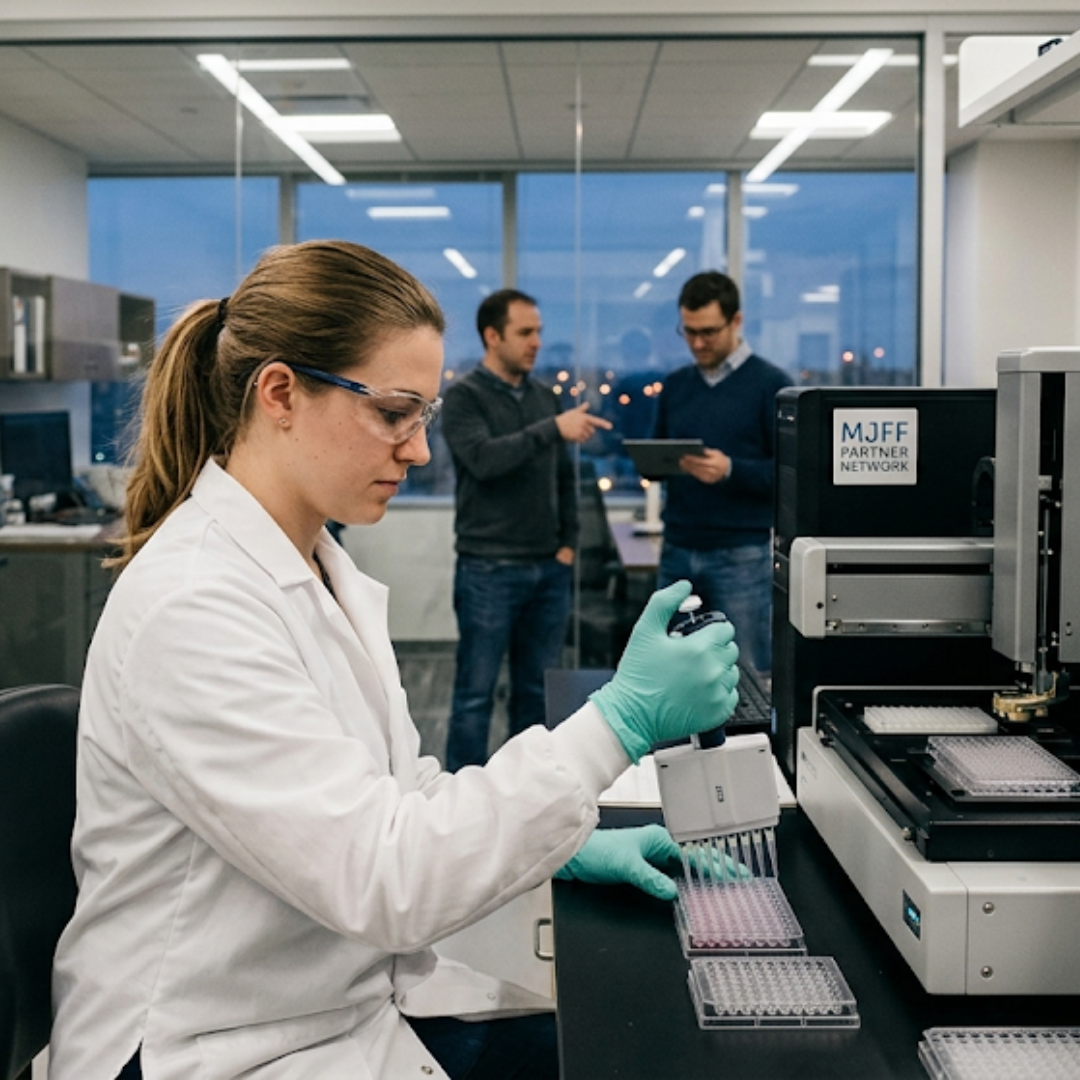
New laboratory tool backed by the Michael J Fox Foundation will track brain inflammation to accelerate therapies for Parkinson's
June 23, 2026
A South Korean biotechnology company has secured a significant partnership that could take the guesswork out of developing new therapies for Parkinson's.
Developing successful treatments often hits a wall because researchers cannot easily see if an experimental drug is actually working inside the brain. This new tracking tool solves that problem by looking at exactly how immune system proteins interact. The development is major news because a global pharmaceutical giant has now agreed to use this system to test a promising new drug candidate before it ever reaches human trials.
The company behind this breakthrough is Proteina, which was founded in 2015 as a specialist startup originating from the Korea Advanced Institute of Science and Technology. Proteina focuses on protein-protein interaction. Standard laboratory tests simply count the total number of proteins in a sample, but Proteina created a platform that tracks the functional process of how proteins physically bind together and send signals.
This distinction is crucial for Parkinson's research. In Parkinson's, certain proteins belonging to the innate immune system form clusters that become hyperactive. This hyperactivation triggers swelling and harmful inflammation that can damage brain cells. Finding biological markers to prove a drug can suppress this inflammation has been a long-term challenge for the pharmaceutical industry. Proteina's platform can selectively and precisely measure tiny amounts of these activated immune clusters to show exactly whether a drug is quietening the inflammation.
This achievement follows a research support agreement and network partnership that Proteina signed with the Michael J Fox Foundation in November 2025. The foundation acted as a bridge, connecting the biotechnology firm with major pharmaceutical developers. Under the newly announced commercial deal, an American multinational pharmaceutical firm, referred to as Company C, will integrate this tracking tool into the preclinical phase of their drug development.
Company C will use the system to verify whether their investigational brain disease drug successfully lowers neuroinflammation levels in the laboratory. Obtaining clear evidence of drug efficacy at this early stage provides researchers with the precise data needed to shape highly efficient clinical trial designs. While the initial focus of this tool is to advance research for Parkinson's and Alzheimer's, the underlying technology could eventually serve as a universal diagnostic toolkit for other conditions driven by chronic inflammation, including rheumatoid arthritis, type 2 diabetes, and cardiovascular disease.
Comments (0)
Loading comments...