


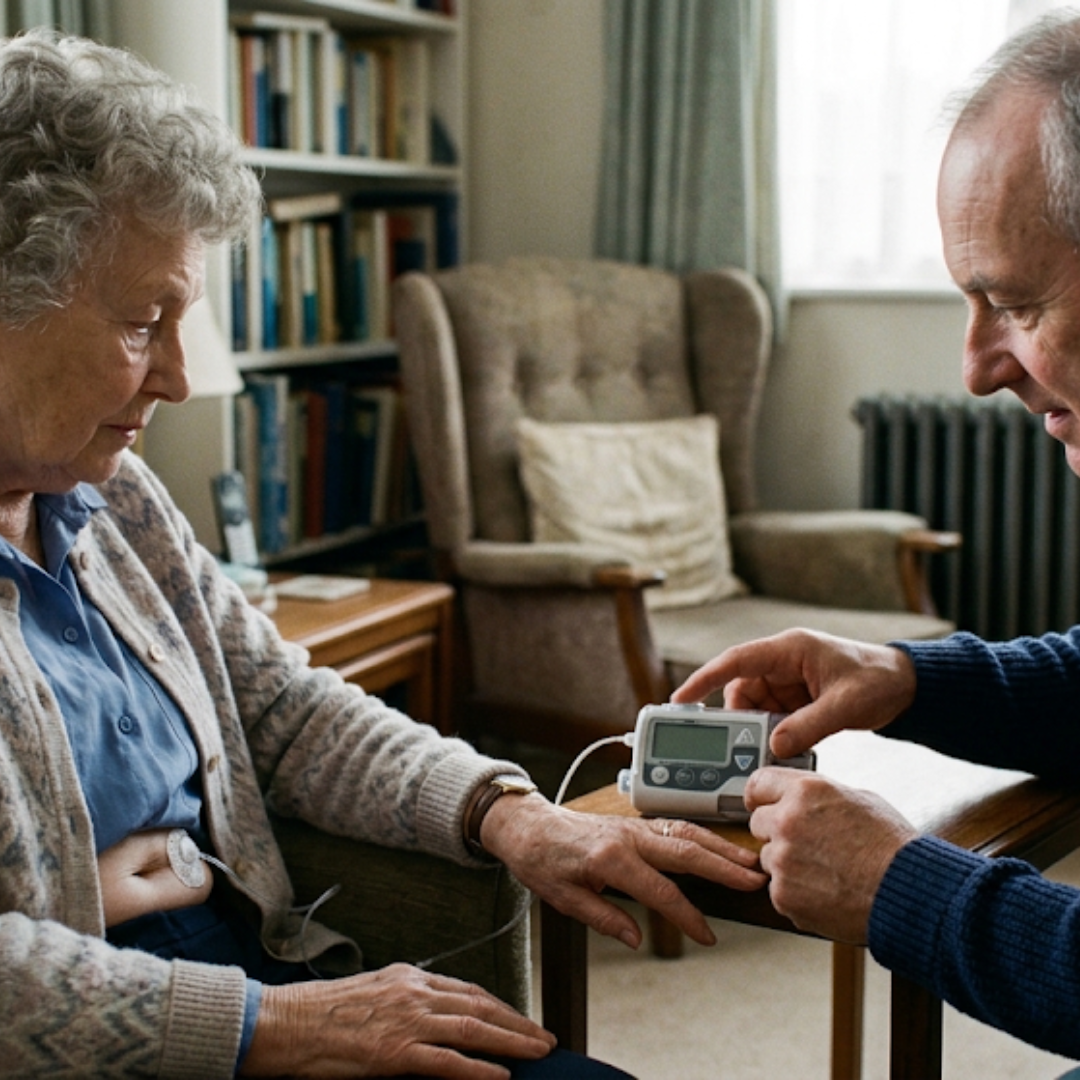
Real world study examines psychotic complications in 198 people receiving continuous subcutaneous foslevodopa and foscarbidopa infusions
August 24, 2026
 Beatrice
A multicentre observational study published in npj Parkinson's Disease investigates how frequently psychotic symptoms occur during continuous subcutaneous foslevodopa and foscarbidopa infusions, evaluating real-world medical data collected from 198 people across specialised neurological centres in Poland.
Managing advanced symptoms often involves sharp daily fluctuations between periods of fluid movement and sudden stiffness as oral medications wear off. Continuous subcutaneous infusion smooths out these motor fluctuations by delivering a soluble form of dopamine precursors directly beneath the skin throughout the day and night. Foslevodopa converts into active dopamine in the body, whilst foscarbidopa protects it from breaking down before it enters the brain.
Because the dopamine pathways that coordinate muscle movement also connect with emotional processing, motivation, and sensory interpretation, steady stimulation of these circuits can influence thought and perception. The research team set out to document how these non-motor complications appear in everyday clinical practice outside the strict inclusion boundaries of early clinical trials.
The investigation analysed the timing, presentation, and severity of psychiatric events recorded across the cohort. The researchers observed a spectrum of psychotic symptoms ranging from minor perceptual shifts to complex hallucinations and persecutory delusions:
Visual hallucinations were the most common perceptual disturbance, often involving seeing figures, animals, or objects that were not present. In some instances, individuals experienced auditory or tactile sensations, or retained partial insight, recognising that what they were seeing was an illusion. In other cases, symptoms progressed to fixed delusions, suspiciousness, or severe misinterpretation of ordinary surroundings, which caused distress for both the individual and their family.
A central finding of the analysis is that the onset of psychotic symptoms rarely stems from a single isolated cause. The authors observed that episodes frequently coincided with changes in total dopaminergic exposure, the introduction of adjunctive therapies, or background systemic vulnerabilities. Triggers such as dehydration, urinary tract or chest infections, metabolic changes, poor sleep architecture, and pre-existing cognitive impairment played a significant contributing role in precipitating confusion and hallucinations.
The study also highlighted practical considerations regarding treatment continuity. Cognitive or psychiatric changes can interfere with a person's ability to operate an infusion device independently, increasing reliance on care partners. When severe psychotic complications arose that did not resolve with dose reductions or standard management, some individuals required temporary or permanent discontinuation of the infusion pump.
The authors emphasise that developing hallucinations or delusions during therapy should prompt immediate clinical assessment rather than assumption that treatment must be abandoned entirely. Addressing reversible physical illnesses, adjusting infusion flow rates, simplifying oral drug regimens, and evaluating cognitive health often allow clinicians to manage symptoms effectively. When antipsychotic medication is needed, clinicians must select options carefully to avoid worsening mobility or causing excessive sedation.
The findings demonstrate that evaluating advanced therapies requires looking beyond improvements in walking speed, tremor reduction, or time spent in the active state. Sustaining overall quality of life depends equally on protecting cognitive stability and perceptual wellbeing.
Comments (0)
Loading comments...