


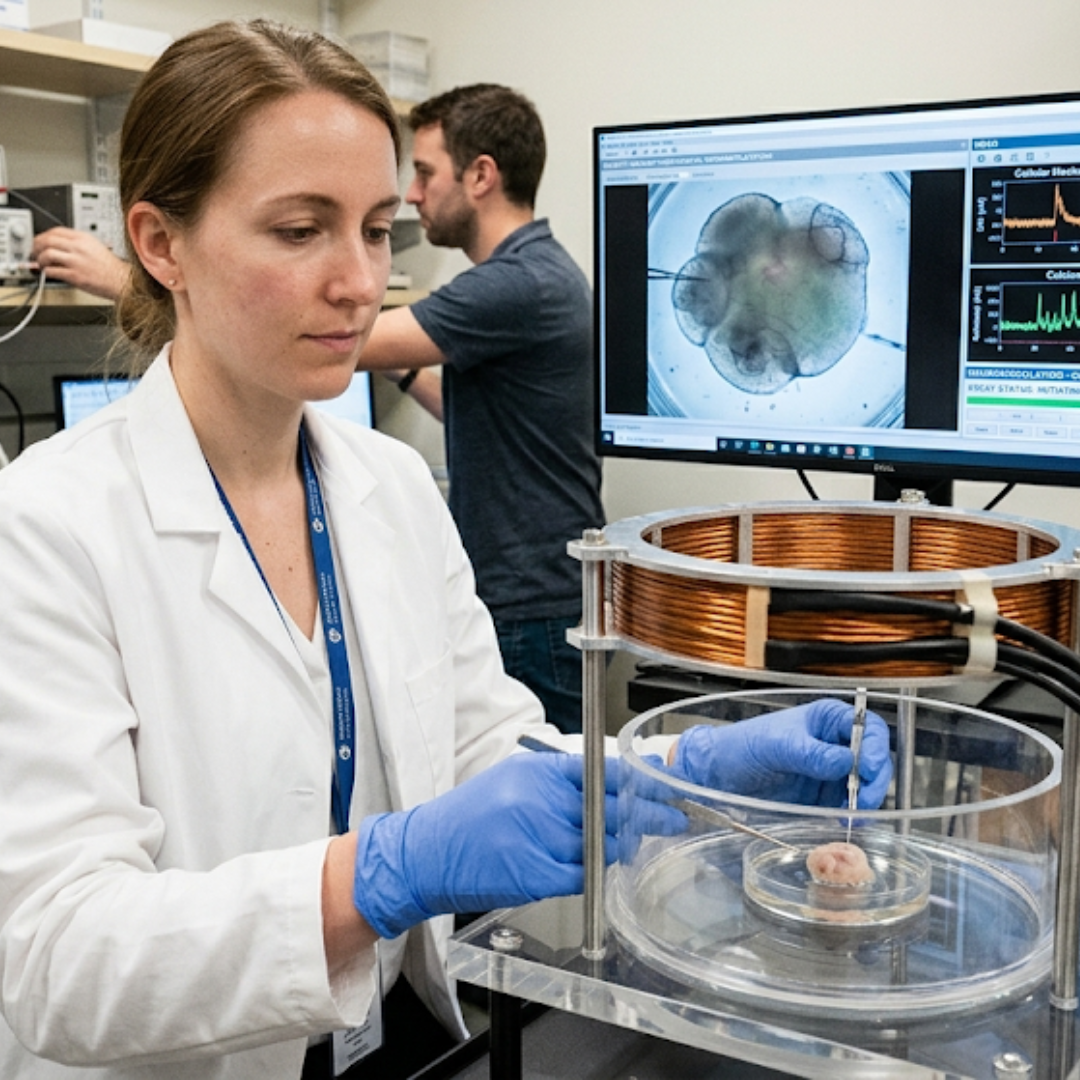
Researchers from European universities use magnetic nanoplatelets to restore movement without needing permanent brain electrodes
July 29, 2026
 Beatrice
Researchers from Universitaet Erlangen Nurnberg, alongside teams from RWTH Aachen, Maastricht University, and KU Leuven, have successfully restored movement in mice using tiny magnetic particles activated from outside the body. Published in the journal Advanced Science, the international study offers a promising blueprint for replacing traditional deep brain stimulation with a far less invasive technique.
Deep brain stimulation currently relies on surgically implanting permanent electrodes deep inside the subthalamic nucleus. This electrical approach can dramatically lessen tremors and movement difficulties, yet the complex brain surgery and permanent hardware carry risks that prevent many people from undergoing the procedure. The new technique achieves a similar therapeutic effect by replacing permanent electrical wires with microscopic, specially shaped magnetic nanoplatelets.
Using high precision stereotactic techniques, the scientists placed these magnetic nanoplatelets into the subthalamic nucleus of mice displaying movement symptoms caused by dopamine loss. Rather than shock the surrounding neurons with electrical current, the technique relies on the natural physical sensitivity of brain cells. When an external magnetic field is activated around the head, the nanoplatelets physically shift and produce minute mechanical forces.
These micro mechanical forces gently push against nearby cell membranes, much like a finger pressing into an inflated balloon. This subtle physical pressure triggers mechanosensitive ion channels embedded in the cell walls, allowing charged ions to flow inside and activate the target neurons naturally. When the magnetic field was switched on, the movement deficits in the mice improved significantly, reaching a level of recovery comparable to conventional electrical pacemakers.
Safety testing showed that the nanoplatelets remained safely inside the brain for several months without triggering inflammation or tissue damage. Beyond removing the need for permanent wires, magnetic stimulation allows for greater flexibility because adjusting the strength and frequency of the external magnetic field fine tunes the stimulation intensity.
The research team is already looking at ways to refine the treatment further. Future developments aim to deliver the nanoplatelets through a simple injection into the bloodstream using particles engineered to cross the blood brain barrier independently, avoiding brain surgery altogether. The scientists are also exploring wearable magnetic devices, such as a comfortable headband, that could allow non invasive targeted brain stimulation in everyday life.
Comments (0)
Loading comments...