


The Brain Static Behind the Afternoon Slump in Parkinson’s
January 9, 2026
For many living with Parkinson’s, the battle against gravity is matched only by the battle against drowsiness. Excessive daytime sleepiness is often written off as a side effect of medication or simply a bad night’s rest, but new research suggests a more fundamental cause. A recent study published in Communications Biology has identified a specific electrical "fingerprint" in the brain that appears to drive this overwhelming urge to sleep, linking it to the same circuit malfunctions that cause stiffness and slowness.
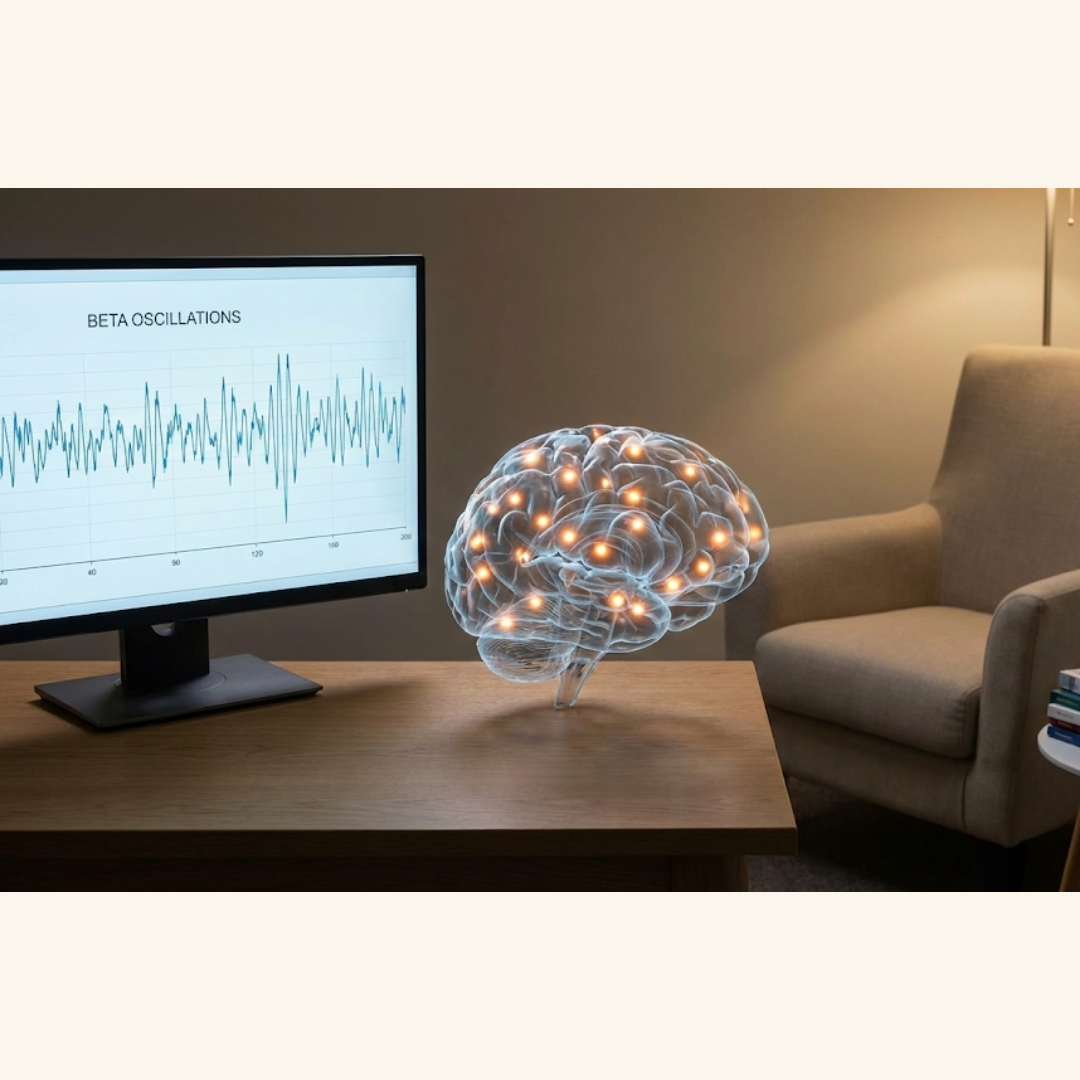
The culprit is a type of brain wave known as a "beta oscillation". In a healthy brain, beta waves act like a "hold" command. They tell the body to maintain a posture or stay still. When you want to move, these waves are supposed to switch off, allowing a smooth action to take place. In Parkinson’s, however, these beta waves become hyperactive, blasting a constant "hold" signal that locks muscles into rigidity. Neuroscientists have known for years that this beta noise is responsible for motor issues, but they have now discovered that this same electrical interference might be dampening the brain’s ability to stay awake.
Researchers used advanced monitoring in non-human primate models to record electrical activity deep within the basal ganglia—the brain’s control centre for movement—and the surface of the motor cortex. They observed that periods of excessive drowsiness correlated perfectly with spikes in this beta activity. It appears that the brain is not just being told to physically freeze, but is also being chemically and electrically lulled into a state of low arousal. The "static" preventing movement is effectively jamming the broadcast that keeps the mind alert.
This is a significant shift in how we understand the condition. It moves daytime sleepiness from a vague symptom to a measurable physiological event. It suggests that the drowsiness is intrinsic to the parkinsonian state itself, rather than just a secondary consequence of poor sleep hygiene or drug interactions. The heavy eyelids and the sudden onset of sleep could be as much a direct result of the condition as the tremor or the shuffle.
The implications for treatment are promising. Currently, therapies like Deep Brain Stimulation (DBS) are used to disrupt these beta rhythms to restore movement. If the same rhythms are driving sleepiness, then fine-tuning these devices to target wakefulness circuits could theoretically help patients stay alert. We are moving towards a future where a "smart" pacemaker for the brain could sense when a person is drifting off and adjust its signal to clear the static, restoring not just mobility, but the vitality to engage with the day.
Comments (0)
Loading comments...