


A New Metabolic Path: How "Stress Lipids" Could Help Repair Brain Cells
March 23, 2026
New research shared on the preprint server bioRxiv has identified a previously unknown relationship between a specific type of fat molecule and LRRK2, one of the most well-known genetic drivers of the condition. The study, led by researchers at the Institut Pasteur, reveals that these molecules—known as NAPEs—act as natural regulators that can "switch off" overactive LRRK2 and restore the health of our brain cells' recycling centres.
Our cells rely on small compartments called lysosomes to act as waste disposal units, breaking down old proteins and cellular debris. In many people with the condition, particularly those with LRRK2 mutations, these disposal units become sluggish and fail. This leads to a dangerous buildup of toxic alpha-synuclein aggregates, which eventually damages the neurons.
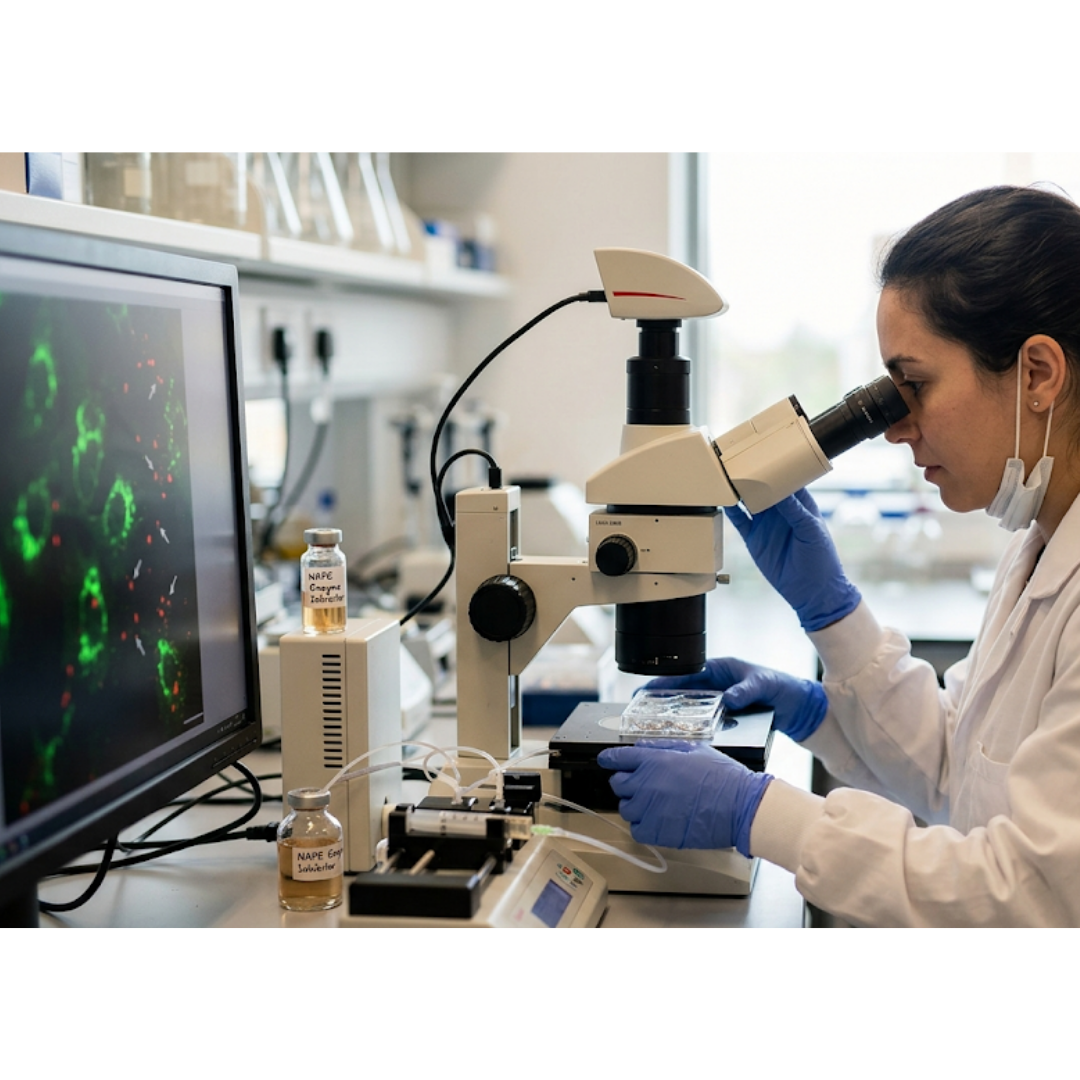
The researchers discovered that NAPEs—lipids that the body naturally produces in response to cellular stress—have the unique ability to bind to LRRK2 and inhibit its activity. When NAPE levels are high, LRRK2 is kept in check, allowing the lysosomes to stay active and efficient. However, when an enzyme called NAPE-PLD breaks these lipids down too quickly, LRRK2 becomes hyperactive, the waste disposal system breaks down, and toxic proteins begin to accumulate.
The most exciting part of this discovery lies in its therapeutic potential. By using a compound to block the enzyme that destroys these protective lipids, the team was able to "rescue" brain cells derived from people with the G2019S LRRK2 mutation. Increasing the levels of these "stress lipids" successfully restored lysosomal function and helped the cells clear out harmful alpha-synuclein clumps.
This "metabolic axis" represents a completely new way of thinking about treatment. Rather than just trying to block LRRK2 with traditional drugs, scientists may now be able to harness the body's own lipid signals to repair the cellular machinery. It suggests that by balancing these specific fats, we could provide the brain with a natural shield against the progression of the condition.
Comments (0)
Loading comments...