


Why Speaking and Swallowing With Purpose Protects Your Health
February 20, 2026
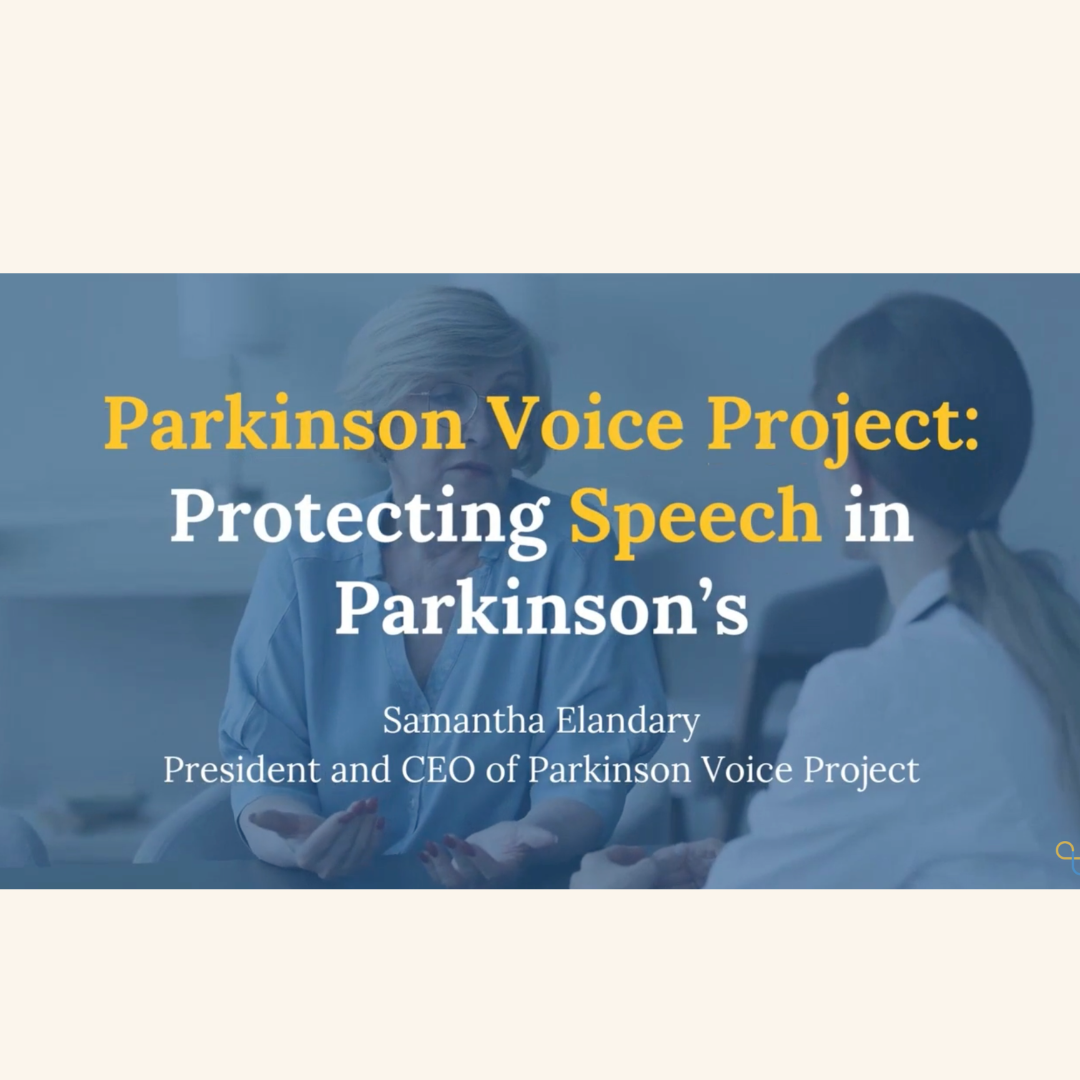
Many of the actions we take for granted—like speaking, walking, and swallowing—happen automatically in a healthy brain. However, as the condition progresses and dopamine levels drop, these automatic functions begin to fade. A fascinating new discussion with speech pathologist Samantha Elandary, CEO of the Parkinson Voice Project, highlights a powerful solution: tapping into our brain's "intentional" motor system to protect our ability to communicate and eat safely.
The key to staying resilient is moving these vital skills from "autopilot" to "conscious control."
The Two Motor Systems of the Brain
Humans have two distinct ways of moving. The first is the automatic motor system, which is heavily dependent on dopamine. This is what handles things we don't think about, like swinging our arms while walking or swallowing our saliva. The second is the intentional motor system, which acts like a backup generator. It is far less dependent on dopamine and is activated whenever we act with deliberate purpose.
For people living with the condition, the automatic system starts to flicker. This is why a voice might become raspy or soft without the person even realising it—a phenomenon known as a sensory deficit. While the person feels they are speaking at a normal volume, to others, they sound like they are whispering. By "speaking with intent," you bypass the broken automatic system and engage the backup generator, resulting in a clearer, stronger, and more confident voice.
Why Speech Therapy is About More than Just Talking
While being heard is important for staying connected to loved ones, speech therapy is actually a vital safety measure. The muscles we use for speaking are the same ones we use for swallowing. If these muscles weaken due to lack of use, it can lead to serious complications.
Preventing Aspiration: The leading cause of serious illness in the condition is aspiration pneumonia, caused by food or liquid "going down the wrong way." Strengthening the vocal cords through intentional exercise helps ensure the airway is protected during every swallow.
Managing Saliva: Many people feel they have "too much" saliva, but the reality is often that the automatic "micro-swallows" we do all day have slowed down. Practising intentional swallowing helps keep the mouth clear and prevents drooling.
Cough Strength: A strong voice means a strong cough. If something does enter the airway, having the muscle power to cough it back out is a life-saving skill.
The Power of Early Intervention
The most important takeaway from Elandary's research is that we shouldn't wait for a crisis to start therapy. Early signs—like a slightly hoarse voice or being asked to repeat yourself—are the best time to act.
Think of it like building muscle in the gym. If you start when your voice is at 65 decibels (just below normal), therapy can often bring you back to a completely normal, pre-Parkinson's level. If you wait until the voice is much softer, you can still make great progress, but it is harder to reach that "gold standard" of clarity.
Sustainable Habits for the Long Haul
The condition is a "marathon, not a sprint," and the same applies to therapy. The Parkinson Voice Project emphasizes that practice shouldn't end when your sessions do.
Daily Intent: Every conversation is an opportunity to practice. Instead of just answering a question, try "projecting" your voice as if you are speaking across a tennis court.
Peer Support: Joining groups like the "Speak Out" classes can provide both the motivation to keep practicing and a sense of community with others who are also living with intent.
Regular Check-ins: Because of the sensory deficit, it’s hard to judge your own volume. Seeing a speech therapist every six months helps "recalibrate" your internal sense of how loud you are actually being.
By choosing to act with intent, you aren't just improving your speech—pani are taking active control of your safety and your connection to the world around you.
Comments (0)
Loading comments...