


The Brain’s "Autocorrect": Why the Mind Fills in the Blanks with Hallucinations
December 28, 2025
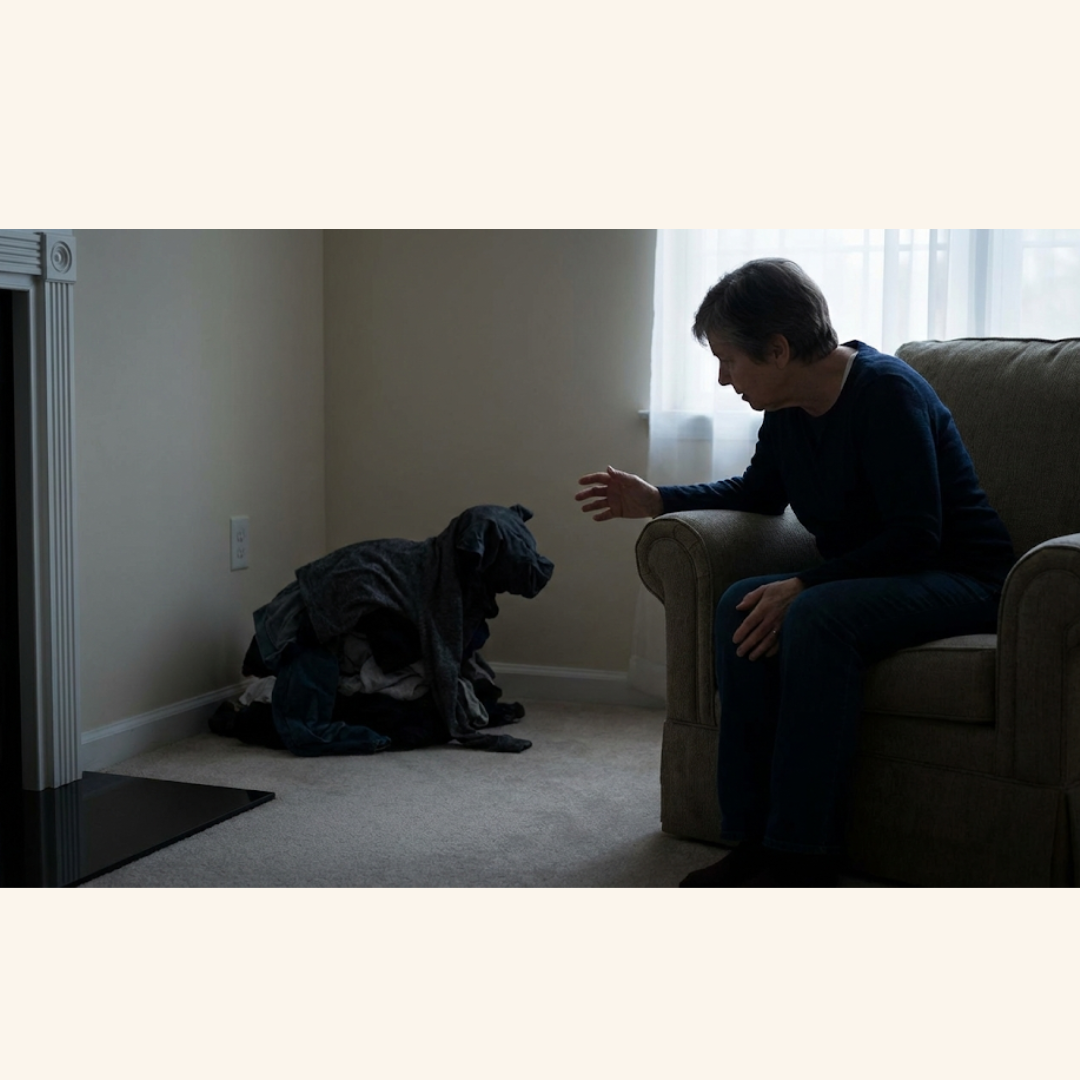
For many people with Parkinson’s, the most unsettling symptom isn't the tremor or the stiffness; it is the moment they spot a cat sitting in the corner of the room, only to realise a second later that it is actually just a pile of laundry. Visual hallucinations are a common, often whispered-about side of the condition, frequently dismissed as medication side effects or general cognitive decline. However, a fascinating new study published in npj Parkinson's Disease has finally popped the bonnet on the brain to show us exactly what is going wrong, and it turns out to be a glitch in translation.
Lost in Translation: The researchers discovered that the problem isn't with the eyes, nor is it a random firing of "madness." Instead, it is a specific breakdown in what they call visual-to-semantic dynamics.
Think of your brain like a super-fast translator. Your eyes capture raw data (shapes, shadows, colours) and send it to the brain’s "meaning centre" (semantic processing) to label it. Usually, this happens instantly: "That shape is a chair."
The study reveals that in people who experience hallucinations, this connection is disrupted. The line is crackly. The brain receives the raw visual information but struggles to quickly attach the correct meaning to it.
The "Autocorrect" Fail: When the brain can't get a clear signal, it doesn't just give up; it guesses. The study describes a process where the brain’s "top-down" expectations overpower the actual "bottom-up" reality.
Essentially, the brain tries to be helpful by filling in the gaps. It sees a shadowy shape, can't quite identify it, and predicts: "I expect to see a person there." So, it projects an image of a person. It is exactly like your phone’s autocorrect changing a word to something completely different because it thought it knew what you meant to say. The hallucination is the brain’s best guess gone wrong.
Why Some and Not Others? One of the key questions has always been why some people get these visions while others with the same condition don't. The researchers found a genetic clue. They identified specific variations in genes related to synaptic plasticity—how adaptable and flexible our brain connections are. Those with "stiffer" or less adaptable connections seem more prone to this visual-to-semantic breakdown.
A New Target: This is a game-changer for treatment. Until now, we have mostly treated hallucinations by trying to dampen down dopamine, which can often make movement worse. By understanding that this is a specific circuit failure—a "predictive coding error"—scientists can now look at much more targeted therapies.
The study suggests that techniques like Transcranial Magnetic Stimulation (TMS) or drugs that specifically enhance synaptic transmission could help "clean up the line." If we can improve the connection between seeing and understanding, we might be able to stop the brain from needing to guess, turning that imaginary cat back into a pile of laundry for good.
Comments (0)
Loading comments...